

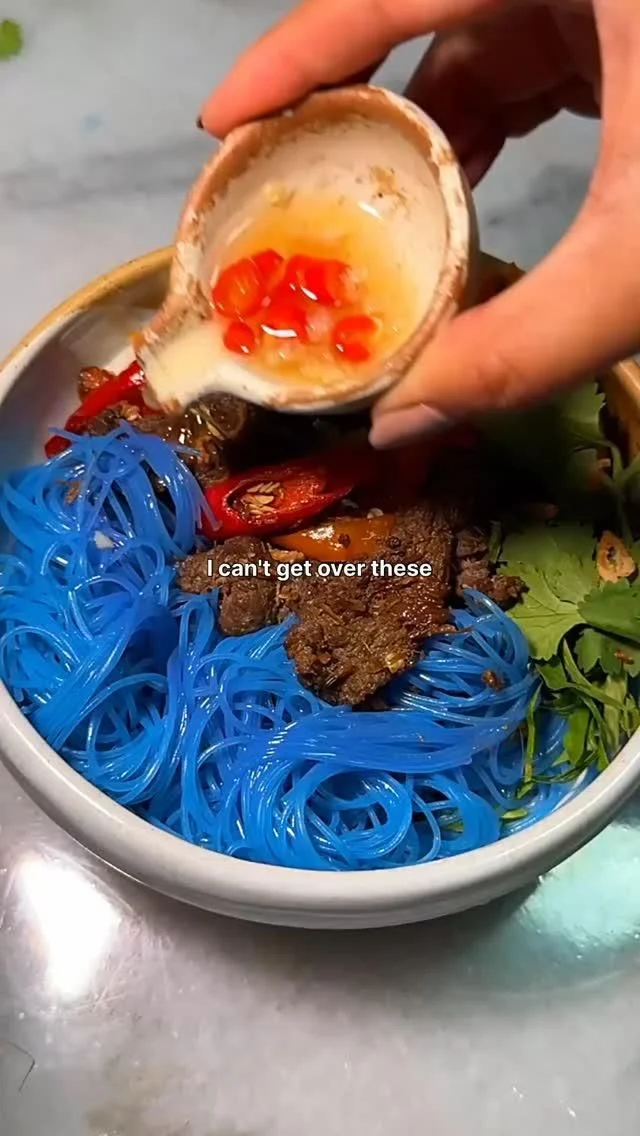
Unicorn Noodles are the dish I make when I want dinner to feel like a magic trick. Butterfly pea flowers steep in hot water and turn it deep sapphire blue, then that blue broth cooks slippery rice noodles until they glow like a mermaid's necklace. A squeeze of lemon at the table shifts everything toward violet, which means each bowl changes color while you eat it.
Advertisements1
I started dyeing my rice blue for fun years ago, and it was only a matter of time before the noodles got the same treatment. This version is savory, not sweet: garlic and ginger sizzle in sesame oil, coconut aminos round out the broth, and crisp vegetables keep it light enough for a weeknight.
The whole pot comes together in under an hour with one saucepan and one skillet, and it is naturally gluten-free, vegan, and colored without a single drop of artificial dye.
Why You'll Love This Recipe
About the Ingredients
8 oz (225 g) dried flat rice noodles (banh pho style)
Flat rice sticks soak up the blue broth best. If you only have thin vermicelli, cut the boil time to 3 minutes so they don't turn to mush.
12 dried butterfly pea flowers (or 2 tbsp butterfly pea powder)
Look for food-grade dried flowers at tea shops or Asian groceries. If using powder, whisk it into the hot water off the heat so it doesn't clump.
4 cups (960 ml) water
Filtered water keeps the blue color clear rather than cloudy. Vegetable stock can replace half the water for a deeper savory base.
2 tbsp toasted sesame oil
Toasted, not plain, sesame oil carries the aroma here. Swap in avocado oil if you need a neutral flavor for kids.
4 cloves garlic, thinly sliced
Fresh garlic gives the best bite; 1 tsp garlic paste works in a pinch but add it later with the liquid so it doesn't burn.
1 tbsp grated fresh ginger
Frozen ginger grates easily on a microplane. Ground ginger is a last resort: use only 1/2 tsp or it turns dusty.
3 tbsp coconut aminos (or soy sauce)
Coconut aminos keep it soy-free and slightly sweet. Tamari is the best substitute if you want a saltier, gluten-free option.
1 medium carrot, julienned
Matchstick-cut carrot softens in the residual heat. Pre-cut bagged carrot sticks save 5 minutes on a busy night.
1 cup (150 g) shelled edamame, thawed
Frozen shelled edamame is the shortcut hero here. Frozen peas are a fine swap and cook in the same time.
1/2 cup (75 g) thinly sliced red cabbage
Red cabbage adds crunch and a pink-purple contrast. Napa cabbage works but will wilt faster, so add it off the heat.
2 tbsp fresh lime or lemon juice, plus wedges to serve
Acid is what turns the broth violet, so use fresh citrus, not bottled. Lime leans floral; lemon leans candy-bright.
2 scallions, thinly sliced, plus toasted sesame seeds to finish
Slice scallions on a sharp bias for pretty curls. Chives are a gentler swap if raw onion is too strong for kids.
Tips & Tricks
Don't overboil the rice noodles
Pull them 1 minute before the package says and let them finish in the hot blue broth, otherwise they break apart when tossed.
Steep, don't boil, the flowers
Boiling butterfly pea flowers for too long turns the water gray-brown; pour hot but not rolling water over them and steep 5 minutes.
Add citrus at the table
Mixing lemon juice into the whole pot early dulls the color to purple; let each person squeeze their own so the blue-to-violet change happens in the bowl.
Pro Tips
Step-by-Step Instructions
1. Steep the flowers
Bring the 4 cups water to 185°F (85°C) – small bubbles at the edges, not a rolling boil – then pour it over the butterfly pea flowers in a heatproof bowl and steep 5 minutes until the liquid is deep sapphire blue. Strain out the flowers and set the blue water aside.
2. Soak the noodles
While the flowers steep, soak the rice noodles in hot tap water for 10 minutes until pliable but still firm in the center; they will finish cooking in the broth. Drain well so they don't water down the pot.
3. Sizzle aromatics
Heat the sesame oil in a large skillet over medium heat (350°F/175°C) and add the garlic and ginger, stirring constantly for 60 to 90 seconds until fragrant and just golden at the edges – do not let them brown past light gold or they turn bitter.
4. Build the broth
Pour in the strained blue water and coconut aminos, bring to a gentle simmer at 200°F (93°C), and cook 3 minutes until the raw garlic edge mellows. Taste and add a pinch of salt if needed.
5. Cook the noodles blue
Add the drained rice noodles to the simmering blue broth and cook 3 to 4 minutes, gently lifting with tongs, until the noodles are tender, translucent, and have absorbed the blue color. They should slide apart easily, not clump.
6. Toss the vegetables
Turn off the heat and fold in the carrot, edamame, and red cabbage, letting the residual heat soften them for 2 minutes so they stay crisp-tender and bright.
7. Finish and serve
Divide among bowls, scatter scallions and toasted sesame seeds, and serve with lime wedges. Squeeze the citrus over each bowl right before eating to watch the blue turn violet.
Delicious Variations
Coconut Unicorn Noodles
Replace 1 cup of the water with full-fat coconut milk for a creamy, pale-blue broth that tastes like a mild laksa.
Peanut Unicorn Bowl
Whisk 3 tbsp peanut butter into the warm broth off the heat for a saucy, nutty version that kids love with extra lime.
Chilled Unicorn Noodle Salad
Rinse the cooked blue noodles in cold water, toss with the vegetables and a double batch of citrus dressing, and chill 30 minutes for a picnic-ready salad.
How to Store Unicorn Noodles 🦄🦋💙 (Blue Butterfly Rice Noodles)
Refrigerator
Store in an airtight container up to 3 days; keep the noodles and broth separate if possible so the noodles don't bloat.
Freezer
Freeze the blue broth alone up to 2 months in a freezer bag; cooked rice noodles turn mushy when frozen, so freeze only the liquid.
Reheating
Reheat the broth in a saucepan over medium heat to 165°F (74°C), then add fresh or freshly soaked noodles for 2 minutes so they regain their bounce.
Frequently Asked Questions
Q: What do butterfly pea noodles taste like?
Butterfly pea flowers add almost no flavor, just a faint earthy note, so the noodles taste like whatever broth you cook them in. The color is the star, not the taste.
Q: Are unicorn noodles healthy?
Yes, this version is a balanced bowl of rice noodles, edamame protein, and raw vegetables with no artificial dyes. Each serving lands around 285 calories with 12 grams of protein.
Q: Why did my blue noodles turn purple or gray?
Butterfly pea color is pH-sensitive, so any acid like lemon or vinegar shifts it to purple and overcooking turns it gray-brown. Steep the flowers in hot but not boiling water and add citrus only at the table.
Q: Can I make unicorn noodles ahead of time?
You can steep the blue water and prep the vegetables up to 2 days ahead and refrigerate them separately. Cook the noodles fresh, since rice noodles stiffen and clump when chilled.
Q: Are rice noodles gluten-free?
Yes, plain dried rice noodles are naturally gluten-free, but check the label for shared wheat facilities. Use coconut aminos or tamari instead of soy sauce to keep the whole dish gluten-free.
Make a pot of Unicorn Noodles tonight and tag me in your blue-to-purple bowl photos – I want to see which citrus squeeze you chose.
Unicorn Noodles 🦄🦋💙 (Blue Butterfly Rice Noodles)
Unicorn Noodles turn butterfly pea rice noodles electric blue in 12 minutes for a naturally dyed, gluten-free dinner that kids and adults devour.
🧂 Ingredients
- 8 oz (225 g) dried flat rice noodles (banh pho style)
- 12 dried butterfly pea flowers (or 2 tbsp butterfly pea powder)
- 4 cups (960 ml) water
- 2 tbsp toasted sesame oil
- 4 cloves garlic, thinly sliced
- 1 tbsp grated fresh ginger
- 3 tbsp coconut aminos (or soy sauce)
- 1 medium carrot, julienned
- 1 cup (150 g) shelled edamame, thawed
- 1/2 cup (75 g) thinly sliced red cabbage
- 2 tbsp fresh lime or lemon juice, plus wedges to serve
- 2 scallions, thinly sliced, plus toasted sesame seeds to finish
📋 Instructions
- 1Steep the flowers — Bring the 4 cups water to 185°F (85°C) – small bubbles at the edges, not a rolling boil – then pour it over the butterfly pea flowers in a heatproof bowl and steep 5 minutes until the liquid is deep sapphire blue. Strain out the flowers and set the blue water aside.
- 2Soak the noodles — While the flowers steep, soak the rice noodles in hot tap water for 10 minutes until pliable but still firm in the center; they will finish cooking in the broth. Drain well so they don't water down the pot.
- 3Sizzle aromatics — Heat the sesame oil in a large skillet over medium heat (350°F/175°C) and add the garlic and ginger, stirring constantly for 60 to 90 seconds until fragrant and just golden at the edges – do not let them brown past light gold or they turn bitter.
- 4Build the broth — Pour in the strained blue water and coconut aminos, bring to a gentle simmer at 200°F (93°C), and cook 3 minutes until the raw garlic edge mellows. Taste and add a pinch of salt if needed.
- 5Cook the noodles blue — Add the drained rice noodles to the simmering blue broth and cook 3 to 4 minutes, gently lifting with tongs, until the noodles are tender, translucent, and have absorbed the blue color. They should slide apart easily, not clump.
- 6Toss the vegetables — Turn off the heat and fold in the carrot, edamame, and red cabbage, letting the residual heat soften them for 2 minutes so they stay crisp-tender and bright.
- 7Finish and serve — Divide among bowls, scatter scallions and toasted sesame seeds, and serve with lime wedges. Squeeze the citrus over each bowl right before eating to watch the blue turn violet.