

Lahana Sarması is the Turkish answer to comfort food: blanched cabbage leaves wrapped around a juicy filling of ground meat, rice, coarse bulgur, onion and parsley, then gently simmered in a bright tomato sauce until everything turns silky and fragrant. It is the kind of dish that shows up at family tables from Istanbul to Izmir, and once you learn the rolling rhythm it becomes second nature.
Advertisements1
The trick that makes these rolls better than the average version is the rice-and-bulgur blend: the rice keeps the filling tender and binds it, while the bulgur soaks up sauce and adds a nutty, hearty texture. Simmering the rolls on a bed of extra cabbage leaves and a few bones or a slice of butter keeps them from scorching and keeps the sauce glossy.
Yes, it takes a little assembly time, but the payoff is a big pot of rolls that taste even better the next day and freeze beautifully. Make a double batch and thank yourself later.
Why You'll Love This Recipe
About the Ingredients
1 large head green cabbage (about 1.2 kg / 2.5 lb)
Look for a heavy, tight head with flexible outer leaves. Savoy cabbage works beautifully and needs less blanching time because its leaves are softer.
500 g (1.1 lb) ground beef (80/20) or a beef-lamb mix
A little fat keeps the filling juicy; if using lean meat, add 1 tablespoon olive oil to the mix. Ground lamb alone is more traditional in southeastern Turkey.
1 medium onion (about 150 g), finely grated
Grate over a bowl to catch the juice, which adds moisture to the filling. Shallots are a milder substitute if raw onion flavor bothers you.
1/2 cup (100 g) short-grain white rice, rinsed
Baldo or Arborio rice gives the creamiest texture. Do not use instant rice, which turns mushy during the long simmer.
1/2 cup (80 g) coarse bulgur (pilavlık bulgur)
Coarse bulgur holds up best; fine bulgur will dissolve into the filling. If unavailable, use an extra 1/3 cup rice plus 2 tablespoons fine cracked wheat.
1 small bunch flat-leaf parsley (about 30 g), finely chopped
Stems included for more flavor. Dill or a mix of parsley and mint is a lovely swap in summer.
2 tablespoons tomato paste + 1 tablespoon pepper paste (biber salçası)
Pepper paste gives the authentic sweet-smoky depth; if you cannot find it, use 3 tablespoons tomato paste plus 1/2 teaspoon smoked paprika.
2 teaspoons salt, 1 teaspoon black pepper, 1 teaspoon dried mint, 1/2 teaspoon pul biber (optional)
Dried mint is essential to the Turkish flavor profile. Aleppo pepper or regular chili flakes can replace pul biber.
3 tablespoons olive oil or butter, plus 1 tablespoon for the pot
Butter rounds out the tomato sauce; olive oil keeps it lighter. Use a mix of both for the best of both worlds.
3 cups (720 ml) hot water or light beef stock
Stock adds richness, but water is traditional and lets the tomato paste shine. A dissolved stock cube works in a pinch.
1 tablespoon lemon juice, to finish
Brightens the sauce and balances the sweetness of the tomato paste. A splash of pomegranate molasses is a tangy alternative.
Tips & Tricks
Do not overfill the leaves
About 2 tablespoons of filling per leaf is right. Overstuffed rolls burst open during simmering and turn the sauce starchy.
Blanch until just pliable
Leaves should bend without cracking, roughly 2-3 minutes in boiling water. Over-blanched leaves tear and lose their structure.
Keep the pot snug
Pack the rolls tightly in a single layer with a plate on top so they stay submerged. Loose rolls unravel and cook unevenly.
Pro Tips
Step-by-Step Instructions
1. Core and blanch the cabbage
Bring a large pot of water to a rolling boil (100°C / 212°F). Cut out the core, lower the head into the water and boil 8-10 minutes, turning once, until the outer leaves pull away easily and are pliable but still bright green. Transfer leaves to a colander and cool; repeat with remaining leaves if needed.
2. Mix the filling
In a large bowl, combine the ground meat, grated onion with its juice, rinsed rice, bulgur, parsley, 1 tablespoon tomato paste, 1 teaspoon salt, black pepper, dried mint and pul biber. Knead with your hands for 2 minutes until the mixture is sticky and evenly blended.
3. Trim and fill the leaves
Cut out the thick central vein from each leaf with a small knife. Place 2 tablespoons of filling near the stem end, fold in the sides and roll up firmly into a cigar shape, about 8 cm (3 inches) long. Repeat with all leaves.
4. Build the pot
Drizzle 1 tablespoon olive oil in a wide heavy pot and line the bottom with torn inner cabbage leaves. Arrange the rolls seam side down in a snug single layer, packing them tightly so they cannot move.
5. Make the sauce
Whisk the remaining tomato paste and pepper paste with 1 cup of the hot water until smooth, then stir in the remaining salt and the rest of the hot water. Pour over the rolls until they are just covered, then drizzle with the remaining olive oil or dot with butter.
6. Simmer gently
Place an inverted heatproof plate on top of the rolls to weigh them down. Bring to a gentle simmer over medium heat, then reduce to low, cover and cook 45-50 minutes, until the rice is fully tender and the sauce has reduced and is bubbling at the edges. A knife should slide through a roll with no resistance.
7. Finish and rest
Remove from heat and stir the lemon juice into the sauce around the edges. Let the pot rest, covered, 10 minutes so the rolls set. Serve warm with the sauce spooned over and a dollop of yogurt on the side.
Delicious Variations
Vegetarian Version
Swap the meat for 1 cup cooked lentils and 1/2 cup crumbled feta for a meatless take that still feels hearty.
Sour Cabbage Rolls
Use pickled whole cabbage leaves (kelem sarması) and skip the lemon juice for a tangy, Balkan-style version.
Stuffed Chard or Vine Leaves
Use the same filling in blanched chard leaves or vine leaves; reduce the simmer to 35 minutes for the thinner leaves.
How to Store Turkish Stuffed Cabbage Rolls with Ground Meat, Rice & Bulgur in Tomato Sauce (Lahana Sarması)
Refrigerator
Store rolls in their sauce in an airtight container for up to 4 days. The flavor actually improves by day two.
Freezer
Freeze rolls with a little sauce in a freezer-safe container for up to 3 months; thaw overnight in the refrigerator before reheating.
Reheating
Reheat gently on the stovetop over low heat with a splash of water, covered, for 10-12 minutes, or microwave covered in 2-minute bursts until steaming hot.
Frequently Asked Questions
Q: Do I have to blanch the cabbage before rolling?
Yes, blanching is essential because raw cabbage leaves crack and tear when rolled. Boiling for 8-10 minutes softens the leaves enough to bend without breaking. Freezing the whole head overnight and thawing it is a no-boil shortcut that also works.
Q: Why did my cabbage rolls fall apart?
Rolls usually fall apart because they were overfilled or not packed tightly in the pot. Use only 2 tablespoons of filling per leaf, roll firmly with the sides tucked in, and place them seam side down in a snug single layer.
Q: Can I make lahana sarması ahead of time?
Absolutely, and it tastes even better made a day ahead. Assemble and cook the rolls, cool them completely, then refrigerate; reheat gently with a splash of water. You can also roll them raw a day ahead and refrigerate until ready to simmer.
Q: What is the difference between rice and bulgur in the filling?
Rice binds the filling and turns creamy, while bulgur absorbs sauce and adds a nutty, hearty bite. Using both is traditional and gives the best texture, but you can use all rice if you prefer a softer filling.
Q: How do I keep the bottom of the pot from burning?
Line the pot with torn inner cabbage leaves and a little oil before adding the rolls. This protective bed, plus a low simmer and enough liquid to just cover the rolls, prevents scorching.
Roll up a pot of lahana sarması this weekend and discover why Turkish home cooks swear by the rice-and-bulgur blend. If you make it, snap a photo of your snug little pot and tag me, and leave a comment telling me whether you went classic beef or tried the lentil version.
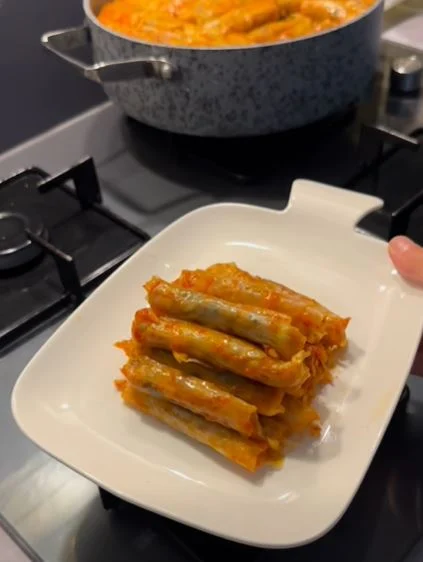
Turkish Stuffed Cabbage Rolls with Ground Meat, Rice & Bulgur in Tomato Sauce (Lahana Sarması)
Tender Turkish stuffed cabbage rolls with ground beef, rice and bulgur simmered in tangy tomato sauce – a cozy, freezer-friendly one-pot dinner.
🧂 Ingredients
- 1 large head green cabbage (about 1.2 kg / 2.5 lb)
- 500 g (1.1 lb) ground beef (80/20) or a beef-lamb mix
- 1 medium onion (about 150 g), finely grated
- 1/2 cup (100 g) short-grain white rice, rinsed
- 1/2 cup (80 g) coarse bulgur (pilavlık bulgur)
- 1 small bunch flat-leaf parsley (about 30 g), finely chopped
- 2 tablespoons tomato paste + 1 tablespoon pepper paste (biber salçası)
- 2 teaspoons salt, 1 teaspoon black pepper, 1 teaspoon dried mint, 1/2 teaspoon pul biber (optional)
- 3 tablespoons olive oil or butter, plus 1 tablespoon for the pot
- 3 cups (720 ml) hot water or light beef stock
- 1 tablespoon lemon juice, to finish
📋 Instructions
- 1Core and blanch the cabbage — Bring a large pot of water to a rolling boil (100°C / 212°F). Cut out the core, lower the head into the water and boil 8-10 minutes, turning once, until the outer leaves pull away easily and are pliable but still bright green. Transfer leaves to a colander and cool; repeat with remaining leaves if needed.
- 2Mix the filling — In a large bowl, combine the ground meat, grated onion with its juice, rinsed rice, bulgur, parsley, 1 tablespoon tomato paste, 1 teaspoon salt, black pepper, dried mint and pul biber. Knead with your hands for 2 minutes until the mixture is sticky and evenly blended.
- 3Trim and fill the leaves — Cut out the thick central vein from each leaf with a small knife. Place 2 tablespoons of filling near the stem end, fold in the sides and roll up firmly into a cigar shape, about 8 cm (3 inches) long. Repeat with all leaves.
- 4Build the pot — Drizzle 1 tablespoon olive oil in a wide heavy pot and line the bottom with torn inner cabbage leaves. Arrange the rolls seam side down in a snug single layer, packing them tightly so they cannot move.
- 5Make the sauce — Whisk the remaining tomato paste and pepper paste with 1 cup of the hot water until smooth, then stir in the remaining salt and the rest of the hot water. Pour over the rolls until they are just covered, then drizzle with the remaining olive oil or dot with butter.
- 6Simmer gently — Place an inverted heatproof plate on top of the rolls to weigh them down. Bring to a gentle simmer over medium heat, then reduce to low, cover and cook 45-50 minutes, until the rice is fully tender and the sauce has reduced and is bubbling at the edges. A knife should slide through a roll with no resistance.
- 7Finish and rest — Remove from heat and stir the lemon juice into the sauce around the edges. Let the pot rest, covered, 10 minutes so the rolls set. Serve warm with the sauce spooned over and a dollop of yogurt on the side.