

Japanese-Italian fusion cooking works best when you stop thinking of it as a gimmick and start treating it as a flavor exchange. Italy brings the pasta, the parmesan, and the finishing butter; Japan brings miso, soy, shiitake, and a hit of yuzu that cuts through the richness. The result is a glossy, savory spaghetti that tastes like it has been simmering all day.
Advertisements1
The dish is built around a miso butter sauce made from white miso, a splash of soy, and pasta water. Shiitake mushrooms and pancetta brown together until the edges are crisp, then everything gets tossed with the noodles off the heat so the sauce stays silky instead of breaking.
It comes together in one large pan in about fifty minutes, most of which is hands-off simmering. If you have never cooked Japanese-Italian food before, this is the friendliest gateway recipe I know.
Why You'll Love This Recipe
About the Ingredients
12 oz (340g) spaghetti
Use a bronze-die spaghetti so the rough surface grips the miso butter sauce. In a pinch, linguine or bucatini works, but add 1 to 2 extra minutes of boiling time.
4 oz (115g) pancetta, diced small
Pancetta gives a porky backbone without overpowering the miso. Swap in thick-cut bacon or, for a fully Japanese-leaning version, 4 oz of diced pork belly.
6 oz (170g) shiitake mushrooms, stems removed and caps sliced
Fresh shiitake has the deepest umami; if you only find dried, soak 1 oz in hot water for 20 minutes and use the soaking liquid in place of some pasta water.
3 tbsp (45g) unsalted butter, divided
European-style butter with higher fat browns more cleanly. Keep it cold until the moment you add it so the sauce emulsifies instead of turning greasy.
3 tbsp (48g) white miso paste
Shiro miso is mellow and slightly sweet, ideal for a cream-adjacent sauce. Do not substitute red miso one-for-one; it is far saltier, so use half the amount.
1 tbsp (15ml) soy sauce
Low-sodium soy sauce keeps the dish from tipping salty once the parmesan goes in. Tamari is a great gluten-free swap.
3 cloves garlic, thinly sliced
Thin slices toast evenly and stay sweet. Pre-minced jarred garlic burns faster, so add it off the heat if that is what you have.
1/2 tsp (1g) red pepper flakes
Adds a slow warmth that balances the butter. For a Japanese twist, use 1/2 tsp of shichimi togarashi instead.
1 cup (100g) finely grated parmesan
Grate it on a Microplane so it melts smoothly; pregrated cheese is coated in starch and clumps. Pecorino is a sharper, saltier substitute.
2 tsp (10ml) fresh lemon or yuzu juice
Yuzu is the authentic choice, but lemon plus a quarter teaspoon of orange zest gets you close. Bottled yuzu juice is a fine shortcut.
2 scallions, thinly sliced, plus toasted sesame seeds to finish
Slice on a sharp bias for pretty curls. Chives work if scallions are out of season.
Tips & Tricks
Add the miso off the heat
Boiling miso dulls its flavor and can make it grainy. Whisk it into the butter once the pan is off the burner, then toss with the pasta.
Do not crowd the mushrooms
Shiitake releases a lot of water, and a packed pan steams instead of browning. Use the widest skillet you own and cook in one layer.
- Reserve more pasta water than you think you need: Starchy water is the emulsifier here, and a dry pan turns the miso butter into a greasy pool. Ladle out 1 1/2 cups before draining.
Pro Tips
Step-by-Step Instructions
1. Boil the pasta
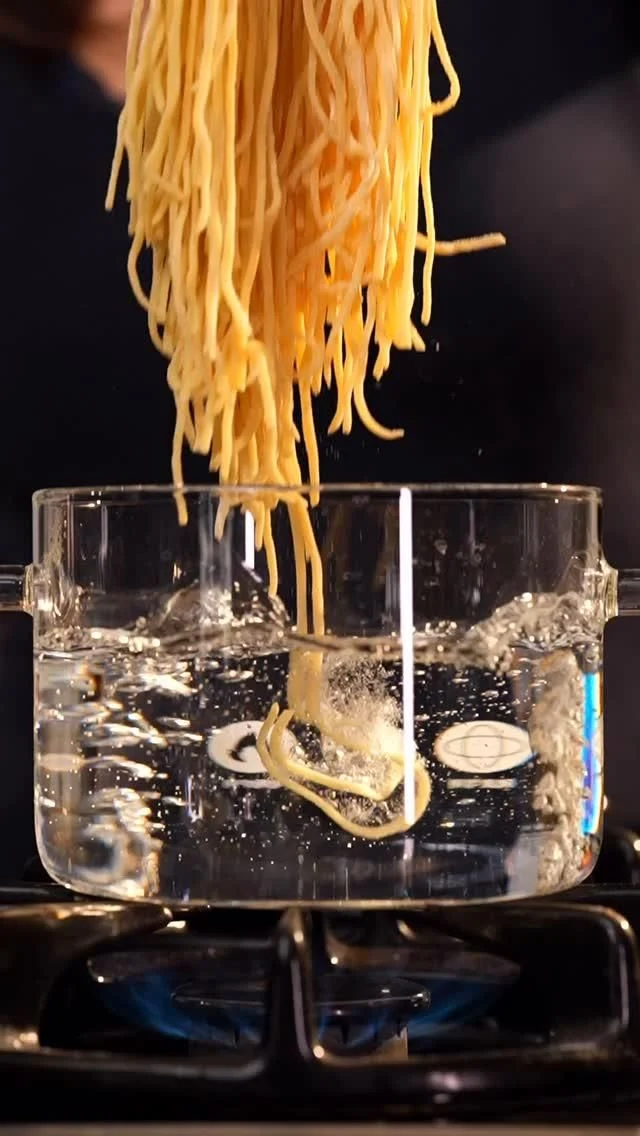
Bring 4 quarts of water to a rolling boil and salt it with 1 tablespoon of kosher salt. Cook the spaghetti 1 minute shy of the package time, then ladle out 1 1/2 cups of pasta water and drain.
2. Crisp the pancetta
Heat a 12-inch skillet over medium heat (about 350F / 175C) and add the pancetta. Cook 6 to 8 minutes, stirring occasionally, until the pieces are deep golden and the fat has rendered.
3. Brown the mushrooms
Add the shiitake in a single layer and cook 5 to 6 minutes without stirring, until the undersides are golden brown and the edges curl. Stir and cook 2 minutes more.
4. Bloom the aromatics
Lower the heat to medium-low (about 300F / 150C), add the garlic and red pepper flakes, and stir constantly for 45 seconds until fragrant but not browned. Browning garlic here turns the sauce bitter.
5. Build the sauce
Pour in 3/4 cup of the reserved pasta water and the soy sauce, scraping up the browned bits. Simmer 2 minutes until the liquid reduces by half and looks slightly syrupy.
6. Melt in the miso butter
Pull the pan off the heat. Whisk in the miso paste and 2 tablespoons of cold butter until the sauce is smooth, glossy, and coats the back of a spoon.
7. Toss the pasta
Add the drained spaghetti and half the parmesan, tossing vigorously with tongs for 60 seconds. Add splashes of pasta water until the sauce clings to every strand rather than pooling.
8. Finish and serve
Stir in the lemon juice, remaining butter, and scallions. Plate immediately, shower with the rest of the parmesan and sesame seeds, and serve while the sauce is still glossy.
Delicious Variations
Spicy Mentaiko Style
Swap the pancetta for 4 oz of mentaiko or spicy cod roe stirred in off the heat for a briny, pink sauce.
Vegetarian Miso Mushroom
Double the shiitake, omit the pancetta, and add 1 tablespoon of extra miso plus a splash of mushroom soaking liquid.
Creamy Yuzu Carbonara
Whisk 2 egg yolks with the parmesan and lemon juice, then toss with the hot pasta off the heat for a silkier, richer sauce.
How to Store The Ultimate Japanese-Italian Fusion
Refrigerator
Store in an airtight container for up to 3 days. Press plastic wrap directly onto the surface to keep the pasta from drying out.
Freezer
Freeze sauced pasta in portions for up to 2 months; thaw overnight in the fridge before reheating.
Reheating
Reheat in a skillet over medium-low heat (about 300F / 150C) with 2 tablespoons of water, tossing until glossy, about 3 minutes. Avoid the microwave, which makes the pasta rubbery.
Frequently Asked Questions
Q: What is Japanese-Italian fusion food?
Japanese-Italian fusion is a cooking style that combines Italian technique and ingredients with Japanese flavors like miso, soy, dashi, and yuzu. Popular examples include mentaiko pasta, miso carbonara, and Japanese-style napolitan spaghetti.
Q: Can I make this miso butter pasta without pancetta?
Yes, simply omit the pancetta and add 1 extra tablespoon of butter plus a pinch of salt when you brown the mushrooms. The dish will be slightly less rich, so finish with extra parmesan to compensate.
Q: What does miso butter taste like?
Miso butter tastes savory, nutty, and lightly sweet, with a deep fermented umami that lingers on the tongue. It is saltier than plain butter, so taste before adding extra salt to the pasta water.
Q: Is white miso or red miso better for pasta sauce?
White miso is better for pasta sauce because it is mellow, slightly sweet, and blends smoothly into butter and cream. Red miso is much saltier and more assertive, so use half the amount if it is all you have.
Q: How do I keep the miso sauce from separating?
Keep the pan off the heat when you whisk in the miso and cold butter, and add pasta water a splash at a time. The starch in the water binds the fat and liquid into a stable, glossy emulsion.
If you make this Japanese-Italian fusion pasta, snap a photo of that glossy bowl and tag me. It is the kind of recipe that quietly becomes a weeknight staple, so save it now and come back to it on the next busy Tuesday.
The Ultimate Japanese-Italian Fusion
The Ultimate Japanese-Italian Fusion is a miso butter spaghetti with shiitake and parmesan that delivers deep umami in one pan, ready in under an hour.
🧂 Ingredients
- 12 oz (340g) spaghetti
- 4 oz (115g) pancetta, diced small
- 6 oz (170g) shiitake mushrooms, stems removed and caps sliced
- 3 tbsp (45g) unsalted butter, divided
- 3 tbsp (48g) white miso paste
- 1 tbsp (15ml) soy sauce
- 3 cloves garlic, thinly sliced
- 1/2 tsp (1g) red pepper flakes
- 1 cup (100g) finely grated parmesan
- 2 tsp (10ml) fresh lemon or yuzu juice
- 2 scallions, thinly sliced, plus toasted sesame seeds to finish
📋 Instructions
- 1Boil the pasta — Bring 4 quarts of water to a rolling boil and salt it with 1 tablespoon of kosher salt. Cook the spaghetti 1 minute shy of the package time, then ladle out 1 1/2 cups of pasta water and drain.
- 2Crisp the pancetta — Heat a 12-inch skillet over medium heat (about 350F / 175C) and add the pancetta. Cook 6 to 8 minutes, stirring occasionally, until the pieces are deep golden and the fat has rendered.
- 3Brown the mushrooms — Add the shiitake in a single layer and cook 5 to 6 minutes without stirring, until the undersides are golden brown and the edges curl. Stir and cook 2 minutes more.
- 4Bloom the aromatics — Lower the heat to medium-low (about 300F / 150C), add the garlic and red pepper flakes, and stir constantly for 45 seconds until fragrant but not browned. Browning garlic here turns the sauce bitter.
- 5Build the sauce — Pour in 3/4 cup of the reserved pasta water and the soy sauce, scraping up the browned bits. Simmer 2 minutes until the liquid reduces by half and looks slightly syrupy.
- 6Melt in the miso butter — Pull the pan off the heat. Whisk in the miso paste and 2 tablespoons of cold butter until the sauce is smooth, glossy, and coats the back of a spoon.
- 7Toss the pasta — Add the drained spaghetti and half the parmesan, tossing vigorously with tongs for 60 seconds. Add splashes of pasta water until the sauce clings to every strand rather than pooling.
- 8Finish and serve — Stir in the lemon juice, remaining butter, and scallions. Plate immediately, shower with the rest of the parmesan and sesame seeds, and serve while the sauce is still glossy.