Cozy Cravings Recipes
Spicy Pork Carbonara Buldak Ramen – Creamy 30-Minute Dinner
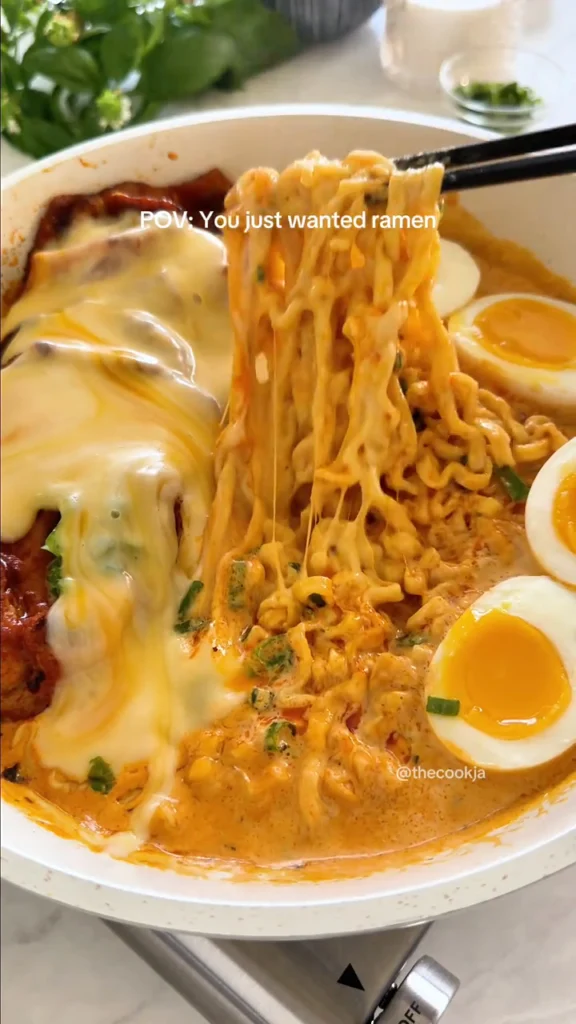
If you have ever slurped a pack of buldak ramen and thought "this needs something creamy," this recipe is your answer. I take the classic Korean fire noodles and turn them into a full carbonara-style meal with golden crispy pork belly, a silky egg-and-cheese sauce, and a glossy chili finish that clings to every strand.
The trick is treating instant ramen like fresh pasta: cook the noodles just shy of done, reserve the starchy water, and toss everything off the heat so the eggs turn into a velvety sauce instead of scrambled eggs. The pork fat does double duty, flavoring the sauce and giving you crunchy bits in every bite.
It is a 50-minute weeknight dinner that tastes like a Korean-Italian mashup from a trendy noodle bar, and it uses pantry staples you probably already have. One pan, one pot, and a very happy table.
Why You'll Love This Recipe
About the Ingredients
2 packs (about 280g) buldak ramen, including the included sauce packets
Any Korean fire noodle brand works, like Samyang Buldak or Ottogi. If you cannot find buldak, use 2 packs of plain ramen plus 2 tablespoons gochujang and 1 teaspoon chili flakes.
200g pork belly or thick-cut bacon, cut into 1cm (1/2-inch) strips
Pork belly gives the crispiest bits; thick-cut bacon is an easy swap with a smokier flavor. Ask the butcher for skinless belly so it renders fast.
2 large eggs plus 1 egg yolk, at room temperature
Room-temperature eggs emulsify more smoothly than cold ones. For a richer sauce, swap one whole egg for an extra yolk.
60g (about 2/3 cup) finely grated Parmesan or Pecorino Romano
Freshly grate it yourself; pre-shredded cheese has anti-caking starch that makes the sauce grainy. Pecorino is sharper, Parmesan is nuttier.
2 cloves garlic, finely minced
Fresh garlic only here; the jars are too wet and burn quickly. If you are out, use 1/2 teaspoon garlic powder added with the pork.
1 tablespoon soy sauce
Use low-sodium soy sauce so you can taste the cheese. Tamari is a great gluten-free substitute.
1 teaspoon toasted sesame oil
A little goes a long way for that nutty Korean finish. Toasted is essential; regular sesame oil tastes flat.
2 scallions, thinly sliced, whites and greens separated
The whites fry with the pork for sweetness, the greens go on top raw for freshness. Chives work as a substitute.
1 teaspoon black pepper, freshly cracked
Carbonara lives on black pepper, so crack it fresh. Use half if your buldak sauce is extra spicy.
1/2 cup (120ml) reserved noodle cooking water, plus more as needed
This starchy water is the secret to a creamy sauce without cream. Never drain it all away; keep a full cup on standby.
1 sheet nori, torn, and 1 teaspoon toasted sesame seeds, for garnish
Optional but adds a savory Korean finish. Crushed pork rinds are a fun crunchy substitute.
Tips & Tricks
Temper the eggs
Whisk the eggs and cheese in a bowl and slowly drizzle in a splash of warm noodle water before adding them to the pan, so they warm up gradually instead of scrambling.
Cook the noodles 1 minute shy
Pull the ramen out while still slightly firm, because they finish cooking in the hot sauce and stay springy rather than mushy.
Go off the heat for the sauce
Add the egg mixture only after the pan is removed from the burner, tossing constantly; residual heat is plenty to thicken it safely.
Save more water than you think
Starchy water is your rescue if the sauce tightens; add it a tablespoon at a time until it flows like heavy cream.
Pro Tips
Step-by-Step Instructions
1. Boil the noodles
Bring a large pot of water to a rolling boil at 212°F (100°C). Add the ramen bricks and cook for 3 minutes, 1 minute less than the package directions, until the noodles bend but still have a firm bite. Reserve 1 cup of the cooking water, then drain.
2. Crisp the pork
While the water heats, place the pork strips in a cold 12-inch skillet over medium heat and cook for 8 to 10 minutes, stirring occasionally, until the fat renders and the pieces are golden brown and crisp at 165°F (74°C) internal temperature. Scoop out half the pork and set aside for topping.
3. Build the base
Add the garlic and scallion whites to the pork fat in the skillet and cook for 45 seconds at medium heat until fragrant but not browned. Stir in the soy sauce and the buldak sauce packets, starting with half, and cook 30 seconds until bubbling at the edges.
4. Whisk the sauce
In a medium bowl, whisk the eggs, extra yolk, grated cheese, sesame oil, and black pepper. Slowly drizzle in 1/4 cup of the reserved warm noodle water while whisking, until the mixture looks smooth and slightly frothy.
5. Toss off the heat
Slide the skillet off the burner completely. Add the drained noodles to the pork mixture and toss for 30 seconds so they soak up the chili oil. Pour in the egg mixture and toss vigorously for 1 to 2 minutes until the sauce turns glossy and coats every strand; loosen with reserved water if needed.
6. Taste and adjust
Taste and stir in more buldak sauce if you want more heat, or a splash of noodle water if it feels thick. The sauce should be creamy enough to pool slightly at the bottom of the pan.
7. Plate and garnish
Twirl the noodles into warm bowls, then top with the reserved crispy pork, scallion greens, torn nori, and sesame seeds. Serve immediately, because carbonara waits for no one.
Delicious Variations
Mushroom Buldak
Swap the pork for 250g sliced king oyster mushrooms browned in 2 tablespoons butter for a meatless version that still gets deeply golden.
Cheesy Baked Buldak
Toss the finished noodles with 1/2 cup mozzarella, transfer to a cast-iron dish, and broil at 500°F (260°C) for 2 to 3 minutes until the top bubbles and browns.
Shrimp Carbonara Buldak
Replace the pork with 250g peeled shrimp seared 2 minutes per side at medium-high heat, then fold them in at the end so they stay snappy.
How to Store Spicy Pork Carbonara Buldak Ramen 🍜🔥 | Creamy Korean Noodle Recipe
Refrigerator
Store leftovers in an airtight container for up to 2 days; the sauce will thicken, so reheat gently with a splash of water.
Freezer
Freezing is not recommended because the egg-based sauce separates and the noodles turn mushy; freeze only the cooked pork separately for up to 1 month.
Reheating
Reheat in a skillet over low heat with 1 to 2 tablespoons of water, stirring constantly for 3 to 4 minutes until creamy again; avoid the microwave, which curdles the eggs.
Frequently Asked Questions
Q: What is carbonara buldak ramen?
It is Korean fire noodles (buldak ramen) prepared carbonara-style with a creamy egg, cheese, and pork sauce instead of just the spicy packet. The result is a rich, silky noodle dish with a serious chili kick.
Q: How do I make buldak ramen less spicy?
Use only half of the buldak sauce packet and increase the cheese and egg yolk to mellow the heat. A spoonful of heavy cream or extra Parmesan also tames the burn without losing flavor.
Q: Can I add cream to carbonara buldak ramen?
Yes, up to 2 tablespoons of heavy cream stirred in off the heat makes it even richer and is common in Korean carbonara buldak recipes. Traditional carbonara skips cream, so add it only if you want a looser, milder sauce.
Q: Why did my carbonara sauce turn scrambled?
The pan was too hot when the eggs went in, so the proteins coagulated instead of emulsifying. Always remove the skillet from the heat and toss constantly while adding the tempered egg mixture.
Q: What can I serve with spicy pork carbonara buldak ramen?
A crisp cucumber salad, quick kimchi, or steamed broccoli balances the richness and heat nicely. A fried egg on top is also a popular extra for extra protein.
Grab your packs of buldak ramen and a skillet, and make this creamy, crispy pork carbonara tonight. Snap a photo of your glossy noodles, tag me, and let me know how far you pushed the heat!
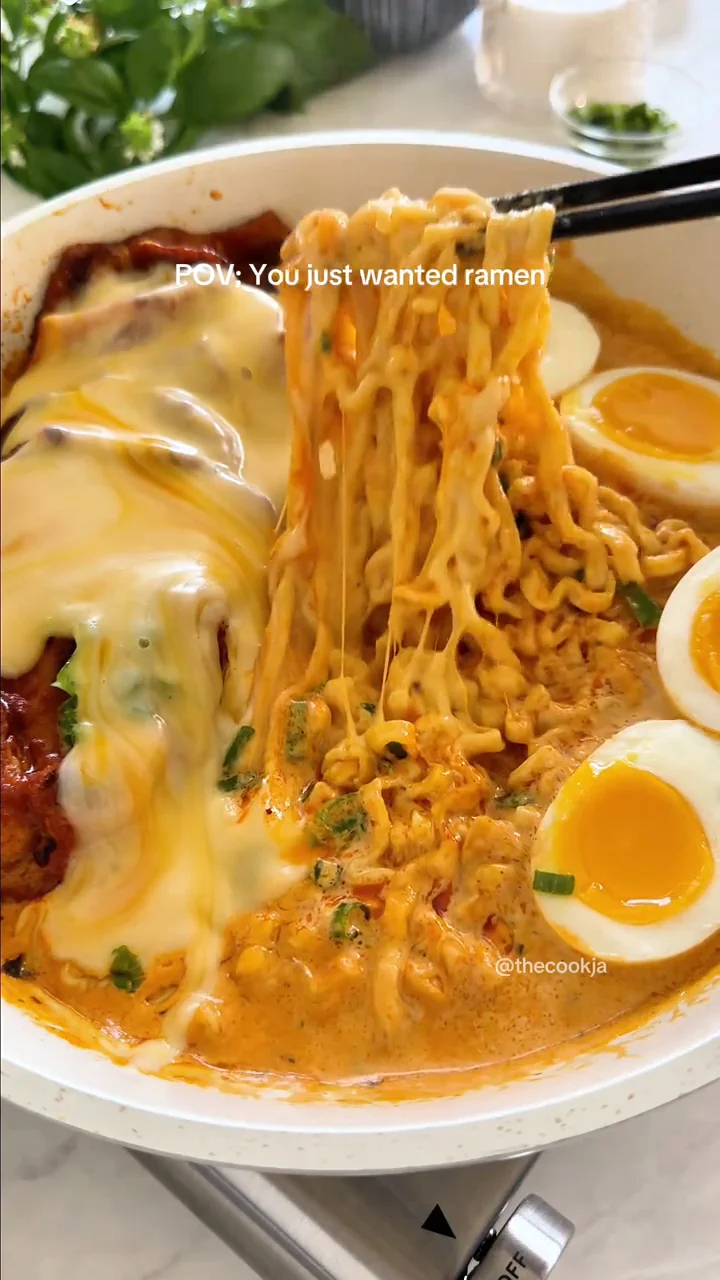
Spicy Pork Carbonara Buldak Ramen 🍜🔥 | Creamy Korean Noodle Recipe
Spicy Pork Carbonara Buldak Ramen turns fiery Korean noodles into a creamy, cheesy one-pan dinner with crispy pork and silky egg sauce in 50 minutes.
🧂 Ingredients
- 2 packs (about 280g) buldak ramen, including the included sauce packets
- 200g pork belly or thick-cut bacon, cut into 1cm (1/2-inch) strips
- 2 large eggs plus 1 egg yolk, at room temperature
- 60g (about 2/3 cup) finely grated Parmesan or Pecorino Romano
- 2 cloves garlic, finely minced
- 1 tablespoon soy sauce
- 1 teaspoon toasted sesame oil
- 2 scallions, thinly sliced, whites and greens separated
- 1 teaspoon black pepper, freshly cracked
- 1/2 cup (120ml) reserved noodle cooking water, plus more as needed
- 1 sheet nori, torn, and 1 teaspoon toasted sesame seeds, for garnish
📋 Instructions
- 1Boil the noodles — Bring a large pot of water to a rolling boil at 212°F (100°C). Add the ramen bricks and cook for 3 minutes, 1 minute less than the package directions, until the noodles bend but still have a firm bite. Reserve 1 cup of the cooking water, then drain.
- 2Crisp the pork — While the water heats, place the pork strips in a cold 12-inch skillet over medium heat and cook for 8 to 10 minutes, stirring occasionally, until the fat renders and the pieces are golden brown and crisp at 165°F (74°C) internal temperature. Scoop out half the pork and set aside for topping.
- 3Build the base — Add the garlic and scallion whites to the pork fat in the skillet and cook for 45 seconds at medium heat until fragrant but not browned. Stir in the soy sauce and the buldak sauce packets, starting with half, and cook 30 seconds until bubbling at the edges.
- 4Whisk the sauce — In a medium bowl, whisk the eggs, extra yolk, grated cheese, sesame oil, and black pepper. Slowly drizzle in 1/4 cup of the reserved warm noodle water while whisking, until the mixture looks smooth and slightly frothy.
- 5Toss off the heat — Slide the skillet off the burner completely. Add the drained noodles to the pork mixture and toss for 30 seconds so they soak up the chili oil. Pour in the egg mixture and toss vigorously for 1 to 2 minutes until the sauce turns glossy and coats every strand; loosen with reserved water if needed.
- 6Taste and adjust — Taste and stir in more buldak sauce if you want more heat, or a splash of noodle water if it feels thick. The sauce should be creamy enough to pool slightly at the bottom of the pan.
- 7Plate and garnish — Twirl the noodles into warm bowls, then top with the reserved crispy pork, scallion greens, torn nori, and sesame seeds. Serve immediately, because carbonara waits for no one.