Cozy Cravings Recipes
Spicy Peanut Butter Ramen – Creamy 30-Minute Dinner

These Spicy Peanut Butter Ramen noodles are the answer to every 9 p.m. craving: springy noodles coated in a glossy, creamy peanut sauce with real chili heat, a hit of garlic, and a squeeze of lime to keep it bright. Everything comes together in one pot and one bowl, which means dinner is done before delivery would even confirm your order.
The magic is in the sauce ratio. Peanut butter gives body, soy sauce and rice vinegar bring salt and tang, honey rounds it out, and chili garlic sauce or sriracha adds the burn that keeps you coming back for forkful after forkful. A splash of hot pasta water loosens everything into a silky, pourable sauce that clings to every strand instead of sitting in a puddle at the bottom.
I top mine with quick-seared ground pork, thinly sliced cucumber, shredded carrot, and a shower of scallions and crushed peanuts for crunch. Skip the pork for a vegetarian version, or swap in shredded rotisserie chicken on a weeknight when you want zero extra pans.
Why You'll Love This Recipe
About the Ingredients
12 oz (340g) dried ramen noodles, seasoning packets discarded
Use fresh or dried ramen blocks; if you only have instant packets, toss the flavor sachets. Spaghetti or lo mein noodles work as a substitute - cook them 1 minute past al dente.
1/2 cup (130g) natural creamy peanut butter
Natural peanut butter (just peanuts and salt) gives the loosest, most pourable sauce; conventional sweetened peanut butter works but reduce the honey to 1 teaspoon. Almond or sunflower butter are solid nut-free swaps.
3 tbsp soy sauce
Low-sodium soy sauce keeps the salt in check; tamari is the gluten-free equivalent. Coconut aminos work but taste sweeter, so cut the honey in half.
2 tbsp rice vinegar
Rice vinegar is mild and slightly sweet; apple cider vinegar is a fine substitute at 1 1/2 tablespoons. Avoid distilled white vinegar, which is too sharp here.
1 tbsp honey
Maple syrup or brown sugar substitutes 1:1 for a vegan version. Taste the sauce before adding more - the peanut butter brand affects sweetness.
2 to 3 tbsp chili garlic sauce or sriracha, to taste
Chili garlic sauce is chunkier and hotter; sriracha is smoother and sweeter. Start with 2 tablespoons, then add gochujang or crushed red pepper flakes for more heat.
3 cloves garlic, finely grated
Fresh garlic is essential; 1 teaspoon garlic paste substitutes in a pinch. Grate on a microplane so it disappears into the sauce instead of tasting raw.
1 lb (450g) ground pork
Ground chicken, turkey, or crumbled firm tofu all work; if using tofu, press it 15 minutes and add 1 extra tablespoon of oil. Look for pork labeled 80/20 for the juiciest crumbles.
1 cup (110g) shredded carrot and 1 Persian cucumber, thinly sliced
Bagged shredded carrot saves time; julienned red bell pepper or thinly sliced cabbage add crunch too. English cucumber works if Persian is unavailable - seed it first.
4 scallions, thinly sliced, plus 1/3 cup (45g) roasted peanuts, crushed
Salted roasted peanuts are ideal; cashews or crispy fried shallots swap in well. Slice scallions on a bias and separate whites from greens for maximum texture.
1 tbsp neutral oil, plus lime wedges for serving
Canola, vegetable, or avocado oil all have high smoke points. A squeeze of lime at the end is not optional - it cuts the richness and wakes up the whole bowl.
Tips & Tricks
Salt the water like the sea
Ramen noodles absorb salt while boiling, and the sauce is already salty from soy. Use about 1 tablespoon of salt per 4 quarts of water so the noodles season from the inside out.
Reserve a full cup of noodle water
The starchy water is what turns thick peanut butter into a glossy sauce. If you forget, hot tap water works but the sauce will be slightly thinner.
Do not overcook the noodles
Dried ramen goes from springy to mushy in about 60 seconds. Pull them 30 seconds before the package time and let the residual heat finish them in the sauce.
- Whisk the sauce before the noodles finish: Peanut butter seizes when it hits hot liquid, so combine peanut butter, soy, vinegar, honey, and chili sauce in a bowl first, then thin with hot noodle water a tablespoon at a time.
Pro Tips
Step-by-Step Instructions
1. Boil the noodles
Bring 4 quarts (3.8L) of water to a rolling boil at 212F (100C), salt it, and cook the ramen 3 to 4 minutes until just tender with a slight bite. Reserve 1 cup of cooking water, then drain.
2. Whisk the peanut sauce
While the water heats, whisk the peanut butter, soy sauce, rice vinegar, honey, chili garlic sauce, and grated garlic in a large serving bowl until smooth. It will look thick and pasty - that is correct.
3. Brown the pork
Heat the oil in a 12-inch skillet over medium-high heat to 375F (190C). Add the pork and press into an even layer; cook undisturbed 3 minutes, then break up and cook 5 to 6 minutes more until no pink remains and the crumbles are golden brown at the edges.
4. Bloom the aromatics
Reduce the heat to medium (300F/150C), add the scallion whites and shredded carrot, and stir 2 minutes until the carrot softens and smells sweet. Scrape up the browned bits as you go.
5. Loosen the sauce
Whisk 1/2 cup of the reserved hot noodle water into the peanut mixture, adding more 1 tablespoon at a time until it pours like heavy cream and coats the back of a spoon.
6. Toss everything together
Add the hot noodles and pork mixture to the sauce bowl and toss with tongs for 30 to 60 seconds until every strand is glossy and coated. If it tightens, splash in more noodle water.
7. Top and serve
Pile on the cucumber, scallion greens, and crushed peanuts, then squeeze lime over the top. Serve immediately while the noodles are still hot and the peanuts are crisp.
Delicious Variations
Sesame-Ginger Twist
Swap half the peanut butter for tahini and add 1 teaspoon grated ginger for a nuttier, more savory bowl.
Vegetarian Crunch
Replace the pork with 14 oz (400g) crumbled extra-firm tofu or shelled edamame and add an extra tablespoon of soy sauce.
Cold Noodle Salad
Rinse the cooked noodles in cold water, toss with the sauce, and chill 30 minutes - add extra lime and cucumber for a hot-weather lunch.
How to Store Spicy Peanut Butter Ramen Noodles
Refrigerator
Store in an airtight container up to 4 days. The noodles will absorb the sauce, so keep a small jar of hot water handy to loosen portions.
Freezer
Freeze the sauce and cooked pork separately up to 3 months; freeze noodles separately and expect a slightly softer texture after thawing.
Reheating
Reheat in a skillet over medium heat (300F/150C) with 2 tablespoons of water, tossing 2 to 3 minutes until glossy again. Avoid the microwave, which makes the noodles rubbery.
Frequently Asked Questions
Q: Can I make spicy peanut butter ramen without peanut butter?
Yes - almond butter, sunflower seed butter, or tahini all substitute 1:1 for the peanut butter. Sunflower butter is the best nut-free option; taste and add a pinch more honey since it runs slightly bitter.
Q: How do I make these noodles less spicy?
Start with just 1 tablespoon of chili garlic sauce and taste before adding more. The peanut butter and honey already mellow the heat, and a squeeze of lime at the end makes the burn feel softer.
Q: Can I use instant ramen packets for this recipe?
Absolutely - use 3 to 4 instant ramen blocks and discard the seasoning packets. The noodles cook in about 3 minutes, so watch them closely and pull them while still slightly firm.
Q: Why did my peanut sauce turn thick and clumpy?
The peanut butter seized because it hit hot noodles before being thinned. Whisk the sauce with hot noodle water first, then toss - and always add liquid a little at a time.
Q: Is this spicy peanut butter ramen gluten-free?
Only if you use gluten-free ramen noodles and tamari instead of soy sauce. Rice noodles also work well; cook them per package directions and rinse briefly so they do not stick.
If you make these Spicy Peanut Butter Ramen noodles, snap a photo and tag me - I love seeing your toppings. Save the recipe now so it is ready the next time a 30-minute dinner saves your night.
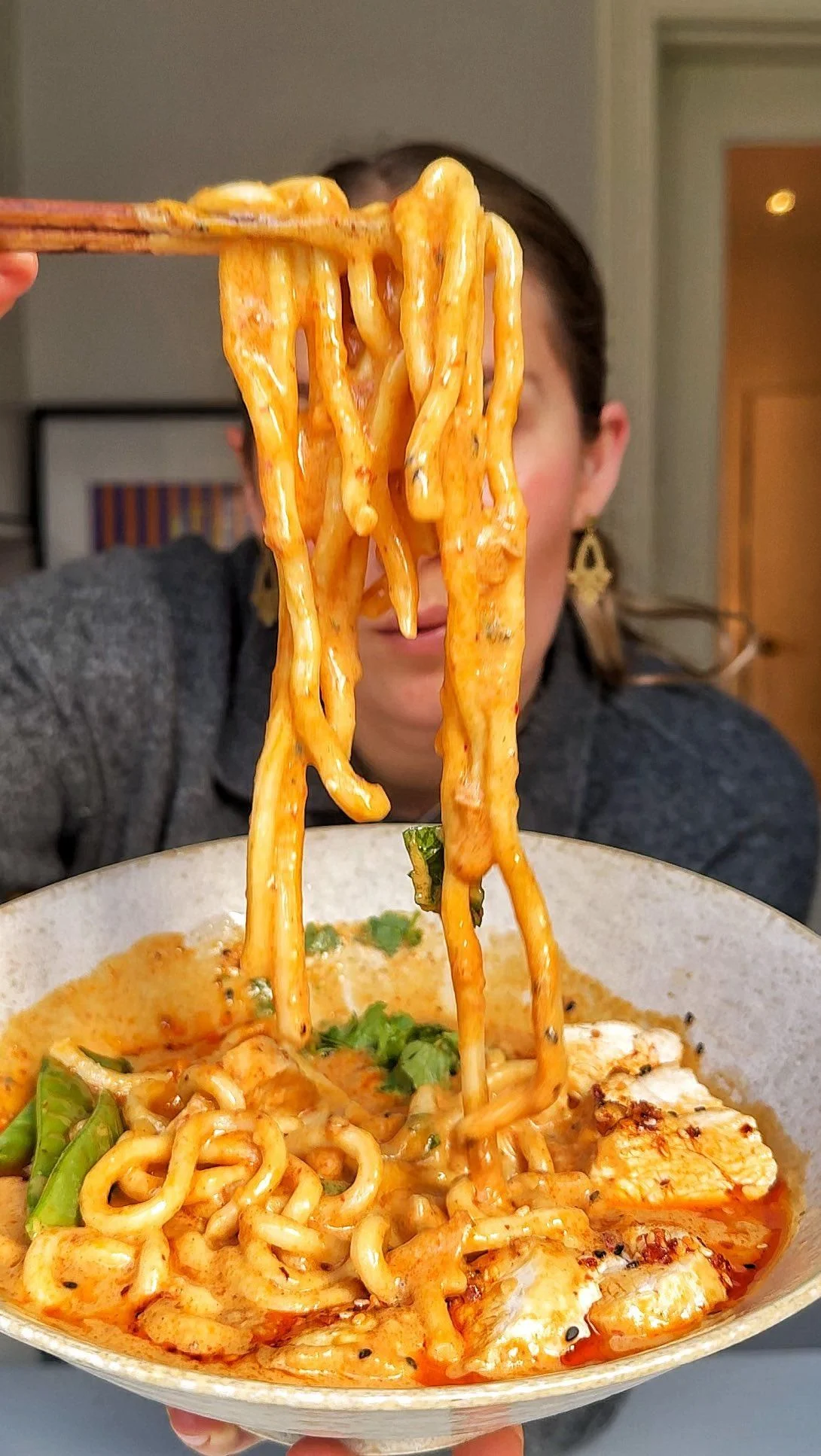
Spicy Peanut Butter Ramen Noodles
Spicy Peanut Butter Ramen noodles tossed in a creamy chili-peanut sauce with crisp veggies and scallions - a 30-minute dinner that beats takeout.
🧂 Ingredients
- 12 oz (340g) dried ramen noodles, seasoning packets discarded
- 1/2 cup (130g) natural creamy peanut butter
- 3 tbsp soy sauce
- 2 tbsp rice vinegar
- 1 tbsp honey
- 2 to 3 tbsp chili garlic sauce or sriracha, to taste
- 3 cloves garlic, finely grated
- 1 lb (450g) ground pork
- 1 cup (110g) shredded carrot and 1 Persian cucumber, thinly sliced
- 4 scallions, thinly sliced, plus 1/3 cup (45g) roasted peanuts, crushed
- 1 tbsp neutral oil, plus lime wedges for serving
📋 Instructions
- 1Boil the noodles — Bring 4 quarts (3.8L) of water to a rolling boil at 212F (100C), salt it, and cook the ramen 3 to 4 minutes until just tender with a slight bite. Reserve 1 cup of cooking water, then drain.
- 2Whisk the peanut sauce — While the water heats, whisk the peanut butter, soy sauce, rice vinegar, honey, chili garlic sauce, and grated garlic in a large serving bowl until smooth. It will look thick and pasty - that is correct.
- 3Brown the pork — Heat the oil in a 12-inch skillet over medium-high heat to 375F (190C). Add the pork and press into an even layer; cook undisturbed 3 minutes, then break up and cook 5 to 6 minutes more until no pink remains and the crumbles are golden brown at the edges.
- 4Bloom the aromatics — Reduce the heat to medium (300F/150C), add the scallion whites and shredded carrot, and stir 2 minutes until the carrot softens and smells sweet. Scrape up the browned bits as you go.
- 5Loosen the sauce — Whisk 1/2 cup of the reserved hot noodle water into the peanut mixture, adding more 1 tablespoon at a time until it pours like heavy cream and coats the back of a spoon.
- 6Toss everything together — Add the hot noodles and pork mixture to the sauce bowl and toss with tongs for 30 to 60 seconds until every strand is glossy and coated. If it tightens, splash in more noodle water.
- 7Top and serve — Pile on the cucumber, scallion greens, and crushed peanuts, then squeeze lime over the top. Serve immediately while the noodles are still hot and the peanuts are crisp.