Cozy Cravings Recipes
Southern Fried Chicken Tenders – Crispy 30-Minute Comfort
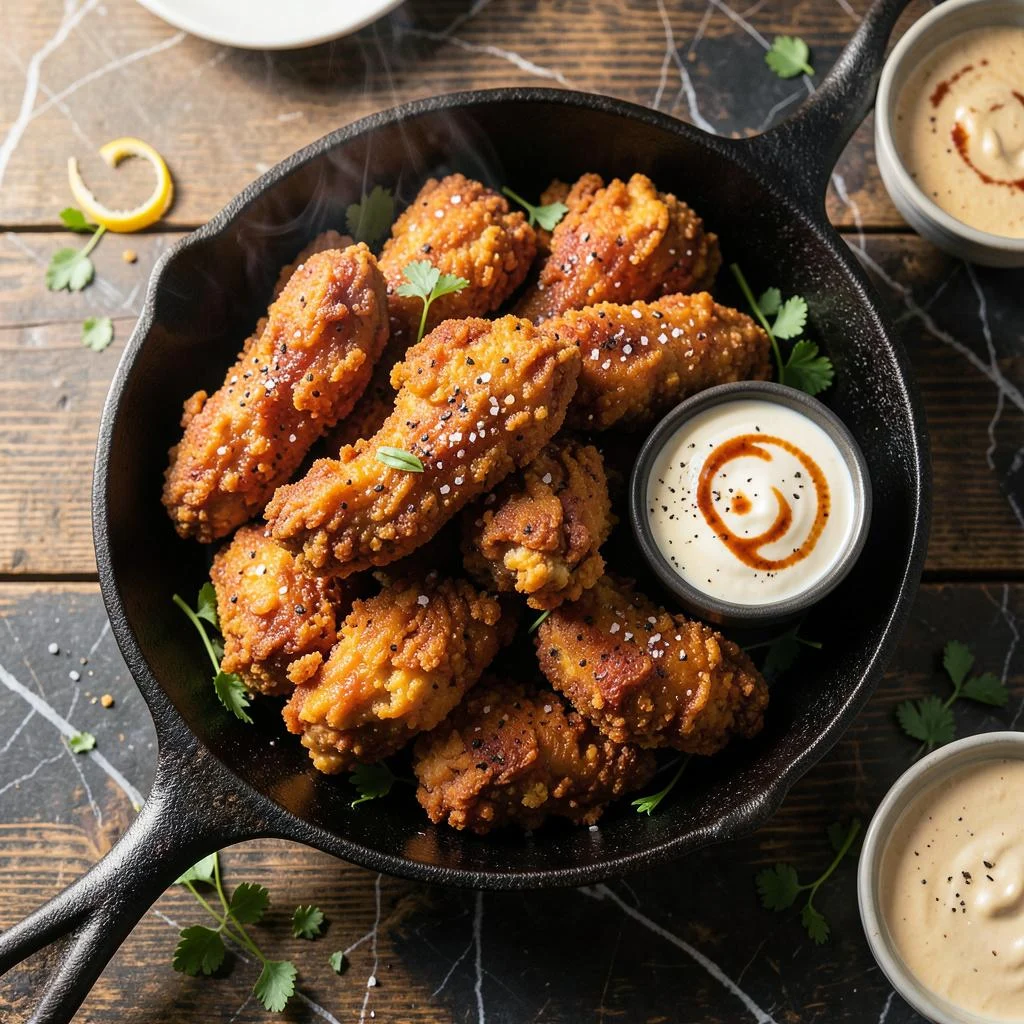
These Southern Fried Chicken Tenders are the kind of food that makes people gather in the kitchen before you have even finished frying the first batch. Chicken strips soak in a seasoned buttermilk bath, get dredged in a flour mixture spiked with paprika, garlic, and a whisper of cayenne, then fry up craggy and golden in about four minutes per side. The crust stays glued to the chicken, and the meat inside stays unmistakably juicy.
The real secret is a two-stage dredge and a short rest. Letting the coated tenders sit for ten minutes before frying hydrates the flour into a shaggy, almost batter-like shell that puffs and crisps rather than sliding off in the oil. A cast-iron skillet or Dutch oven with an inch of oil gives you a deep-fried result with far less mess and far more control over the temperature.
Serve them piled on a platter with honey mustard, pickles, and a squeeze of lemon, or tuck them into a biscuit for the best sandwich of the week. This recipe feeds six hungry people generously, and the leftovers, if there are any, reheat surprisingly well in a hot oven.
Why You'll Love This Recipe
About the Ingredients
2 lb (900g) chicken tenderloins, trimmed of any white sinew
Tenderloins are the small strip under each breast; if unavailable, slice boneless skinless breasts into 1-inch strips. Pat them dry so the buttermilk adheres.
1 1/2 cups (360ml) buttermilk
Full-fat buttermilk gives the best tang and tenderizing power; substitute 1 1/2 cups whole milk mixed with 1 1/2 tablespoons lemon juice, rested 10 minutes.
2 teaspoons kosher salt, plus more for finishing
Kosher salt dissolves more evenly than table salt in a marinade; if using fine table salt, reduce to 1 1/2 teaspoons.
1 teaspoon hot sauce, such as Frank's
Hot sauce seasons the soak without making it spicy; swap in 1 teaspoon apple cider vinegar if you prefer no heat at all.
1 1/2 cups (190g) all-purpose flour
All-purpose is ideal for a sturdy crust; for a gluten-free version, use a 1:1 gluten-free flour blend with 2 tablespoons cornstarch.
1/2 cup (65g) cornstarch
Cornstarch is the crispness insurance policy, keeping the coating crunchy longer; potato starch works as a direct swap.
2 teaspoons smoked paprika
Smoked paprika adds color and a subtle campfire note; sweet paprika is a fine substitute if you want a milder flavor.
1 teaspoon garlic powder
Granulated garlic blends into the flour better than fresh; onion powder can replace half of it for a rounder flavor.
1/2 teaspoon cayenne pepper
This is a gentle warmth, not heat; leave it out entirely for kids or double it for a spicier crust.
1 teaspoon freshly ground black pepper
Fresh-cracked pepper is far more aromatic than pre-ground; white pepper gives a sharper, more Southern-style bite.
4 cups (960ml) peanut or canola oil, for frying
Peanut oil has a high smoke point and a neutral-sweet flavor; canola or vegetable oil are safe, cheaper alternatives.
Tips & Tricks
Keep the oil at 350F (175C)
Too hot and the crust browns before the chicken cooks through; too cool and the coating turns greasy. Clip a candy or instant-read thermometer to the pan and adjust the burner as you go.
Rest the coated tenders for 10 minutes
This short rest lets the flour hydrate into the buttermilk, which is what makes the crust craggy and firmly attached instead of dusty and prone to falling off.
Fry in small batches of 4 to 5 tenders
Crowding drops the oil temperature and steams the chicken. Give each piece room to swim, and let the oil come back to 350F (175C) between batches.
Drain on a wire rack, not paper towels
A rack lets steam escape from all sides so the bottom stays crisp; paper towels trap moisture and soften the crust within minutes.
Pro Tips
Step-by-Step Instructions
1. Marinate the chicken
Whisk the buttermilk, kosher salt, hot sauce, and 1/2 teaspoon of the black pepper in a bowl. Add the tenderloins, toss to coat, cover, and refrigerate for at least 20 minutes or up to 4 hours.
2. Build the dredge
In a wide shallow dish, whisk the flour, cornstarch, smoked paprika, garlic powder, cayenne, remaining black pepper, and 1 teaspoon salt until evenly combined.
3. Coat and rest
Lift each tender from the buttermilk, letting the excess drip off, then press firmly into the flour mixture on both sides. Set the coated tenders on a wire rack and rest 10 minutes so the coating hydrates.
4. Heat the oil
Pour 1 inch (about 4 cups) of oil into a deep 12-inch cast-iron skillet or Dutch oven and heat over medium-high to 350F (175C), measured with a thermometer.
5. Fry the first batch
Lower 4 to 5 tenders into the oil and fry 3 to 4 minutes per side, until deep golden brown and the edges bubble vigorously, 8 to 9 minutes total. The internal temperature should read 165F (74C).
6. Drain and season
Transfer the fried tenders to a clean wire rack set over a sheet pan and sprinkle immediately with flaky salt. Let the oil return to 350F (175C) before frying the next batch.
7. Fry the remaining batches
Repeat with the remaining tenders, keeping finished pieces warm in a 200F (95C) oven if needed. Serve hot with honey mustard, pickles, and lemon wedges.
Delicious Variations
Nashville Hot
Brush the hot fried tenders with a paste of 3 tablespoons melted butter, 1 tablespoon cayenne, and 1 teaspoon brown sugar for a fiery, glossy finish.
Parmesan Herb
Add 1/2 cup finely grated Parmesan and 1 teaspoon dried oregano to the flour dredge for an Italian-leaning tender that loves marinara.
Korean Gochujang Glaze
Toss the fried tenders in a sauce of 3 tablespoons gochujang, 2 tablespoons honey, 1 tablespoon soy sauce, and 1 teaspoon sesame oil.
How to Store Southern Fried Chicken Tenders
Refrigerator
Store cooled tenders in an airtight container in the refrigerator for up to 3 days; keep them in a single layer or separated by parchment so the crust does not steam.
Freezer
Freeze fried, cooled tenders on a sheet pan for 1 hour, then transfer to a zip-top bag for up to 2 months. Reheat from frozen without thawing.
Reheating
Reheat on a wire rack in a 375F (190C) oven for 10 to 12 minutes, or in an air fryer at 375F (190C) for 5 to 6 minutes, until the crust re-crisps and the center is hot.
Frequently Asked Questions
Q: Why does my fried chicken coating fall off?
The coating usually falls off because the chicken was too wet or the coated pieces went straight into the oil without resting. Pat the chicken dry before marinating, let the excess buttermilk drip off, press the flour on firmly, and rest the coated tenders for 10 minutes so the crust sets.
Q: What is the best oil for frying chicken tenders?
Peanut oil is the best all-around choice because it has a high smoke point and a mild flavor, but canola, vegetable, and corn oil all work well. Avoid olive oil and butter, which burn at frying temperatures around 350F (175C).
Q: How do I know when chicken tenders are fully cooked?
Chicken tenders are done when the thickest part registers 165F (74C) on an instant-read thermometer. At 350F (175C) oil, that usually takes 8 to 9 minutes total, and the crust will be deep golden brown with vigorously bubbling edges.
Q: Can I make these Southern fried chicken tenders in an air fryer?
Yes, air-fry them at 400F (205C) for 10 to 12 minutes, flipping halfway, after spraying the coating generously with oil. The crust will be crisp but slightly less craggy than fried, so double-dredge for extra texture.
Q: Can I use chicken breasts instead of tenderloins?
Yes, slice boneless skinless chicken breasts into 1-inch-thick strips and pound them to an even 1/2-inch thickness. They may need 1 to 2 extra minutes of frying, so rely on the 165F (74C) internal temperature rather than the clock.
Grab your cast-iron skillet, get that oil to 350F (175C), and fry up a batch of these Southern Fried Chicken Tenders tonight. Snap a photo of that golden crust and let me know in the comments which dipping sauce won the table.
Southern Fried Chicken Tenders
Southern Fried Chicken Tenders deliver a shatteringly crisp buttermilk crust around juicy chicken in 50 minutes, no deep fryer required.
🧂 Ingredients
- 2 lb (900g) chicken tenderloins, trimmed of any white sinew
- 1 1/2 cups (360ml) buttermilk
- 2 teaspoons kosher salt, plus more for finishing
- 1 teaspoon hot sauce, such as Frank's
- 1 1/2 cups (190g) all-purpose flour
- 1/2 cup (65g) cornstarch
- 2 teaspoons smoked paprika
- 1 teaspoon garlic powder
- 1/2 teaspoon cayenne pepper
- 1 teaspoon freshly ground black pepper
- 4 cups (960ml) peanut or canola oil, for frying
📋 Instructions
- 1Marinate the chicken — Whisk the buttermilk, kosher salt, hot sauce, and 1/2 teaspoon of the black pepper in a bowl. Add the tenderloins, toss to coat, cover, and refrigerate for at least 20 minutes or up to 4 hours.
- 2Build the dredge — In a wide shallow dish, whisk the flour, cornstarch, smoked paprika, garlic powder, cayenne, remaining black pepper, and 1 teaspoon salt until evenly combined.
- 3Coat and rest — Lift each tender from the buttermilk, letting the excess drip off, then press firmly into the flour mixture on both sides. Set the coated tenders on a wire rack and rest 10 minutes so the coating hydrates.
- 4Heat the oil — Pour 1 inch (about 4 cups) of oil into a deep 12-inch cast-iron skillet or Dutch oven and heat over medium-high to 350F (175C), measured with a thermometer.
- 5Fry the first batch — Lower 4 to 5 tenders into the oil and fry 3 to 4 minutes per side, until deep golden brown and the edges bubble vigorously, 8 to 9 minutes total. The internal temperature should read 165F (74C).
- 6Drain and season — Transfer the fried tenders to a clean wire rack set over a sheet pan and sprinkle immediately with flaky salt. Let the oil return to 350F (175C) before frying the next batch.
- 7Fry the remaining batches — Repeat with the remaining tenders, keeping finished pieces warm in a 200F (95C) oven if needed. Serve hot with honey mustard, pickles, and lemon wedges.