Cozy Cravings Recipes
Red Curry Noodles – Creamy 30-Minute Weeknight Dinner

These red curry noodles came from a night when I wanted takeout but refused to leave the couch. A jar of Thai red curry paste, a can of coconut milk, and a package of rice noodles turned into something better than delivery in under an hour. The sauce clings to every strand, and the whole thing cooks in one skillet, which means fewer dishes and more time eating.
The trick is blooming the curry paste in hot coconut cream before adding the rest of the liquid. That 90-second sizzle is what separates flat, muddy noodles from a sauce that tastes like it came from a restaurant kitchen. Bell peppers go in early for sweetness, and a squeeze of lime at the end keeps everything bright instead of heavy.
I make this on repeat for weeknights because it is forgiving. Swap the protein, change the vegetables, dial the paste up or down, and it still works. If you keep coconut milk and curry paste in the pantry, dinner is never far away.
Why You'll Love This Recipe
About the Ingredients
8 oz (225g) wide rice noodles
Use the flat, wide dried rice sticks labeled banh pho. If you cannot find them, linguine or ramen noodles work as a substitute, but cook them just shy of al dente since they will finish in the sauce.
1 lb (450g) boneless chicken thighs, sliced thin
Thighs stay juicy under high heat; chicken breast works but cook it 2 minutes less. Look for thighs with good marbling and no gray patches for the best texture.
1 tbsp neutral oil
Canola, grapeseed, or avocado oil all handle high heat well. Skip olive oil here, as its flavor fights the curry paste.
3 tbsp Thai red curry paste
Mae Ploy or Maesri brands are reliable and widely available. If you are sensitive to heat, start with 2 tablespoons and taste after blooming.
1 can (13.5 oz / 400ml) full-fat coconut milk, shaken
Full-fat is essential for body; light coconut milk makes a thin sauce. Buy a brand with no added gums or stabilizers if you can, as it separates less when simmered.
1 cup (240ml) low-sodium chicken broth
Vegetable broth or water plus a teaspoon of fish sauce is a fine substitute. Low-sodium matters here because the curry paste and fish sauce are already salty.
1 large red bell pepper, sliced thin
Red peppers are sweeter than green ones and hold their shape. Frozen sliced peppers work in a pinch but add them 3 minutes later so they do not turn mushy.
1 tbsp fish sauce
Three Crabs or Red Boat are excellent. Soy sauce or coconut aminos can replace it for a vegetarian version, though the flavor will be less complex.
1 tbsp brown sugar
Palm sugar is traditional and rounder in flavor, but brown sugar is a perfect pantry substitute. Honey also works; use slightly less since it is sweeter.
2 cups (60g) fresh spinach
Baby spinach wilts fast and needs no chopping. Frozen spinach is a substitute but squeeze it dry first so the sauce does not turn watery.
1 lime, juiced, plus wedges for serving
Fresh lime juice is non-negotiable for the finish; bottled juice tastes flat. Roll the lime on the counter before juicing to get more out of it.
1/4 cup (10g) fresh cilantro, chopped
Thai basil is a fragrant substitute and arguably more authentic. Skip if you are in the cilantro-tastes-like-soap camp and use sliced scallions instead.
Tips & Tricks
Bloom the Paste Properly
Fry the curry paste in the thick coconut cream that rises to the top of the can until it smells nutty and the oil separates, about 90 seconds. Rushing this step leaves the sauce tasting raw and flat.
Do Not Overcook the Noodles
Soak rice noodles in hot tap water for 15 minutes instead of boiling them, then finish them in the sauce. Boiled noodles go straight to mushy when they hit the hot pan.
Balance at the End, Not the Start
Taste after the noodles are in and adjust with lime, fish sauce, or sugar. The sauce concentrates as it reduces, so seasoning early leads to oversalting.
Slice Against the Grain
Cut chicken thighs across the muscle fibers into thin strips so they stay tender in the short cook time.
Pro Tips
Step-by-Step Instructions
1. Soak the Noodles
Place the rice noodles in a large bowl and cover with hot tap water (about 120F / 49C). Soak for 15 minutes until pliable but still firm in the center, then drain, reserving 1/2 cup of the water.
2. Sear the Chicken
Heat the oil in a large skillet over medium-high heat (about 375F / 190C). Add the chicken in a single layer and cook 4 minutes without moving, then stir and cook 2 more minutes until golden brown at the edges and the internal temperature reads 165F / 74C. Transfer to a plate.
3. Bloom the Curry Paste
Lower the heat to medium (about 325F / 165C). Spoon the thick cream from the top of the coconut milk can into the skillet and add the curry paste. Fry, stirring constantly, for 90 seconds until the paste darkens and smells nutty and the oil glistens at the edges.
4. Build the Sauce
Pour in the remaining coconut milk and the broth, whisking to dissolve the paste. Add the fish sauce and brown sugar, bring to a gentle simmer (about 200F / 93C), and cook 5 minutes until the sauce thickens slightly and coats the back of a spoon.
5. Add Peppers and Chicken
Stir in the bell pepper and return the chicken with any juices. Simmer 4 minutes until the peppers are crisp-tender and the sauce bubbles gently at the edges.
6. Toss in the Noodles
Add the drained noodles and toss with tongs for 2 to 3 minutes until they are tender, coated, and have absorbed some sauce. If the pan looks dry, splash in the reserved noodle water a tablespoon at a time.
7. Wilt the Spinach
Fold in the spinach and cook 60 to 90 seconds until just wilted and bright green. Do not walk away; spinach goes from bright to drab fast.
8. Finish and Serve
Remove from the heat and stir in the lime juice and cilantro. Taste and adjust with more fish sauce or lime, then serve immediately with lime wedges.
Delicious Variations
Shrimp and Snow Pea
Swap the chicken for 1 lb of peeled shrimp added in the last 3 minutes, and use snow peas instead of bell pepper for extra crunch.
Tofu and Mushroom Vegetarian
Use firm tofu pressed and cubed plus 8 oz of sliced cremini mushrooms, and replace fish sauce with soy sauce.
Spicy Peanut Red Curry
Stir 3 tablespoons of creamy peanut butter into the sauce with the broth for a richer, nuttier noodle bowl topped with crushed peanuts.
How to Store Red Curry Noodles
Refrigerator
Store in an airtight container in the refrigerator for up to 3 days. The noodles absorb sauce as they sit, so keep a splash of broth or water handy when reheating.
Freezer
Freezing is not recommended because the rice noodles turn mushy and the coconut sauce can separate. If you must, freeze the sauce and chicken without noodles for up to 2 months.
Reheating
Reheat gently in a skillet over medium-low heat (about 300F / 150C) with 2 tablespoons of water or broth, tossing for 3 to 4 minutes until loosened. Avoid the microwave, which makes the noodles gummy.
Frequently Asked Questions
Q: What are red curry noodles made of?
Red curry noodles are made of rice noodles tossed in a sauce of Thai red curry paste, coconut milk, broth, fish sauce, and sugar, usually with chicken and vegetables. The paste is built from dried red chiles, garlic, lemongrass, galangal, and shrimp paste.
Q: Are red curry noodles very spicy?
Red curry noodles are moderately spicy, but you control the heat entirely with how much paste you use. Three tablespoons of a standard Thai brand gives a warm, noticeable burn; use 1 to 2 tablespoons for a mild version.
Q: Can I make red curry noodles without fish sauce?
Yes, soy sauce or coconut aminos can replace fish sauce one-for-one, though the flavor will be slightly less deep. For a vegan version, also check that your curry paste contains no shrimp paste.
Q: What noodles are best for red curry?
Wide dried rice noodles are the best choice because they soak up the sauce and stay springy. Egg noodles, ramen, or linguine also work well if you cook them just shy of al dente before tossing them in the sauce.
Q: How do I keep rice noodles from sticking together?
Soak the noodles in hot water rather than boiling them, drain well, and toss them with the sauce immediately. If they sit drained for long, rinse them briefly with warm water and separate with your fingers before adding.
If you make these red curry noodles, I want to hear how you customized them. Tag me in your photos or leave a comment below with the protein and vegetables you used, and save this recipe for your next busy weeknight.
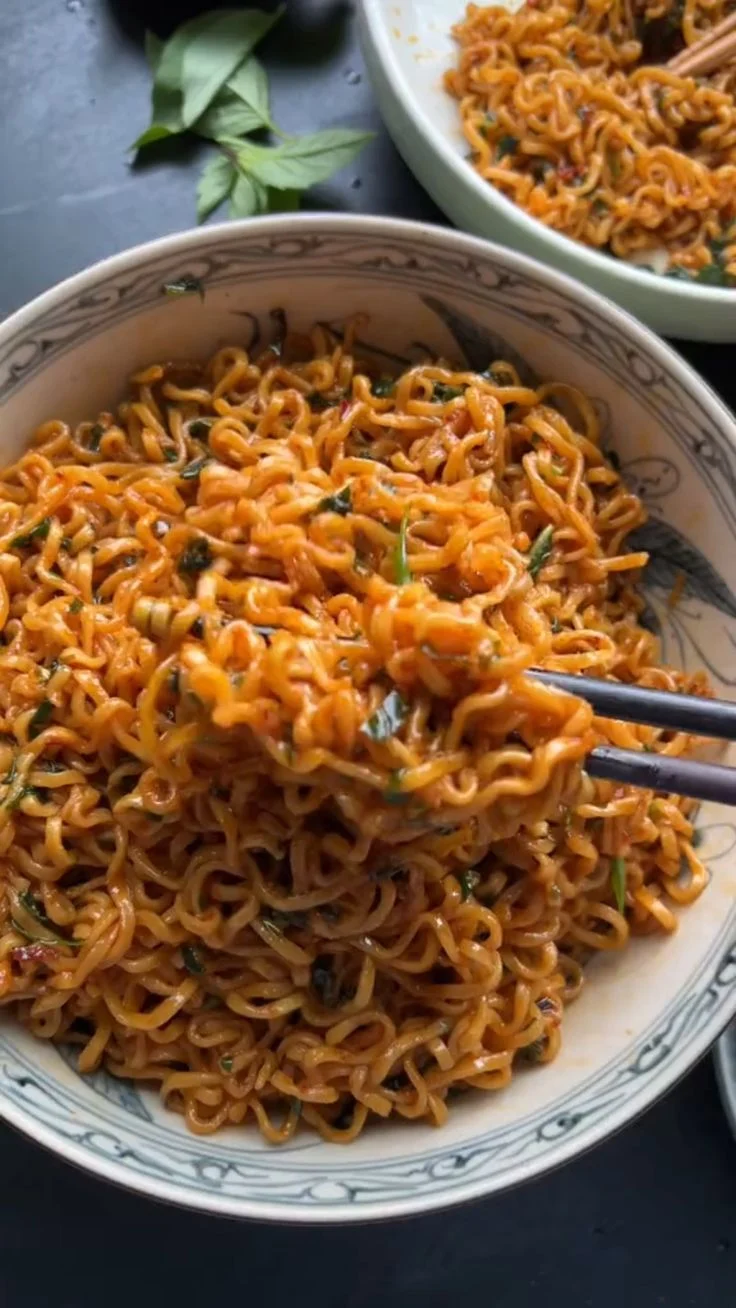
Red Curry Noodles
Red curry noodles are a creamy, coconut-rich one-pan dinner ready in 50 minutes, loaded with tender chicken, crisp peppers, and slurpable rice noodles.
🧂 Ingredients
- 8 oz (225g) wide rice noodles
- 1 lb (450g) boneless chicken thighs, sliced thin
- 1 tbsp neutral oil
- 3 tbsp Thai red curry paste
- 1 can (13.5 oz / 400ml) full-fat coconut milk, shaken
- 1 cup (240ml) low-sodium chicken broth
- 1 large red bell pepper, sliced thin
- 1 tbsp fish sauce
- 1 tbsp brown sugar
- 2 cups (60g) fresh spinach
- 1 lime, juiced, plus wedges for serving
- 1/4 cup (10g) fresh cilantro, chopped
📋 Instructions
- 1Soak the Noodles — Place the rice noodles in a large bowl and cover with hot tap water (about 120F / 49C). Soak for 15 minutes until pliable but still firm in the center, then drain, reserving 1/2 cup of the water.
- 2Sear the Chicken — Heat the oil in a large skillet over medium-high heat (about 375F / 190C). Add the chicken in a single layer and cook 4 minutes without moving, then stir and cook 2 more minutes until golden brown at the edges and the internal temperature reads 165F / 74C. Transfer to a plate.
- 3Bloom the Curry Paste — Lower the heat to medium (about 325F / 165C). Spoon the thick cream from the top of the coconut milk can into the skillet and add the curry paste. Fry, stirring constantly, for 90 seconds until the paste darkens and smells nutty and the oil glistens at the edges.
- 4Build the Sauce — Pour in the remaining coconut milk and the broth, whisking to dissolve the paste. Add the fish sauce and brown sugar, bring to a gentle simmer (about 200F / 93C), and cook 5 minutes until the sauce thickens slightly and coats the back of a spoon.
- 5Add Peppers and Chicken — Stir in the bell pepper and return the chicken with any juices. Simmer 4 minutes until the peppers are crisp-tender and the sauce bubbles gently at the edges.
- 6Toss in the Noodles — Add the drained noodles and toss with tongs for 2 to 3 minutes until they are tender, coated, and have absorbed some sauce. If the pan looks dry, splash in the reserved noodle water a tablespoon at a time.
- 7Wilt the Spinach — Fold in the spinach and cook 60 to 90 seconds until just wilted and bright green. Do not walk away; spinach goes from bright to drab fast.
- 8Finish and Serve — Remove from the heat and stir in the lime juice and cilantro. Taste and adjust with more fish sauce or lime, then serve immediately with lime wedges.