Cozy Cravings Recipes
Quick and Easy Vegan Peanut Noodles – 30-Minute Creamy

These Quick and Easy Vegan Peanut Noodles are the weeknight dinner I make when the fridge is half empty and the clock is already past seven. A silky peanut sauce comes together in one bowl while the noodles boil, and the whole thing lands on the table in about half an hour with nothing but a pot and a whisk to wash.
The trick is balance: creamy natural peanut butter gets sharpened with rice vinegar and lime, deepened with soy sauce and garlic, and loosened with hot pasta water so it clings to every strand instead of sitting in a lump at the bottom of the bowl. Thin rice noodles soak up that sauce beautifully, but spaghetti or linguine work just as well if that is what you have.
Pile on shredded cabbage, julienned carrot, and scallions for crunch, then finish with crushed peanuts and a squeeze of lime. It is filling enough to be dinner on its own, and it holds up beautifully in the fridge for lunches the next day.
Why You'll Love This Recipe
About the Ingredients
8 oz (225g) thin rice noodles or spaghetti
Thin rice noodles give the most authentic texture and cook in about 4 minutes; spaghetti or linguine are great substitutes and need 9 to 11 minutes. Look for rice noodles that list only rice and water to avoid an gummy, starchy bite.
1/2 cup (130g) natural creamy peanut butter
Use unsweetened natural peanut butter and stir the oil back in before measuring, or the sauce will turn out dry and stiff. Almond butter or sunflower seed butter (for nut-free) swaps in one-for-one.
3 tbsp (45ml) low-sodium soy sauce or tamari
Tamari keeps the dish gluten-free and tastes slightly richer; coconut aminos work for a soy-free version but are sweeter, so add a splash less. Taste the sauce before adding salt, since soy sauce varies a lot in sodium.
2 tbsp (30ml) rice vinegar
Rice vinegar is mild and slightly sweet, which is why it works here; if you only have apple cider vinegar, use 1 1/2 tablespoons and add a pinch of sugar. Do not use distilled white vinegar straight, it is too harsh.
1 tbsp (15ml) toasted sesame oil
Toasted sesame oil is dark and intensely fragrant, so a little goes a long way; regular sesame oil is far milder and needs double the amount. Store it in the fridge once opened so it does not go rancid.
2 tbsp (30ml) maple syrup or agave
Maple syrup brings a rounder flavor, agave a cleaner sweetness; either balances the vinegar and lime. Honey works if you are not strictly vegan, and brown sugar can substitute in a pinch.
2 cloves garlic, finely grated (about 2 tsp)
Fresh garlic makes a real difference here, so grate it on a microplane so it disappears into the sauce rather than leaving raw chunks. Jarred garlic is a backup but tastes flatter and slightly metallic.
1 tbsp (15ml) fresh lime juice, plus wedges to serve
Add the lime at the end and taste before adding more, since it brightens the whole bowl. Bottled lime juice is noticeably duller, so squeeze fresh if you can.
1/2 to 1 tsp red pepper flakes or 1 tsp sriracha
Start with 1/2 teaspoon and adjust, because peanut butter mutes heat more than you expect. Sriracha adds garlicky sweetness, while gochugaru gives a fruitier, milder burn.
2 cups (140g) shredded green cabbage
Bagged coleslaw mix saves five minutes and adds carrot too, so it is a smart shortcut. If shredding your own, use a sharp knife or mandoline for thin, tender ribbons.
1 medium carrot, julienned (about 1/2 cup)
A julienne peeler makes quick work of this; matchsticks soften slightly in the hot noodles, so keep them thin. Pre-cut carrot sticks from the store can be sliced into thin strips instead.
1/3 cup (45g) roasted peanuts, roughly crushed, plus 3 scallions, thinly sliced
Roasted unsalted peanuts give crunch without extra salt; dry-toast them in a skillet for 3 minutes to revive stale ones. Cashews or crispy fried shallots are excellent swaps.
Tips & Tricks
Loosen the sauce before tossing
Whisk the peanut butter with 1/4 cup of the hot noodle water first, then add the noodles, so the sauce coats evenly instead of clumping.
Do not overcook the noodles
Rice noodles go from perfect to mushy in under a minute, so start tasting 30 seconds before the package time and drain as soon as they are tender but still springy.
Season in layers
Salt the boiling water lightly, taste the sauce before it hits the noodles, and finish with lime and crushed peanuts so the final bite is bright and crunchy.
Keep some pasta water
A splash of starchy cooking water rescues a sauce that tightens up after sitting, and it is the easiest fix for leftovers.
Pro Tips
Step-by-Step Instructions
1. Boil the noodles
Bring a large pot of water to a rolling boil over high heat, about 8 minutes, salt it lightly, and cook the rice noodles for 4 to 5 minutes (spaghetti 9 to 11 minutes). They are done when tender but still have a slight spring in the center; scoop out 1/2 cup of the cooking water, then drain.
2. Whisk the peanut sauce
While the water heats, whisk the peanut butter, soy sauce, rice vinegar, sesame oil, maple syrup, garlic, lime juice, and red pepper flakes in a large bowl until completely smooth, about 2 minutes. It should look glossy and pourable; if it seizes, add hot water one tablespoon at a time.
3. Sauté the vegetables
Heat 1 tablespoon of neutral oil in a large skillet over medium-high heat (375F/190C) and add the cabbage and carrot. Cook for 3 to 4 minutes, stirring often, until the cabbage is wilted at the edges and bright green but still has a bite, then remove from the heat.
4. Loosen and combine
Whisk 3 to 4 tablespoons of the hot noodle water into the peanut sauce until it turns silky and pale, then add the drained noodles and toss with tongs for 1 minute until every strand is coated. If the sauce looks thick, add another splash of water.
5. Fold in the vegetables
Add the warm cabbage and carrot to the noodles and toss gently for 30 seconds, just until evenly distributed. Taste and adjust with a pinch of salt or a squeeze of lime; the sauce should taste bright, savory, and a little sweet.
6. Finish and serve
Divide among bowls and top with crushed peanuts and sliced scallions, plus lime wedges on the side. Serve warm; the noodles are best within 20 minutes, while the peanuts are still crunchy.
Delicious Variations
Spicy Sesame Peanut Noodles
Swap half the peanut butter for tahini and add 1 teaspoon of chili crisp at the end for a nuttier, hotter bowl.
Peanut Noodle Salad
Rinse the cooked noodles in cold water, toss with the sauce, and add thinly sliced cucumber and mint for a chilled summer version.
Tofu Peanut Noodles
Pan-fry cubed extra-firm tofu in 1 tablespoon of oil over medium-high heat (375F/190C) for 8 minutes until golden on all sides, then fold it in for extra protein.
How to Store Quick and Easy Vegan Peanut Noodles
Refrigerator
Store in an airtight container for up to 4 days; press plastic wrap onto the surface to keep the noodles from drying out.
Freezer
Freeze the sauced noodles without the fresh toppings for up to 2 months in a freezer-safe container; thaw overnight in the fridge.
Reheating
Reheat in a skillet over medium heat (350F/175C) with 2 tablespoons of water for 3 to 4 minutes, tossing until glossy, or microwave in 30-second bursts with a splash of water.
Frequently Asked Questions
Q: Can I make vegan peanut noodles ahead of time?
Yes, you can make the sauce and cook the noodles up to 3 days ahead and store them separately in the fridge. Keep the sauce in a jar and the noodles in a sealed container, then loosen the sauce with hot water and toss together just before serving so the texture stays right.
Q: What can I use instead of peanut butter in peanut noodles?
Almond butter, cashew butter, or sunflower seed butter all work one-for-one in this recipe. Sunflower seed butter is the best choice for a nut-free version, though it is slightly more bitter, so add an extra teaspoon of maple syrup to balance it.
Q: Are rice noodles or spaghetti better for peanut noodles?
Thin rice noodles are the classic choice because they soak up the sauce and cook in about 4 minutes, but spaghetti works just as well and holds up better in leftovers. Use whatever you have; just reserve some pasta water either way to loosen the sauce.
Q: How do I fix peanut sauce that is too thick or too salty?
Whisk in hot water one tablespoon at a time until the sauce turns glossy and pourable, which fixes thickness in seconds. For a sauce that tastes too salty, add a teaspoon of maple syrup, a squeeze of lime, and a spoonful more peanut butter to rebalance it.
Q: Is this peanut noodle recipe gluten-free?
It is gluten-free as long as you use tamari instead of soy sauce and confirm your rice noodles are labeled gluten-free. Check the peanut butter label too, since some brands add malt or other gluten-containing ingredients.
If you make these Quick and Easy Vegan Peanut Noodles, snap a photo and tag me so I can see your bowl. Save the recipe for your next 30-minute dinner emergency, and leave a comment below telling me whether you went spicy or extra lime.
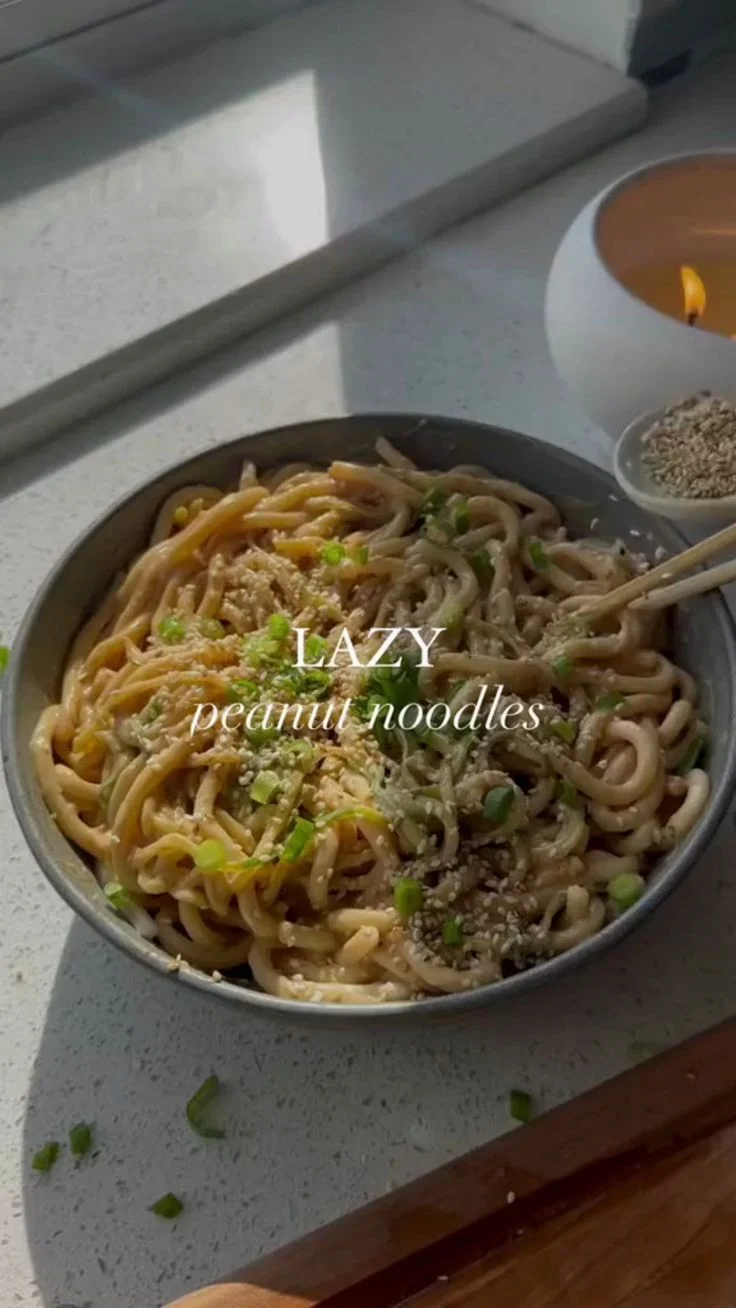
Quick and Easy Vegan Peanut Noodles
Quick and Easy Vegan Peanut Noodles are a creamy, 30-minute dinner with a savory peanut-lime sauce, crisp veggies, and tender noodles everyone loves.
🧂 Ingredients
- 8 oz (225g) thin rice noodles or spaghetti
- 1/2 cup (130g) natural creamy peanut butter
- 3 tbsp (45ml) low-sodium soy sauce or tamari
- 2 tbsp (30ml) rice vinegar
- 1 tbsp (15ml) toasted sesame oil
- 2 tbsp (30ml) maple syrup or agave
- 2 cloves garlic, finely grated (about 2 tsp)
- 1 tbsp (15ml) fresh lime juice, plus wedges to serve
- 1/2 to 1 tsp red pepper flakes or 1 tsp sriracha
- 2 cups (140g) shredded green cabbage
- 1 medium carrot, julienned (about 1/2 cup)
- 1/3 cup (45g) roasted peanuts, roughly crushed, plus 3 scallions, thinly sliced
📋 Instructions
- 1Boil the noodles — Bring a large pot of water to a rolling boil over high heat, about 8 minutes, salt it lightly, and cook the rice noodles for 4 to 5 minutes (spaghetti 9 to 11 minutes). They are done when tender but still have a slight spring in the center; scoop out 1/2 cup of the cooking water, then drain.
- 2Whisk the peanut sauce — While the water heats, whisk the peanut butter, soy sauce, rice vinegar, sesame oil, maple syrup, garlic, lime juice, and red pepper flakes in a large bowl until completely smooth, about 2 minutes. It should look glossy and pourable; if it seizes, add hot water one tablespoon at a time.
- 3Sauté the vegetables — Heat 1 tablespoon of neutral oil in a large skillet over medium-high heat (375F/190C) and add the cabbage and carrot. Cook for 3 to 4 minutes, stirring often, until the cabbage is wilted at the edges and bright green but still has a bite, then remove from the heat.
- 4Loosen and combine — Whisk 3 to 4 tablespoons of the hot noodle water into the peanut sauce until it turns silky and pale, then add the drained noodles and toss with tongs for 1 minute until every strand is coated. If the sauce looks thick, add another splash of water.
- 5Fold in the vegetables — Add the warm cabbage and carrot to the noodles and toss gently for 30 seconds, just until evenly distributed. Taste and adjust with a pinch of salt or a squeeze of lime; the sauce should taste bright, savory, and a little sweet.
- 6Finish and serve — Divide among bowls and top with crushed peanuts and sliced scallions, plus lime wedges on the side. Serve warm; the noodles are best within 20 minutes, while the peanuts are still crunchy.