Cozy Cravings Recipes
Old Fashioned Beef Stew – Tender One-Pot Comfort
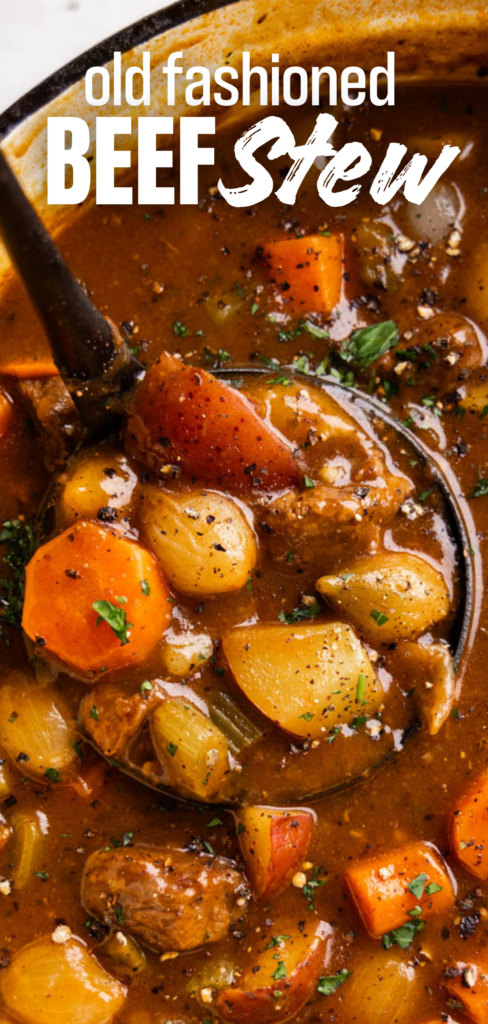
There is a reason this stew has never left the family recipe box. Chunks of chuck roast sear until deeply browned, then simmer low with carrots, potatoes, and a splash of tomato paste until the meat gives way to a spoon and the gravy turns glossy and rich.
The secret is patience with two things: browning the beef in batches so it never steams, and letting the flour-coated meat cook long enough to thicken the broth naturally instead of dumping in cornstarch at the end. That is what separates a thin soup from a proper old fashioned stew.
Make it on a lazy Sunday and you will have lunches for days, or freeze half for the week you cannot face the stove. It is humble food that tastes like someone cared.
Why You'll Love This Recipe
About the Ingredients
2.5 lbs (1.1 kg) beef chuck roast, cut into 1.5-inch cubes
Chuck is the ideal cut because its marbling breaks down into gelatin, making the meat silky. If chuck is unavailable, use boneless short ribs or bottom round, but add 20 minutes of simmering time for leaner cuts.
2 tsp kosher salt, plus more to taste
Kosher salt seasons more evenly than table salt because the larger flakes are easier to distribute. If using fine table salt, cut the amount to 1.5 tsp.
1 tsp freshly ground black pepper
Fresh-cracked pepper blooms in the hot oil and tastes far brighter than pre-ground. A coffee grinder reserved for spices works if you do not own a pepper mill.
3 tbsp all-purpose flour
The flour coats the beef and thickens the braising liquid into a velvety gravy as it cooks. For a gluten-free version, swap in 2 tbsp cornstarch and add it as a slurry in the last 10 minutes.
3 tbsp vegetable oil, divided
A high-smoke-point oil is essential for searing without burning. Canola, avocado, or even beef tallow all work beautifully here.
1 large yellow onion, cut into 1-inch chunks
Yellow onion gives the deepest sweet-savory base once browned. Sweet onions will work but brown faster, so watch them closely.
3 medium carrots, peeled and cut into 1-inch rounds
Look for carrots with firm, snap-worthy texture and no limpness at the tip. Parsnips make a lovely earthy substitute if you want to change things up.
1.5 lbs (680 g) Yukon Gold potatoes, cut into 1.5-inch chunks
Yukon Golds hold their shape while turning creamy inside. Russets will dissolve and thicken the broth more, which is fine if you like a thicker stew.
2 tbsp tomato paste
Tomato paste adds body and a subtle sweetness that rounds out the beefy flavor. Sun-dried tomato paste is a great swap if you have it on hand.
4 cups (960 ml) low-sodium beef broth
Low-sodium broth lets you control the final seasoning. Use homemade stock if you have it, or a good-quality Better Than Bouillon concentrate mixed with water.
2 dried bay leaves and 1 tsp dried thyme
Bay and thyme are the classic herbal backbone of old fashioned stew. Fresh thyme works too; use about 3 sprigs tied with kitchen twine for easy removal.
1 tbsp Worcestershire sauce
Worcestershire adds that savory umami depth that makes people ask what is in this. Soy sauce or a splash of balsamic vinegar can stand in if needed.
Tips & Tricks
Do not crowd the pot when searing
Cook the beef in two or three batches so each piece gets a dark crust instead of steaming in its own juices, which is the number one cause of bland stew.
Brown the tomato paste
Letting the tomato paste cook for a full minute in the hot pan before adding liquid caramelizes its sugars and removes the raw tinny edge.
Season at the end, not just the start
The broth reduces significantly during simmering, so taste and adjust salt in the final 10 minutes when the flavors have concentrated.
Keep the lid ajar
Leaving the lid slightly off during the last 20 minutes lets steam escape so the gravy thickens instead of staying watery.
Pro Tips
Step-by-Step Instructions
1. Prep and season the beef
Pat the beef cubes dry with paper towels, then toss with 2 tsp kosher salt, 1 tsp black pepper, and 3 tbsp flour until evenly coated. Let it sit at room temperature for 15 minutes so the flour hydrates and adheres.
2. Heat the Dutch oven
Set a heavy Dutch oven or large pot over medium-high heat and add 2 tbsp vegetable oil. Heat until the oil shimmers and a drop of water sizzles instantly, about 350F (175C).
3. Sear in batches
Add half the beef in a single layer and cook undisturbed for 3 to 4 minutes per side until deeply golden brown, about 8 minutes total per batch. Transfer to a plate and repeat with the remaining oil and beef.
4. Sauté onion and tomato paste
Lower the heat to medium, add the onion to the pot, and cook for 4 to 5 minutes until softened and lightly browned at the edges. Stir in the tomato paste and cook for 1 minute until it darkens to brick red and smells sweet.
5. Deglaze and build the broth
Pour in 1 cup of the beef broth and scrape up every browned bit from the bottom with a wooden spoon. Return the beef and any juices to the pot, then add the remaining broth, Worcestershire, bay leaves, and thyme.
6. Simmer low and slow
Bring to a gentle boil, then reduce heat to low, cover, and simmer for 60 minutes, stirring occasionally, until the beef is nearly fork-tender and the liquid bubbles lazily at the edges.
7. Add the vegetables
Stir in the carrots and potatoes, cover, and simmer for another 30 to 35 minutes until the potatoes are easily pierced with a knife and the carrots yield without resistance. The gravy should coat the back of a spoon.
8. Finish and rest
Remove the bay leaves, taste, and season with salt and pepper. If the gravy is too thin, simmer uncovered for 5 to 10 minutes at 200F (95C). Rest off heat for 10 minutes before ladling into bowls.
Delicious Variations
Red Wine Beef Stew
Replace 1 cup of the broth with dry red wine and deglaze the pot with it for a deeper, more elegant flavor.
Slow Cooker Version
Brown the beef and onion on the stove first, then transfer everything except the potatoes and carrots to a slow cooker on low for 6 hours, adding the vegetables in the last 2 hours.
Herb Dumpling Stew
Drop 8 small biscuit dumplings on top of the simmering stew in the last 20 minutes, cover, and steam until puffed and cooked through.
How to Store Old Fashioned Beef Stew
Refrigerator
Store in an airtight container in the refrigerator for up to 4 days. The flavor actually improves on day two as the spices meld.
Freezer
Freeze in portioned containers for up to 3 months. Leave 1 inch of headspace for expansion and thaw overnight in the refrigerator before reheating.
Reheating
Reheat gently on the stovetop over medium-low heat with a splash of broth or water to loosen the gravy, about 8 to 10 minutes. Avoid boiling, which toughens the beef.
Frequently Asked Questions
Q: What is the best cut of beef for old fashioned beef stew?
Chuck roast is the best cut because its marbling and connective tissue break down into rich gelatin during the long simmer. Bottom round and short ribs also work well, but avoid lean cuts like sirloin, which turn dry and tough.
Q: Why is my beef stew meat tough?
The meat is almost certainly undercooked; stew beef needs a long, gentle simmer to break down collagen, often 60 to 90 minutes. Cutting the pieces too small or boiling vigorously can also toughen the meat, so keep the heat low and the chunks at least 1.5 inches.
Q: Can I make beef stew in a slow cooker?
Yes, and it works beautifully if you brown the beef and onion on the stove first to build flavor. Cook on low for 6 to 7 hours, adding the potatoes and carrots in the last 2 hours so they do not turn to mush.
Q: How do I thicken beef stew that is too watery?
Simmer it uncovered for 10 to 15 minutes so the liquid reduces and concentrates naturally. For a faster fix, whisk 1 tbsp cornstarch with 2 tbsp cold water and stir it in, then simmer 2 minutes until glossy.
Q: Can you put raw potatoes in beef stew?
Yes, raw potatoes can go straight into the stew, but add them with the carrots about 30 minutes before the end of cooking. Adding them too early causes them to break down and cloud the gravy.
If this Old Fashioned Beef Stew becomes your new Sunday tradition, I would love to hear about it. Leave a star rating and a comment below telling me whether you went classic or tried the red wine version, and snap a photo of your steaming bowl to share.
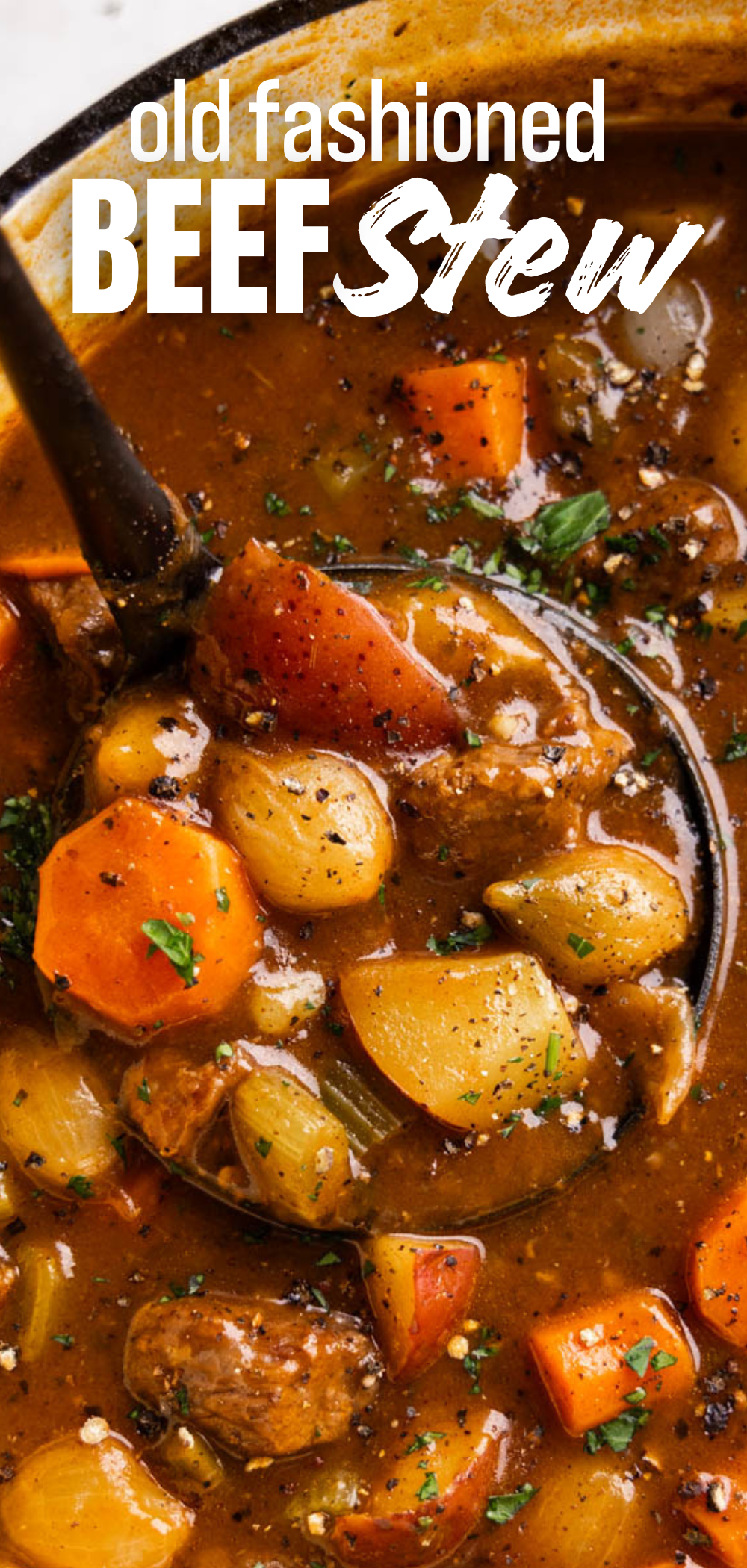
Old Fashioned Beef Stew
Old Fashioned Beef Stew delivers fork-tender chuck and silky gravy in one pot, the cozy Sunday dinner that feeds a crowd for under $3 a bowl.
🧂 Ingredients
- 2.5 lbs (1.1 kg) beef chuck roast, cut into 1.5-inch cubes
- 2 tsp kosher salt, plus more to taste
- 1 tsp freshly ground black pepper
- 3 tbsp all-purpose flour
- 3 tbsp vegetable oil, divided
- 1 large yellow onion, cut into 1-inch chunks
- 3 medium carrots, peeled and cut into 1-inch rounds
- 1.5 lbs (680 g) Yukon Gold potatoes, cut into 1.5-inch chunks
- 2 tbsp tomato paste
- 4 cups (960 ml) low-sodium beef broth
- 2 dried bay leaves and 1 tsp dried thyme
- 1 tbsp Worcestershire sauce
📋 Instructions
- 1Prep and season the beef — Pat the beef cubes dry with paper towels, then toss with 2 tsp kosher salt, 1 tsp black pepper, and 3 tbsp flour until evenly coated. Let it sit at room temperature for 15 minutes so the flour hydrates and adheres.
- 2Heat the Dutch oven — Set a heavy Dutch oven or large pot over medium-high heat and add 2 tbsp vegetable oil. Heat until the oil shimmers and a drop of water sizzles instantly, about 350F (175C).
- 3Sear in batches — Add half the beef in a single layer and cook undisturbed for 3 to 4 minutes per side until deeply golden brown, about 8 minutes total per batch. Transfer to a plate and repeat with the remaining oil and beef.
- 4Sauté onion and tomato paste — Lower the heat to medium, add the onion to the pot, and cook for 4 to 5 minutes until softened and lightly browned at the edges. Stir in the tomato paste and cook for 1 minute until it darkens to brick red and smells sweet.
- 5Deglaze and build the broth — Pour in 1 cup of the beef broth and scrape up every browned bit from the bottom with a wooden spoon. Return the beef and any juices to the pot, then add the remaining broth, Worcestershire, bay leaves, and thyme.
- 6Simmer low and slow — Bring to a gentle boil, then reduce heat to low, cover, and simmer for 60 minutes, stirring occasionally, until the beef is nearly fork-tender and the liquid bubbles lazily at the edges.
- 7Add the vegetables — Stir in the carrots and potatoes, cover, and simmer for another 30 to 35 minutes until the potatoes are easily pierced with a knife and the carrots yield without resistance. The gravy should coat the back of a spoon.
- 8Finish and rest — Remove the bay leaves, taste, and season with salt and pepper. If the gravy is too thin, simmer uncovered for 5 to 10 minutes at 200F (95C). Rest off heat for 10 minutes before ladling into bowls.