Cozy Cravings Recipes
Korean Beef Stew – Tender Braised Galbi Jjim
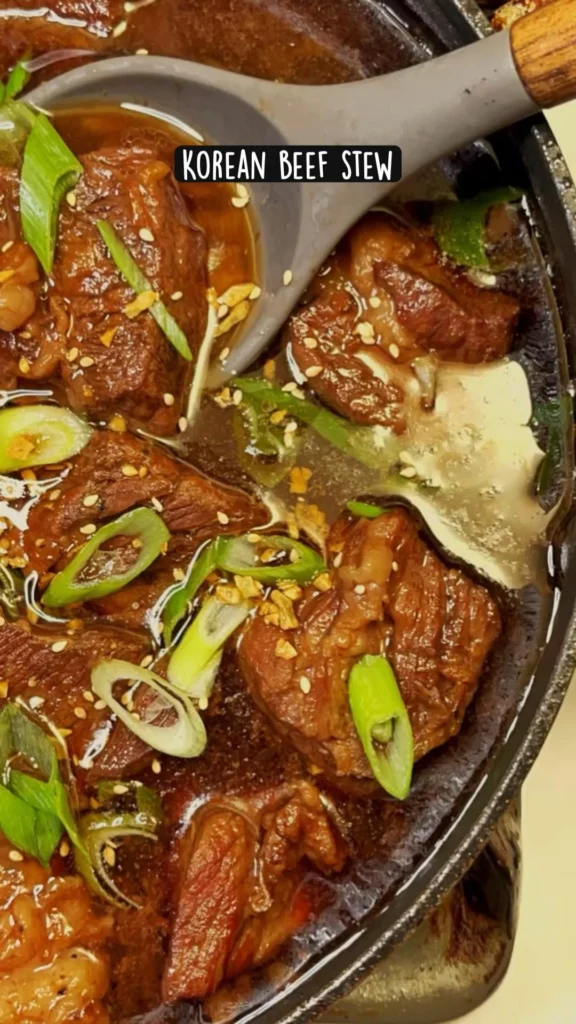
Korean beef stew, known as galbi jjim, is the kind of dish that makes a whole house smell like a celebration. Short ribs braise low and slow in a glossy sauce built from soy, Asian pear, garlic, and a touch of honey, so every bite is deep, sweet, and savory at once.
Unlike quick weeknight stir-fries, this stew rewards a little patience with fall-apart meat and a sauce that clings to every piece. I keep the ingredient list tight on purpose so the beef and the braise stay the stars, and I lean on the oven for even, hands-off cooking.
Serve it over hot rice with a spoonful of the braising liquid and a scatter of scallions, and you have a centerpiece dinner that tastes like it came from a Korean grandmother's kitchen.
Why You'll Love This Recipe
About the Ingredients
3.5 lb (1.6 kg) bone-in beef short ribs, cut 2 inches thick
Look for meaty English-cut ribs with good marbling. Bone-in chuck roast cut into large chunks is a fine substitute if ribs are unavailable.
1 cup (240 ml) low-sodium soy sauce
Use low-sodium so you can control the salt; tamari works for a gluten-free swap. Taste the sauce before adding extra salt.
1/2 cup (100 g) packed brown sugar
Dark brown sugar adds molasses depth. Honey or maple syrup can replace it cup for cup if you prefer.
1 medium Asian pear (about 8 oz / 225 g), peeled and grated
Asian pear brings natural sweetness and tenderizing enzymes. A ripe Bosc pear or 1/2 cup apple sauce is a solid stand-in.
1 medium yellow onion, grated (about 1 cup)
Grating lets the onion melt into the sauce. Sweet onion or shallots work if yellow is too sharp.
8 garlic cloves, minced
Fresh garlic is best here; 2 teaspoons garlic paste can substitute in a pinch. Buy firm, heavy heads with tight papery skin.
1 tbsp grated fresh ginger
Use a microplane for fine fibers. Jarred ginger paste works at a 1:1 swap if you are short on time.
2 tbsp toasted sesame oil
Toasted oil carries the nutty aroma; regular sesame oil is milder. Do not use it as a high-heat frying oil.
2 tbsp rice vinegar
Rice vinegar brightens the braise. Unseasoned rice vinegar or apple cider vinegar can be used instead.
2 medium carrots, cut into 2-inch chunks
Chunky cuts hold their shape over the long cook. Daikon radish is a traditional and delicious alternative.
1 lb (450 g) Korean or Yukon Gold potatoes, cut into 2-inch pieces
Waxy potatoes stay intact; russets will crumble. Add them in the last 40 minutes so they do not overcook.
4 scallions, sliced, plus 1 tbsp toasted sesame seeds, for serving
Slice scallions on the bias for a pretty finish. Thinly sliced chives are a fine substitute.
Tips & Tricks
Skim the fat and foam
After the first 20 minutes of simmering, skim the gray foam and excess fat from the surface so the final sauce stays clean and glossy instead of greasy.
Do not skip the pear
The grated pear does real work by tenderizing the beef and balancing the soy; leaving it out makes the sauce taste flat and harsh.
Add potatoes late
Stir in the potatoes only for the final 40 minutes so they soak up flavor without turning to mush and clouding the sauce.
Pro Tips
Step-by-Step Instructions
1. Season and sear the ribs
Pat the short ribs very dry and season lightly with salt and pepper. Heat a large Dutch oven over medium-high heat to 400F (205C) with 1 tbsp sesame oil, then sear the ribs in batches for 3 to 4 minutes per side until deeply golden brown, about 8 minutes total per batch. Set the ribs aside on a plate.
2. Build the braising sauce
Lower the heat to medium and add the remaining sesame oil, onion, garlic, and ginger. Cook for 3 minutes until fragrant and softened, then stir in the soy sauce, brown sugar, grated pear, and rice vinegar, scraping up the browned bits. Bring to a simmer at 200F (93C) for 2 minutes until the sugar dissolves and the sauce smells sweet and savory.
3. Return the beef and add water
Nestle the seared ribs back into the pot in a single layer. Add 2 cups (480 ml) water, or just enough to come two-thirds up the sides of the meat without submerging it. Bring to a gentle boil at 212F (100C), then skim any foam that rises to the surface.
4. Braise low and slow
Cover the pot and transfer it to a 325F (165C) oven. Braise for 2 hours, checking once at the 1-hour mark, until the meat is fork-tender and pulls away from the bone easily. The liquid should be gently bubbling at the edges, not rolling.
5. Add carrots and potatoes
Stir in the carrots and potatoes, re-cover, and return to the 325F (165C) oven for 40 minutes more, until a knife slides into a potato with no resistance and the carrots are tender. The sauce should look glossy and coat the back of a spoon.
6. Reduce and glaze
Move the pot to the stovetop over medium-high heat and simmer uncovered at 210F (99C) for 8 to 10 minutes, spooning sauce over the meat, until it thickens into a syrupy glaze that clings to the ribs. Taste and adjust with water or a pinch of sugar.
7. Rest and serve
Let the stew rest off the heat for 10 minutes so the juices settle. Spoon over hot rice, scatter with scallions and toasted sesame seeds, and serve with the extra sauce on the side.
Delicious Variations
Spicy Version
Add 2 tbsp gochujang and 1 tsp gochugaru to the sauce for a fiery, deep-red braise.
Mushroom and Daikon
Swap the potatoes for 8 oz shiitake mushrooms and 1 lb daikon radish for an earthier, lighter stew.
Slow Cooker Method
Sear the beef, then combine everything except potatoes in a slow cooker on low for 7 hours, adding potatoes in the last hour.
How to Store Korean Beef Stew (Galbi Jjim)
Refrigerator
Store in an airtight container in the refrigerator for up to 4 days; the flavor improves by day two.
Freezer
Freeze the cooled stew in portions for up to 3 months; leave 1 inch of headspace and thaw overnight in the refrigerator.
Reheating
Reheat gently on the stovetop over medium-low heat at 200F (93C) for 8 to 10 minutes, adding a splash of water if the sauce has thickened too much.
Frequently Asked Questions
Q: What cut of beef is best for Korean beef stew?
Bone-in English-cut short ribs are the classic choice because their marbling and collagen turn silky during the long braise. Boneless chuck roast cut into large chunks is the best substitute if ribs are hard to find.
Q: How long does galbi jjim need to cook?
Plan on about 2 hours and 40 minutes total in a 325F (165C) oven, with the potatoes and carrots added for the last 40 minutes. The beef is done when a fork twists easily in the meat and it pulls cleanly from the bone.
Q: Can I make Korean beef stew ahead of time?
Yes, it tastes even better made a day ahead, since the flavors deepen as it sits. Cool it completely, refrigerate up to 4 days, and reheat gently on the stovetop with a splash of water.
Q: Why is my galbi jjim sauce too salty?
The soy sauce is almost always the culprit, especially if you used a regular rather than low-sodium brand. Balance it with 1/2 cup water, a teaspoon of sugar, and a squeeze of pear or apple to round out the salt.
Q: Can I use a slow cooker instead of the oven?
Yes, sear the beef first, then cook everything except the potatoes on low for 7 hours, adding the potatoes in the last hour. Finish with 10 minutes uncovered on high if you want a thicker glaze.
Give this Korean beef stew a try this weekend and let the oven do the heavy lifting while you set the table. If you make it, snap a photo and tell me how your family liked it in the comments.
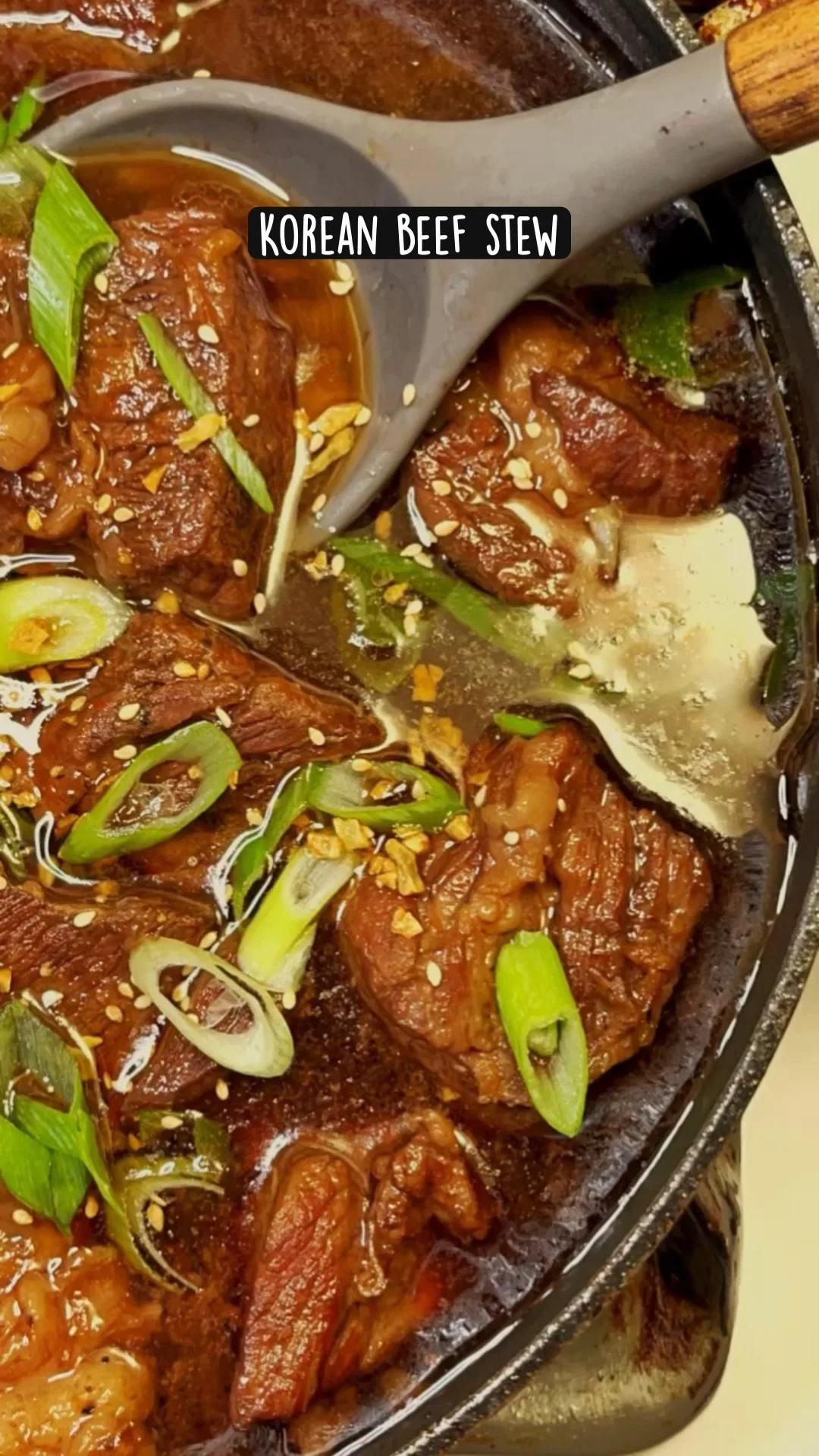
Korean Beef Stew (Galbi Jjim)
Korean beef stew simmers short ribs in a sweet-savory soy and pear sauce until fork-tender for a rich, comforting dinner.
🧂 Ingredients
- 3.5 lb (1.6 kg) bone-in beef short ribs, cut 2 inches thick
- 1 cup (240 ml) low-sodium soy sauce
- 1/2 cup (100 g) packed brown sugar
- 1 medium Asian pear (about 8 oz / 225 g), peeled and grated
- 1 medium yellow onion, grated (about 1 cup)
- 8 garlic cloves, minced
- 1 tbsp grated fresh ginger
- 2 tbsp toasted sesame oil
- 2 tbsp rice vinegar
- 2 medium carrots, cut into 2-inch chunks
- 1 lb (450 g) Korean or Yukon Gold potatoes, cut into 2-inch pieces
- 4 scallions, sliced, plus 1 tbsp toasted sesame seeds, for serving
📋 Instructions
- 1Season and sear the ribs — Pat the short ribs very dry and season lightly with salt and pepper. Heat a large Dutch oven over medium-high heat to 400F (205C) with 1 tbsp sesame oil, then sear the ribs in batches for 3 to 4 minutes per side until deeply golden brown, about 8 minutes total per batch. Set the ribs aside on a plate.
- 2Build the braising sauce — Lower the heat to medium and add the remaining sesame oil, onion, garlic, and ginger. Cook for 3 minutes until fragrant and softened, then stir in the soy sauce, brown sugar, grated pear, and rice vinegar, scraping up the browned bits. Bring to a simmer at 200F (93C) for 2 minutes until the sugar dissolves and the sauce smells sweet and savory.
- 3Return the beef and add water — Nestle the seared ribs back into the pot in a single layer. Add 2 cups (480 ml) water, or just enough to come two-thirds up the sides of the meat without submerging it. Bring to a gentle boil at 212F (100C), then skim any foam that rises to the surface.
- 4Braise low and slow — Cover the pot and transfer it to a 325F (165C) oven. Braise for 2 hours, checking once at the 1-hour mark, until the meat is fork-tender and pulls away from the bone easily. The liquid should be gently bubbling at the edges, not rolling.
- 5Add carrots and potatoes — Stir in the carrots and potatoes, re-cover, and return to the 325F (165C) oven for 40 minutes more, until a knife slides into a potato with no resistance and the carrots are tender. The sauce should look glossy and coat the back of a spoon.
- 6Reduce and glaze — Move the pot to the stovetop over medium-high heat and simmer uncovered at 210F (99C) for 8 to 10 minutes, spooning sauce over the meat, until it thickens into a syrupy glaze that clings to the ribs. Taste and adjust with water or a pinch of sugar.
- 7Rest and serve — Let the stew rest off the heat for 10 minutes so the juices settle. Spoon over hot rice, scatter with scallions and toasted sesame seeds, and serve with the extra sauce on the side.