Cozy Cravings Recipes
Jajangmyeon – Rich 50-Minute Korean Black Bean Noodles
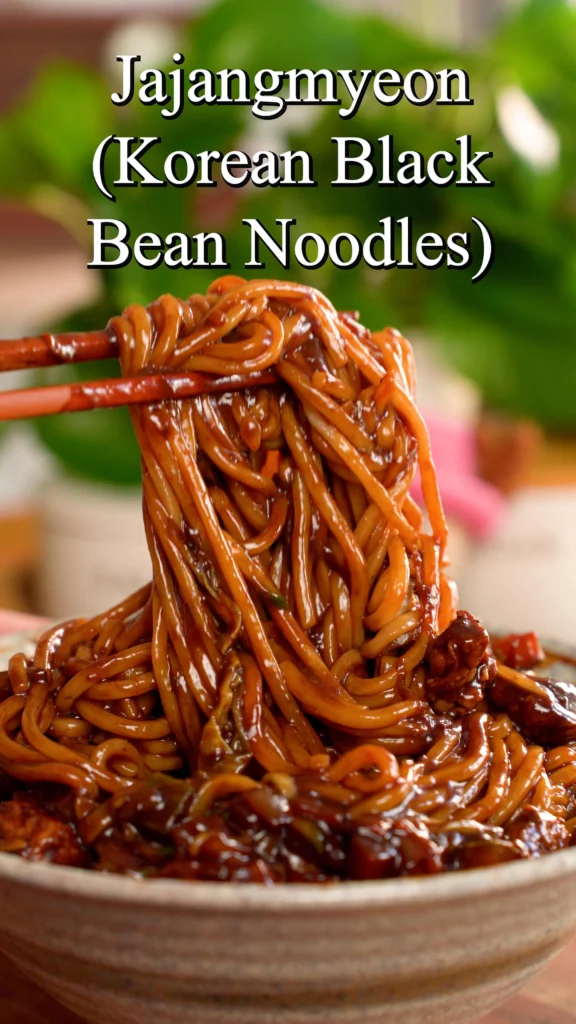
Jajangmyeon is the Korean-Chinese noodle dish you have seen slurped in dramas and delivery ads: thick wheat noodles buried under a dark, glossy sauce of chunjang (fermented black bean paste), pork, and sweet caramelized onion. The magic is in the wok time, when the paste fries in hot oil until it turns deep and nutty instead of flat and bitter.
This version keeps the sauce rich but weeknight-friendly. You will render pork belly, bloom the black bean paste, and simmer everything with potatoes, zucchini, and cabbage until the vegetables are tender and the sauce clings to each noodle. A cornstarch slurry gives that signature silky body, and a fresh cucumber julienne cuts through the richness.
It is a one-wok sauce plus a pot of noodles, so cleanup stays small. Serve it with pickled radish (danmuji) if you have it, and expect everyone to ask for extra sauce.
Why You'll Love This Recipe
About the Ingredients
14 oz (400g) fresh jajangmyeon noodles (or thick fresh udon)
Look for vacuum-packed fresh jajangmyeon noodles in the refrigerated Asian aisle; dried udon works but needs 1 to 2 minutes longer boiling.
8 oz (225g) pork belly or pork shoulder, cut into 1/2-inch cubes
Pork belly gives the richest sauce; substitute boneless chicken thigh if you prefer leaner meat, and add 1 extra tablespoon oil.
1/2 cup (about 120g) chunjang (Korean fermented black bean paste)
Chunjang is sold in jars or boxes labeled Korean black bean paste; do not substitute Chinese doubanjiang, which is spicy and completely different.
3 tablespoons neutral oil, plus 1 tablespoon for the wok
Grapeseed or canola has a high smoke point; avoid olive oil here because it will taste strong when fried at high heat.
1 large onion (about 200g), diced
Yellow onion is standard; sweet Vidalia onion works well and lets you reduce the sugar by half.
1 medium potato (about 150g), peeled and cut into 1/2-inch cubes
Russet breaks down and thickens the sauce; Yukon Gold holds its shape better if you like distinct chunks.
1 small zucchini (about 150g), cut into 1/2-inch cubes
Pat the zucchini dry before adding so it browns instead of steaming; yellow squash is a fine swap.
2 cups (about 180g) green cabbage, chopped into 1-inch pieces
Napa cabbage turns silkier; regular green cabbage stays crunchier, so add it 2 minutes later if you use it.
3 cups (720ml) water or low-sodium chicken broth
Broth adds body; use water plus 1 teaspoon soy sauce for a lighter, vegetarian-friendly version.
1 tablespoon cornstarch mixed with 2 tablespoons cold water
Mix just before adding, since the starch settles; potato starch is an equal substitute.
1 tablespoon sugar, plus 1 teaspoon for the noodles
Sugar balances the salty chunjang; honey or mirin can replace it, but reduce the liquid slightly.
1 Korean cucumber or 1/2 English cucumber, julienned, and 1 teaspoon toasted sesame oil for finishing
Korean cucumber is crisp and thin-skinned; English cucumber is the easiest substitute and needs no peeling.
Tips & Tricks
Fry the paste properly
Cook chunjang in oil over medium heat for 3 to 4 minutes until it smells nutty, not sharp; skipping this leaves the sauce bitter.
Do not oversalt early
Chunjang is already very salty, so taste after the slurry thickens and only then add soy sauce or salt.
Keep noodles from sticking
Rinse cooked noodles in cold water and toss with the 1 teaspoon sugar and a few drops of sesame oil before saucing.
Thicken off the boil
Stir the cornstarch slurry again, add it to a gently bubbling sauce at 200°F (93°C), and simmer 1 minute so it does not turn gluey.
Pro Tips
Step-by-Step Instructions
1. Boil the noodles
Bring a large pot of water to a rolling boil at 212°F (100°C). Add the fresh noodles and cook 4 to 5 minutes, until tender but still chewy at the center, then drain and rinse under cold water.
2. Fry the black bean paste
Heat 3 tablespoons oil in a wok or wide skillet over medium heat at about 350°F (175°C). Add the chunjang and stir constantly for 3 to 4 minutes, until it smells roasted and nutty and the oil turns dark red-black.
3. Drain the paste
Push the paste to one side, tilt the wok, and spoon off most of the excess oil, leaving about 1 tablespoon. Scrape the paste into a small bowl and wipe the wok mostly clean.
4. Brown the pork
Add 1 tablespoon oil and the pork to the wok over medium-high heat at 375°F (190°C). Cook 5 to 6 minutes, until the cubes are golden brown on all sides and the fat has rendered.
5. Soften the vegetables
Add the onion, potato, zucchini, and cabbage. Stir-fry 4 to 5 minutes at 375°F (190°C), until the onion is translucent and the potato edges look glossy.
6. Simmer the sauce
Return the fried chunjang to the wok with 3 cups water and 1 tablespoon sugar. Bring to a gentle boil at 200°F (93°C), then lower the heat and simmer 10 to 12 minutes, until the potato is fork-tender.
7. Thicken and finish
Stir the cornstarch slurry and pour it in, stirring constantly. Simmer 1 minute at 200°F (93°C), until the sauce coats the back of a spoon, then turn off the heat and stir in the sesame oil.
8. Serve over noodles
Divide the noodles among 6 bowls, ladle the hot sauce over the top, and crown each bowl with julienned cucumber. Toss everything together just before eating.
Delicious Variations
Seafood jajangmyeon
Swap the pork for 8 oz shrimp and 8 oz squid, adding them in the last 3 minutes so they stay tender.
Vegetarian jajangmyeon
Use 8 oz firm tofu or mushrooms instead of pork and vegetable broth instead of chicken broth for a meat-free version.
Spicy jajangmyeon
Stir 1 to 2 teaspoons gochugaru or a spoon of chili oil into the sauce at the end for a gentle heat.
How to Store Jajangmyeon (Korean Black Bean Noodles)
Refrigerator
Store the sauce and noodles separately in airtight containers for up to 4 days; keep the cucumber separate and slice fresh.
Freezer
Freeze the sauce alone for up to 3 months in a sealed container; thaw overnight in the refrigerator before reheating.
Reheating
Reheat the sauce in a saucepan over medium heat at 200°F (93°C) for 3 to 4 minutes, adding a splash of water if it is too thick; boil fresh noodles rather than reheating cooked ones.
Frequently Asked Questions
Q: What does jajangmyeon taste like?
Jajangmyeon tastes deeply savory, lightly sweet, and roasted, like a rich onion and pork gravy with a fermented black bean backbone. The sauce is glossy and mild rather than spicy, and the cucumber on top adds a fresh crunch.
Q: Is jajangmyeon the same as jajangbap?
Jajangbap is the same black bean sauce served over steamed white rice instead of noodles. The sauce recipe is essentially identical, so you can use this one and simply swap the noodles for 4 cups of hot rice.
Q: Can I make jajangmyeon without chunjang?
There is no true substitute for chunjang, but Korean markets and online shops stock it widely, and it keeps for months in the fridge. Do not use Chinese doubanjiang or hoisin, which are spicy or sweet and will change the dish completely.
Q: Why is my jajangmyeon sauce bitter?
The sauce turns bitter when the chunjang is not fried long enough or when it scorches over high heat. Fry it over medium heat at about 350°F (175°C) for 3 to 4 minutes until nutty, and drain the excess oil before simmering.
Q: How do I keep the noodles from sticking together?
Rinse the cooked noodles under cold water and toss them with a teaspoon of sugar and a few drops of sesame oil. Portion them into bowls right away and sauce them while hot so they do not clump.
Grab a jar of chunjang and a wok, and make this glossy, savory jajangmyeon tonight. Snap a photo of your bowl, tag me, and let me know if you went classic pork or seafood.
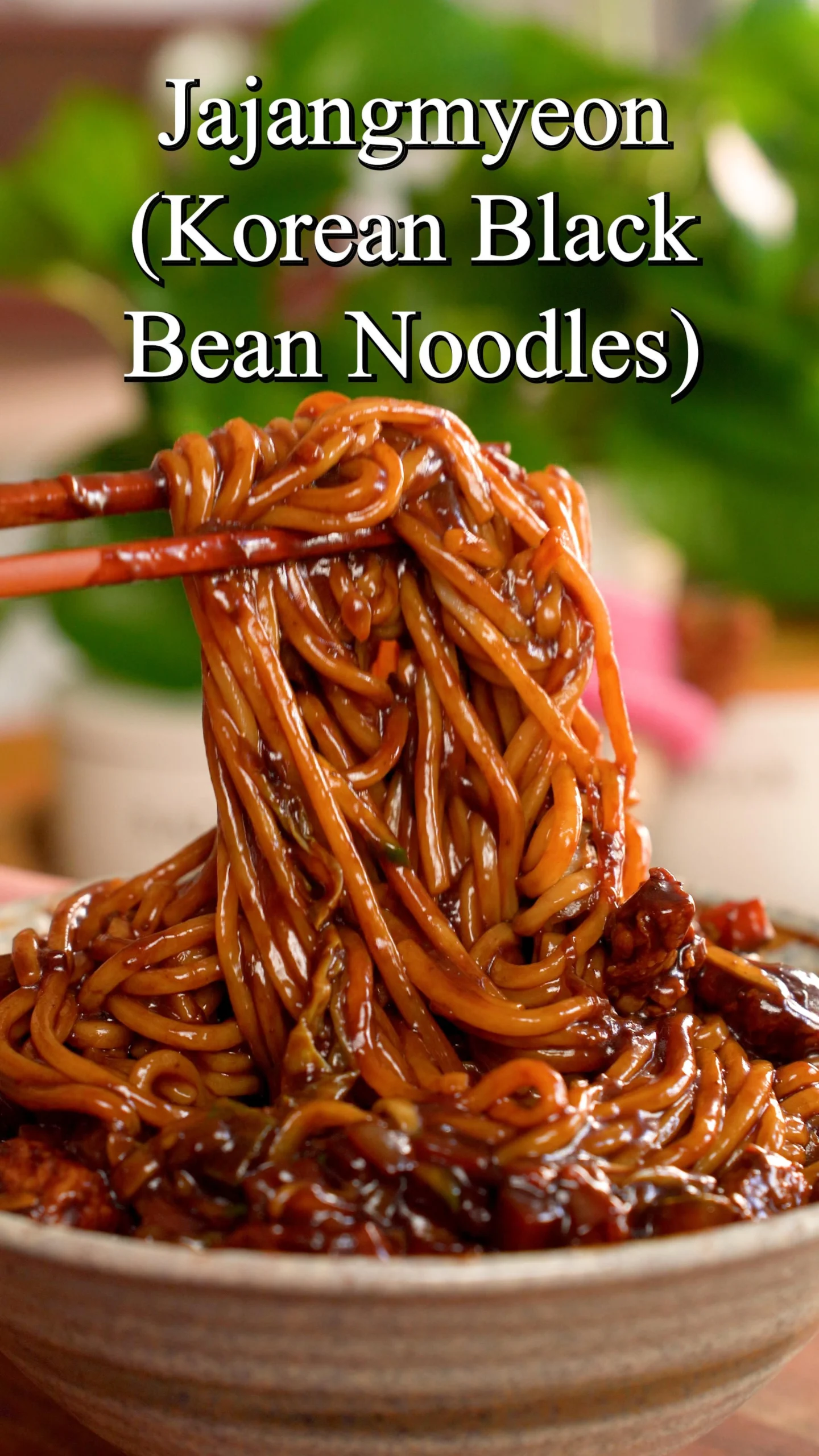
Jajangmyeon (Korean Black Bean Noodles)
Jajangmyeon delivers glossy, savory black bean sauce over chewy noodles in 50 minutes, a comforting Korean-Chinese classic the whole family devours.
🧂 Ingredients
- 14 oz (400g) fresh jajangmyeon noodles (or thick fresh udon)
- 8 oz (225g) pork belly or pork shoulder, cut into 1/2-inch cubes
- 1/2 cup (about 120g) chunjang (Korean fermented black bean paste)
- 3 tablespoons neutral oil, plus 1 tablespoon for the wok
- 1 large onion (about 200g), diced
- 1 medium potato (about 150g), peeled and cut into 1/2-inch cubes
- 1 small zucchini (about 150g), cut into 1/2-inch cubes
- 2 cups (about 180g) green cabbage, chopped into 1-inch pieces
- 3 cups (720ml) water or low-sodium chicken broth
- 1 tablespoon cornstarch mixed with 2 tablespoons cold water
- 1 tablespoon sugar, plus 1 teaspoon for the noodles
- 1 Korean cucumber or 1/2 English cucumber, julienned, and 1 teaspoon toasted sesame oil for finishing
📋 Instructions
- 1Boil the noodles — Bring a large pot of water to a rolling boil at 212°F (100°C). Add the fresh noodles and cook 4 to 5 minutes, until tender but still chewy at the center, then drain and rinse under cold water.
- 2Fry the black bean paste — Heat 3 tablespoons oil in a wok or wide skillet over medium heat at about 350°F (175°C). Add the chunjang and stir constantly for 3 to 4 minutes, until it smells roasted and nutty and the oil turns dark red-black.
- 3Drain the paste — Push the paste to one side, tilt the wok, and spoon off most of the excess oil, leaving about 1 tablespoon. Scrape the paste into a small bowl and wipe the wok mostly clean.
- 4Brown the pork — Add 1 tablespoon oil and the pork to the wok over medium-high heat at 375°F (190°C). Cook 5 to 6 minutes, until the cubes are golden brown on all sides and the fat has rendered.
- 5Soften the vegetables — Add the onion, potato, zucchini, and cabbage. Stir-fry 4 to 5 minutes at 375°F (190°C), until the onion is translucent and the potato edges look glossy.
- 6Simmer the sauce — Return the fried chunjang to the wok with 3 cups water and 1 tablespoon sugar. Bring to a gentle boil at 200°F (93°C), then lower the heat and simmer 10 to 12 minutes, until the potato is fork-tender.
- 7Thicken and finish — Stir the cornstarch slurry and pour it in, stirring constantly. Simmer 1 minute at 200°F (93°C), until the sauce coats the back of a spoon, then turn off the heat and stir in the sesame oil.
- 8Serve over noodles — Divide the noodles among 6 bowls, ladle the hot sauce over the top, and crown each bowl with julienned cucumber. Toss everything together just before eating.