Cozy Cravings Recipes
Honey Glazed Carrots & Green Beans – Easy 30-Minute Side

If you need one vegetable side that works with roast chicken, glazed ham, and a weeknight salmon fillet, this is it. Carrots get a head start in a hot pan so they turn tender and golden, then green beans join for just long enough to stay snappy and bright green. A quick honey-butter glaze with garlic and a splash of cider vinegar ties everything together in a shiny, slightly sticky coating.
The trick is sequencing. Carrots take longer than green beans, so they hit the skillet first with a little water to steam through, then finish in butter and honey until the edges caramelize. The beans go in last for three or four minutes so they keep their bite and their color instead of going olive-drab and limp.
It is a stovetop-only recipe, one pan, and it comes together in about half an hour, which makes it a realistic addition to a holiday table or a Tuesday dinner. The glaze is sweet but not dessert-sweet thanks to the vinegar, and a pinch of red pepper flakes keeps it from tasting flat.
Why You'll Love This Recipe
About the Ingredients
1 1/2 lb (680g) carrots, peeled and cut into 2-inch by 1/2-inch batons
Look for carrots of even thickness so they cook at the same rate; if yours are fat, halve them lengthwise. Bagged baby carrots work as a substitute, but halve any thick ones and expect about 5 minutes less cooking time.
1 lb (450g) fresh green beans, trimmed
Snap off the stem end and any woody tips; slender beans are more tender than thick ones. Frozen whole green beans can replace fresh in a pinch, but do not thaw them first and add 2 extra minutes of cooking.
2 tbsp (28g) unsalted butter, divided
Dividing the butter keeps the glaze from scorching before the vegetables are done. Olive oil or a plant butter both work if you need this dairy-free.
2 tbsp (42g) honey
Clover honey is mild and reliable; buckwheat or wildflower honey is stronger and will dominate the dish. Maple syrup is a good 1-to-1 substitute for a vegan version.
3 tbsp (45ml) water
The water steams the carrots through before they brown. Use it sparingly; you want it fully evaporated before the butter goes in.
2 cloves garlic, minced (about 2 tsp)
Fresh garlic only here, since jarred garlic burns faster and tastes bitter. Add it at the end off the heat so it sweetens instead of scorching.
1 tbsp (15ml) apple cider vinegar
The acid balances the honey and keeps the glaze from tasting candy-sweet. White wine vinegar or fresh lemon juice can stand in.
1/2 tsp kosher salt, plus more to taste
Kosher salt dissolves more evenly than table salt; if using fine table salt, start with 1/4 tsp. Season the carrots early and the beans at the very end.
1/4 tsp freshly ground black pepper
Fresh-cracked pepper is brighter than pre-ground. A pinch of red pepper flakes (about 1/8 tsp) adds gentle heat if you want it.
1 tbsp chopped fresh parsley or thyme, for garnish
Parsley adds color and freshness; thyme reinforces the earthy sweetness. Skip it or use 1 tsp dried thyme if you have no fresh herbs.
Tips & Tricks
Do not crowd the pan
Use your widest skillet, ideally 12 inches, so the carrots brown instead of steaming. If they pile up more than one layer deep, cook in two batches.
Watch the honey at the end
Honey and butter scorch quickly above 350F (177C), so pull the pan off the heat the moment the glaze turns amber and coats the back of a spoon.
Salt the beans last
Salting green beans early draws out moisture and makes them limp; season them in the final minute so they stay firm.
Dry the beans well
Wet beans from washing will sputter and steam rather than sear, so pat them dry with a towel before they go in.
Pro Tips
Step-by-Step Instructions
1. Prep the vegetables
Peel the carrots and cut them into 2-inch by 1/2-inch batons, then trim the green beans and pat both dry. Uniform pieces are the difference between even cooking and a mix of mushy and raw.
2. Steam the carrots
Melt 1 tbsp butter in a 12-inch skillet over medium-high heat (about 375F/190C) and add the carrots and water. Cover and cook 8 to 10 minutes, until the water has evaporated and a knife slides into a carrot with slight resistance.
3. Brown the carrots
Uncover and cook 4 to 5 minutes more, stirring occasionally, until the carrots are golden brown at the edges and the pan looks dry. You should hear a steady sizzle, not a hiss of boiling water.
4. Add the beans
Add the remaining 1 tbsp butter and the green beans, tossing to coat. Cook 4 to 5 minutes over medium-high heat (375F/190C) until the beans are bright green, blistered in spots, and crisp-tender when bitten.
5. Build the glaze
Push the vegetables to one side, lower the heat to medium (300F/150C), and add the honey and cider vinegar. Stir 60 to 90 seconds until the glaze bubbles at the edges and thickens enough to coat a spoon.
6. Finish with garlic
Remove the pan from the heat, stir in the garlic, salt, and pepper, and toss everything until glossy. The residual heat softens the garlic without browning it.
7. Garnish and serve
Scatter with parsley or thyme and taste for salt, adding a pinch more if the glaze tastes sweet. Serve hot, straight from the pan, within 10 minutes for the best texture.
Delicious Variations
Balsamic and Thyme Version
Swap the cider vinegar for balsamic and finish with fresh thyme for a deeper, almost jammy glaze that suits roast beef.
Spicy Honey-Sriracha Glaze
Add 1 tsp sriracha and a pinch of red pepper flakes to the honey for a sweet-heat side that pairs with grilled chicken.
Holiday Cranberry Almond
Toss in 1/4 cup dried cranberries and 2 tbsp toasted sliced almonds at the end for a festive Thanksgiving version.
How to Store Honey Glazed Carrots & Green Beans
Refrigerator
Store leftovers in an airtight container in the refrigerator for up to 4 days; the glaze will firm up when cold, which is normal.
Freezer
Freezing is not recommended because the beans turn soft and watery, but if you must, freeze up to 1 month and expect a softer texture.
Reheating
Reheat in a skillet over medium heat (300F/150C) with 1 tbsp water for 3 to 4 minutes, tossing until glossy; the microwave works but makes the beans limp.
Frequently Asked Questions
Q: How do you keep green beans bright green when cooking?
Cook them hot and fast and avoid covering the pan. Green beans turn olive-drab when they are overcooked or steamed too long, so add them late and pull them while they are still crisp-tender, about 4 to 5 minutes over medium-high heat.
Q: Can I make honey glazed carrots and green beans ahead of time?
Yes, you can blanch the vegetables up to a day ahead and finish them in the skillet right before serving. Boil the carrots 4 minutes and the beans 2 minutes, shock them in ice water, drain, and refrigerate; then glaze and reheat in the pan for 5 minutes.
Q: Why did my honey glaze burn?
Honey burns quickly because its sugars scorch above about 350F (177C). Add the honey only after the vegetables are nearly done, lower the heat to medium, and stir constantly for just 60 to 90 seconds.
Q: Are honey glazed carrots and green beans healthy?
They are a genuinely nutritious side, delivering about 3g of fiber and over 300% of your daily vitamin A per serving from the carrots. The honey adds a small amount of sugar, roughly 8g per serving, which you can cut by using 1 tbsp instead of 2.
Q: What goes with honey glazed carrots and green beans?
They pair best with roasted chicken, glazed ham, pork tenderloin, or baked salmon. The sweet-savory glaze also works alongside holiday staples like mashed potatoes and stuffing.
Give this honey glazed carrots and green beans recipe a try at your next dinner and watch the pan come back empty. If you make it, leave a rating and a comment telling me whether you went classic or added the spicy sriracha twist.
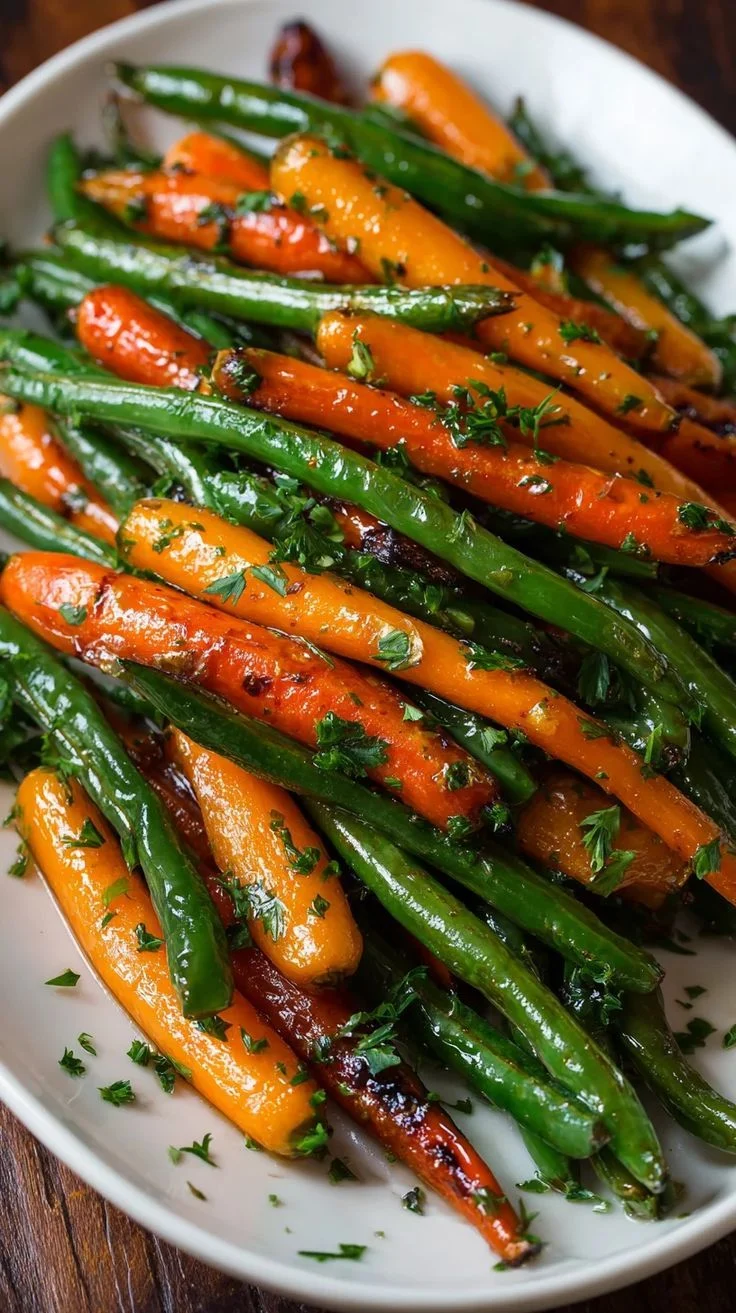
Honey Glazed Carrots & Green Beans
Honey Glazed Carrots & Green Beans are a glossy 30-minute side dish with sweet caramelized edges and crisp-tender beans that steal the plate.
🧂 Ingredients
- 1 1/2 lb (680g) carrots, peeled and cut into 2-inch by 1/2-inch batons
- 1 lb (450g) fresh green beans, trimmed
- 2 tbsp (28g) unsalted butter, divided
- 2 tbsp (42g) honey
- 3 tbsp (45ml) water
- 2 cloves garlic, minced (about 2 tsp)
- 1 tbsp (15ml) apple cider vinegar
- 1/2 tsp kosher salt, plus more to taste
- 1/4 tsp freshly ground black pepper
- 1 tbsp chopped fresh parsley or thyme, for garnish
📋 Instructions
- 1Prep the vegetables — Peel the carrots and cut them into 2-inch by 1/2-inch batons, then trim the green beans and pat both dry. Uniform pieces are the difference between even cooking and a mix of mushy and raw.
- 2Steam the carrots — Melt 1 tbsp butter in a 12-inch skillet over medium-high heat (about 375F/190C) and add the carrots and water. Cover and cook 8 to 10 minutes, until the water has evaporated and a knife slides into a carrot with slight resistance.
- 3Brown the carrots — Uncover and cook 4 to 5 minutes more, stirring occasionally, until the carrots are golden brown at the edges and the pan looks dry. You should hear a steady sizzle, not a hiss of boiling water.
- 4Add the beans — Add the remaining 1 tbsp butter and the green beans, tossing to coat. Cook 4 to 5 minutes over medium-high heat (375F/190C) until the beans are bright green, blistered in spots, and crisp-tender when bitten.
- 5Build the glaze — Push the vegetables to one side, lower the heat to medium (300F/150C), and add the honey and cider vinegar. Stir 60 to 90 seconds until the glaze bubbles at the edges and thickens enough to coat a spoon.
- 6Finish with garlic — Remove the pan from the heat, stir in the garlic, salt, and pepper, and toss everything until glossy. The residual heat softens the garlic without browning it.
- 7Garnish and serve — Scatter with parsley or thyme and taste for salt, adding a pinch more if the glaze tastes sweet. Serve hot, straight from the pan, within 10 minutes for the best texture.