Cozy Cravings Recipes
Hand Pulled Noodles – Chewy 45-Minute Biang Biang Noodles

Biang biang noodles are the showstopper of Shaanxi cooking: long, belt-wide ribbons of dough that you stretch and slap against the counter until they snap into shape with a satisfying thwack. The dough is dead simple, just flour, water, and salt, but the pulling technique and a sizzling chili oil pour turn it into something unforgettable.
This version keeps the whole thing weeknight-friendly. A 30-minute rest makes the gluten relaxed and cooperative, so even first-timers can pull a decent noodle. While the dough rests, you bloom garlic, scallions, and chili flakes in hot oil and whisk together a tangy black vinegar-soy sauce that gets tossed in at the very end.
Serve the noodles hot with extra chili oil, a shower of cilantro, and plenty of blanched greens. It is a messy, hands-on, deeply satisfying meal that costs almost nothing to make.
Why You'll Love This Recipe
About the Ingredients
3 1/2 cups (440g) bread flour, plus more for dusting
Bread flour's higher protein gives the stretchy, chewy bite biang biang noodles need. All-purpose flour works in a pinch, but add 2 tablespoons less water since it hydrates differently.
1 1/4 cups (300ml) warm water, about 100F (38C)
Warm water hydrates the flour faster and makes a smoother dough. If you only have cold water, add 5 extra minutes to the rest time.
1 1/2 teaspoons fine sea salt
Salt seasons the dough from the inside out. Do not swap in coarse kosher salt here, since it will not dissolve evenly.
2 tablespoons neutral oil, plus more for coating
Neutral oil keeps the dough supple and stops the noodles from sticking to each other. Grapeseed or canola are ideal; olive oil's flavor is too strong.
6 garlic cloves, finely minced
Fresh garlic is non-negotiable for the hot-oil pour. Jarred minced garlic is a fine substitute in a rush, use 2 tablespoons.
3 scallions, thinly sliced, whites and greens separated
Scallion whites go into the oil, greens go on top at the end. A small shallot can replace the whites if you are out.
2 tablespoons Sichuan chili flakes (or gochugaru)
Sichuan chili flakes bring toasty heat without bitterness. Gochugaru is a milder, fruitier substitute, and Aleppo pepper works if you want very low heat.
1/3 cup (80ml) neutral oil, for the chili oil
This oil gets poured smoking hot over the aromatics. Any high-smoke-point oil works, but avoid butter or extra virgin olive oil.
2 tablespoons Chinese black vinegar
Black vinegar gives the sauce its malty tang. Balsamic vinegar is the closest easy substitute, use 1 tablespoon plus 1 teaspoon rice vinegar.
2 tablespoons light soy sauce
Light soy sauce seasons without darkening the noodles. Tamari is a great gluten-free swap; use 1 tablespoon if you want less salt.
1 teaspoon toasted sesame oil
Sesame oil adds a nutty finish and should go in off the heat. Toasted is essential, untoasted sesame oil tastes flat.
1 cup (60g) cilantro leaves and 2 baby bok choy, halved, for serving
Cilantro and bok choy add freshness and crunch. Swap in spinach or sliced napa cabbage if bok choy is unavailable.
Tips & Tricks
Do not skip the rest
Dough that has not rested for at least 30 minutes will snap back and tear when you pull it. Cover it and walk away.
Oil every piece
Coat each dough portion generously in oil before resting so the noodles slide apart instead of fusing into a lump.
Slap, do not stretch
Let gravity and a firm slap on the counter do the lengthening. Pulling with your hands alone stretches unevenly and creates thin spots.
Pour the oil at the right moment
Heat the oil until it shimmers and a chili flake sizzles instantly, about 350F (175C), then pour. Too cool and the aromatics taste raw.
Pro Tips
Step-by-Step Instructions
1. Mix the dough
Whisk the bread flour and salt in a large bowl, pour in the warm water, and stir with chopsticks or a spoon until a shaggy mass forms. Knead in the bowl for 2 minutes, then turn out and knead 5 minutes until smooth and slightly tacky.
2. Rest the dough
Cover the dough with a damp towel and let it rest at room temperature for 30 minutes. This relaxes the gluten so the dough pulls instead of fighting back.
3. Portion and oil
Divide the dough into 8 equal pieces, about 90g each. Roll each into a 4-inch log, coat thoroughly with neutral oil, and set on an oiled tray. Cover and rest another 15 minutes.
4. Make the chili oil
Pile the garlic, scallion whites, and chili flakes in a heatproof bowl. Heat 1/3 cup neutral oil in a small saucepan over medium-high until it reaches 350F (175C), about 3 minutes, and a chili flake sizzles on contact. Pour it over the aromatics slowly; it should bubble vigorously at the edges. Stir in the sesame oil.
5. Mix the sauce
Whisk the black vinegar and soy sauce together in a small bowl and set aside. Taste and adjust, it should be tangy and savory in equal measure.
6. Flatten the noodles
On a lightly oiled counter, press one dough log into a flat rectangle about 3 inches wide. Hold each end and gently slap the dough against the counter 4 to 5 times until it stretches to about 30 inches, then tear it in half lengthwise for two ribbons.
7. Boil the noodles
Bring a large pot of water to a rolling boil. Drop in the noodles a few at a time and cook 2 to 3 minutes, until they float and turn opaque with a springy, chewy bite. Lift out with a spider or tongs and drain briefly.
8. Blanch the greens
Drop the bok choy into the same boiling water for 60 seconds, until the leaves wilt and the stems turn bright green and tender-crisp. Remove and drain.
9. Toss and serve
Pile the hot noodles in bowls, spoon over the vinegar-soy sauce, and top with a generous spoonful of chili oil. Add the bok choy, scatter cilantro and scallion greens, and toss at the table before eating.
Delicious Variations
Sesame Style
Swap half the chili oil for 3 tablespoons of Chinese sesame paste thinned with noodle water for a nutty, creamy version.
Beef Topping
Spoon 1 cup of braised beef shank and a little braising liquid over the noodles for a heartier Shaanxi-style bowl.
Tomato Egg Version
Top the noodles with soft-scrambled eggs and a quick stir-fried tomato sauce instead of chili oil for a milder family-friendly meal.
How to Store Hand Pulled Noodles (Biang Biang Noodles)
Refrigerator
Store cooked noodles and sauce separately in airtight containers for up to 3 days. Keep the chili oil at room temperature, it does not need refrigeration.
Freezer
Freeze the raw oiled dough portions on a tray for 1 hour, then transfer to a bag for up to 2 months. Thaw overnight in the fridge before pulling.
Reheating
Reheat noodles in boiling water for 60 seconds or in a hot oiled skillet for 2 minutes. Add a splash of water and fresh chili oil to bring them back to life.
Frequently Asked Questions
Q: Can I make hand pulled noodles ahead of time?
Yes, you can portion and oil the dough up to 24 hours ahead and keep it covered in the fridge. Let it sit at room temperature for 20 minutes before pulling so it is pliable again.
Q: Why did my noodles break when I pulled them?
The dough was likely under-rested or too dry. Cover it and give it another 20 minutes, and wet your hands slightly before pulling to add surface moisture.
Q: Is bread flour necessary for biang biang noodles?
Bread flour is best because its high protein creates the signature chewy texture. All-purpose flour works, but reduce the water by 2 tablespoons and expect a slightly softer noodle.
Q: How spicy are biang biang noodles?
They are moderately spicy, with warmth from the chili oil rather than a burning heat. Use gochugaru or Aleppo pepper instead of Sichuan chili flakes if you want a milder bowl.
Grab your flour, crank up the chili oil, and get slapping. Once you pull your first ribbon, you will want to make these biang biang noodles every week, so snap a photo of your best noodle and share it with me.
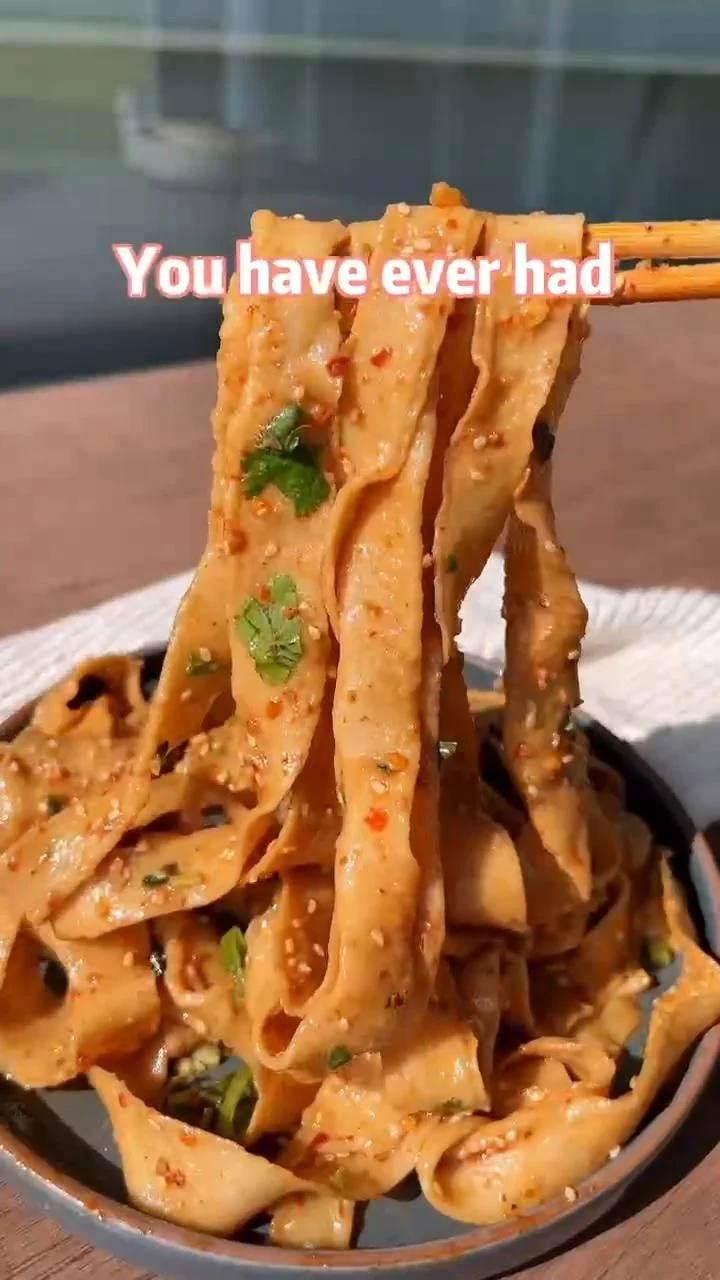
Hand Pulled Noodles (Biang Biang Noodles)
Hand Pulled Noodles (Biang Biang Noodles) are wide, chewy ribbons you slap by hand, ready in 45 minutes and built to soak up spicy chili oil.
🧂 Ingredients
- 3 1/2 cups (440g) bread flour, plus more for dusting
- 1 1/4 cups (300ml) warm water, about 100F (38C)
- 1 1/2 teaspoons fine sea salt
- 2 tablespoons neutral oil, plus more for coating
- 6 garlic cloves, finely minced
- 3 scallions, thinly sliced, whites and greens separated
- 2 tablespoons Sichuan chili flakes (or gochugaru)
- 1/3 cup (80ml) neutral oil, for the chili oil
- 2 tablespoons Chinese black vinegar
- 2 tablespoons light soy sauce
- 1 teaspoon toasted sesame oil
- 1 cup (60g) cilantro leaves and 2 baby bok choy, halved, for serving
📋 Instructions
- 1Mix the dough — Whisk the bread flour and salt in a large bowl, pour in the warm water, and stir with chopsticks or a spoon until a shaggy mass forms. Knead in the bowl for 2 minutes, then turn out and knead 5 minutes until smooth and slightly tacky.
- 2Rest the dough — Cover the dough with a damp towel and let it rest at room temperature for 30 minutes. This relaxes the gluten so the dough pulls instead of fighting back.
- 3Portion and oil — Divide the dough into 8 equal pieces, about 90g each. Roll each into a 4-inch log, coat thoroughly with neutral oil, and set on an oiled tray. Cover and rest another 15 minutes.
- 4Make the chili oil — Pile the garlic, scallion whites, and chili flakes in a heatproof bowl. Heat 1/3 cup neutral oil in a small saucepan over medium-high until it reaches 350F (175C), about 3 minutes, and a chili flake sizzles on contact. Pour it over the aromatics slowly; it should bubble vigorously at the edges. Stir in the sesame oil.
- 5Mix the sauce — Whisk the black vinegar and soy sauce together in a small bowl and set aside. Taste and adjust, it should be tangy and savory in equal measure.
- 6Flatten the noodles — On a lightly oiled counter, press one dough log into a flat rectangle about 3 inches wide. Hold each end and gently slap the dough against the counter 4 to 5 times until it stretches to about 30 inches, then tear it in half lengthwise for two ribbons.
- 7Boil the noodles — Bring a large pot of water to a rolling boil. Drop in the noodles a few at a time and cook 2 to 3 minutes, until they float and turn opaque with a springy, chewy bite. Lift out with a spider or tongs and drain briefly.
- 8Blanch the greens — Drop the bok choy into the same boiling water for 60 seconds, until the leaves wilt and the stems turn bright green and tender-crisp. Remove and drain.
- 9Toss and serve — Pile the hot noodles in bowls, spoon over the vinegar-soy sauce, and top with a generous spoonful of chili oil. Add the bok choy, scatter cilantro and scallion greens, and toss at the table before eating.