

Gochujang Brussels Sprouts are what happens when you roast sprouts until their outer leaves shatter into chips and then toss them in a glossy, spicy-sweet Korean chile glaze. The gochujang melts into honey and toasted sesame, clinging to every charred crevice without turning the sprouts soggy.
Advertisements1
The trick is heat and timing: a screaming hot oven for the first stretch, then a quick broil to blister the edges before the sauce goes on. Because the glaze is added off the heat, it stays thick and sticky instead of burning into a bitter crust.
Serve these next to grilled steak, roasted salmon, or piled into a rice bowl with a fried egg. They are fast enough for a weeknight and dramatic enough for a holiday table, and the leftovers are honestly great cold straight from the fridge.
Why You'll Love This Recipe
About the Ingredients
2 lb (900g) Brussels sprouts, trimmed and halved lengthwise
Look for tight, bright green heads about 1 to 1.5 inches across; smaller sprouts roast more evenly and taste sweeter. If you can only find large ones, quarter them so every piece has a flat cut side.
3 tbsp extra-virgin olive oil
Use a neutral high-heat oil like avocado oil if your olive oil is a delicate finishing oil, since it can smoke at 425F. Save the fancy oil for drizzling at the end.
3 tbsp gochujang (Korean fermented chile paste)
Check the label for wheat or barley if you need gluten-free; some brands contain them. For a milder sauce, use 2 tablespoons and add 1 teaspoon of tomato paste for body.
2 tbsp honey
Maple syrup is a great vegan swap and browns slightly faster, so watch the broiler closely. Dark honey gives a deeper, more molasses-like flavor than clover honey.
1 tbsp rice vinegar
Unseasoned rice vinegar keeps the glaze bright; if you only have seasoned, reduce the honey by 1 teaspoon. Apple cider vinegar works as a substitute in a pinch.
2 tsp toasted sesame oil
Toasted, not plain, sesame oil is what gives the sauce its nutty backbone. Buy it in small bottles, since it goes rancid within about six months of opening.
3 cloves garlic, finely grated
A Microplane gives you a paste that blends into the glaze without chunks. Jarred minced garlic is a fine shortcut; use 1 teaspoon.
1 tbsp toasted sesame seeds
Toast raw seeds in a dry skillet over medium heat for 2 to 3 minutes until they smell nutty and start popping. Black sesame seeds make a striking visual contrast.
2 scallions, thinly sliced on the bias
Slice on a sharp diagonal for pretty ribbons; the green tops are milder and the whites are sharper. Chives are a good substitute if scallions are unavailable.
1/2 tsp kosher salt
Diamond Crystal kosher salt is less dense than Morton, so use half the amount if you are measuring Morton. Skip the salt if your gochujang is very salty.
Tips & Tricks
Dry the sprouts completely
Any water left on the sprouts steams them instead of roasting them, so pat them bone dry with a towel after washing and halve them just before they go in the oven.
Do not crowd the pan
Use a large 18×13-inch sheet pan and spread the sprouts in a single layer with space between them; if they overlap, they release steam and turn limp instead of crisp.
Add the glaze off the heat
Gochujang contains sugar and starch that scorch quickly, so pull the pan out of the oven, let the sprouts cool for 1 minute, then toss with the sauce in a bowl for a glossy, non-bitter coating.
Pro Tips
Step-by-Step Instructions
1. Heat the oven and pan
Place a rack in the upper third of the oven and preheat to 425F (220C) with a large rimmed sheet pan inside for at least 10 minutes. A hot pan is what gives the sprouts an instant sear on contact.
2. Prep and dry the sprouts
Trim the stem ends and halve the sprouts lengthwise, then pat them thoroughly dry with a clean kitchen towel. Toss with the olive oil and kosher salt in a bowl until every piece is lightly coated.
3. Roast cut-side down
Carefully pull the hot pan out, add the sprouts cut-side down in a single layer, and roast for 20 minutes at 425F (220C) without stirring. They are ready when the cut faces are deep golden brown and the outer leaves are dark and crisp, about 20 minutes.
4. Blister under the broiler
Switch the oven to broil on high and broil for 3 to 4 minutes, until the edges are charred in spots and a leaf or two is almost black. Watch closely, since broilers go from charred to burnt in under a minute.
5. Whisk the gochujang glaze
While the sprouts roast, whisk the gochujang, honey, rice vinegar, sesame oil, and grated garlic in a large bowl until smooth and glossy. It should be thick enough to coat the back of a spoon.
6. Toss off the heat
Transfer the hot sprouts straight into the bowl with the glaze and toss gently for 30 seconds until every sprout is coated. The residual heat thins the sauce just enough to cling without cooking it bitter.
7. Finish and serve
Scatter with toasted sesame seeds and sliced scallions and serve immediately while the edges are still crisp. These are best within 15 minutes of glazing, while the exterior is at its crunchiest.
Delicious Variations
Gochujang Honey Butter Sprouts
Melt 2 tablespoons of butter into the glaze for a richer, rounder sauce that pairs beautifully with roast chicken.
Air Fryer Version
Cook the oiled sprouts at 400F (200C) for 12 to 14 minutes, shaking halfway, then toss with the glaze for a faster, crispier result.
Bacon and Gochujang Sprouts
Render 4 slices of chopped bacon first, roast the sprouts in the bacon fat, and crumble the bacon over the top for a smoky, savory upgrade.
How to Store Gochujang Brussels Sprouts
Refrigerator
Store in an airtight container in the refrigerator for up to 4 days; the sprouts will soften slightly but the flavor deepens.
Freezer
Freezing is not recommended, since the roasted texture turns mushy once thawed; if you must, freeze for up to 2 months and use in soups or stir-fries.
Reheating
Reheat on a sheet pan at 400F (200C) for 6 to 8 minutes to re-crisp the edges, or in a skillet over medium-high heat for 4 to 5 minutes. Avoid the microwave, which steams them.
Frequently Asked Questions
Q: Why did my Brussels sprouts turn out soggy?
They were likely wet or crowded on the pan, which traps steam instead of letting them roast. Dry them thoroughly, use a large sheet pan, and leave space between the sprouts so hot air can circulate.
Q: Is gochujang very spicy?
Gochujang is moderately spicy, roughly medium heat, though brands vary a lot in intensity. Start with 2 tablespoons, taste the glaze, and add more if you want extra kick.
Q: Can I make gochujang Brussels sprouts ahead of time?
You can roast the sprouts up to a day ahead and refrigerate them unglazed, then re-crisp and toss with the sauce just before serving. The glaze itself can be whisked up to 5 days in advance and stored in the fridge.
Q: What can I substitute for gochujang?
Mix 2 tablespoons of miso paste with 1 tablespoon of sriracha and 1 teaspoon of honey for a decent stand-in. It will be less fermented and funkier, but it delivers similar heat and depth.
Q: How do I get crispy Brussels sprouts without a broiler?
Roast them at 450F (230C) for 22 to 25 minutes on a preheated pan, cut-side down, without stirring. The higher heat mimics the broiler's char without risking a burnt top.
If you make these Gochujang Brussels Sprouts, snap a photo of those glossy, charred edges and tag me, because this is the side dish that converts sprout skeptics every single time.
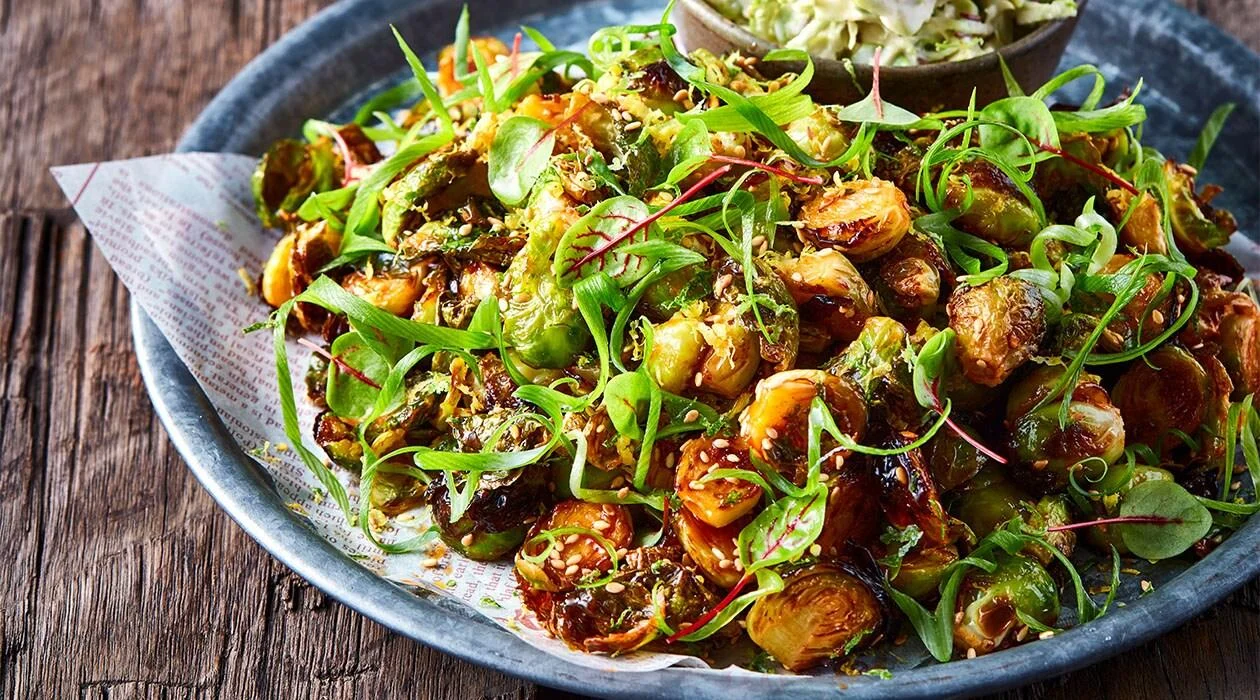
Gochujang Brussels Sprouts
Gochujang Brussels Sprouts turn caramelized roasted sprouts into a sticky, spicy-sweet side dish with crispy edges and a glossy glaze in 30 minutes.
🧂 Ingredients
- 2 lb (900g) Brussels sprouts, trimmed and halved lengthwise
- 3 tbsp extra-virgin olive oil
- 3 tbsp gochujang (Korean fermented chile paste)
- 2 tbsp honey
- 1 tbsp rice vinegar
- 2 tsp toasted sesame oil
- 3 cloves garlic, finely grated
- 1 tbsp toasted sesame seeds
- 2 scallions, thinly sliced on the bias
- 1/2 tsp kosher salt
📋 Instructions
- 1Heat the oven and pan — Place a rack in the upper third of the oven and preheat to 425F (220C) with a large rimmed sheet pan inside for at least 10 minutes. A hot pan is what gives the sprouts an instant sear on contact.
- 2Prep and dry the sprouts — Trim the stem ends and halve the sprouts lengthwise, then pat them thoroughly dry with a clean kitchen towel. Toss with the olive oil and kosher salt in a bowl until every piece is lightly coated.
- 3Roast cut-side down — Carefully pull the hot pan out, add the sprouts cut-side down in a single layer, and roast for 20 minutes at 425F (220C) without stirring. They are ready when the cut faces are deep golden brown and the outer leaves are dark and crisp, about 20 minutes.
- 4Blister under the broiler — Switch the oven to broil on high and broil for 3 to 4 minutes, until the edges are charred in spots and a leaf or two is almost black. Watch closely, since broilers go from charred to burnt in under a minute.
- 5Whisk the gochujang glaze — While the sprouts roast, whisk the gochujang, honey, rice vinegar, sesame oil, and grated garlic in a large bowl until smooth and glossy. It should be thick enough to coat the back of a spoon.
- 6Toss off the heat — Transfer the hot sprouts straight into the bowl with the glaze and toss gently for 30 seconds until every sprout is coated. The residual heat thins the sauce just enough to cling without cooking it bitter.
- 7Finish and serve — Scatter with toasted sesame seeds and sliced scallions and serve immediately while the edges are still crisp. These are best within 15 minutes of glazing, while the exterior is at its crunchiest.