Cozy Cravings Recipes
Garlic Parmesan Roast Chicken – Crispy, Juicy Weeknight

I have roasted a lot of chickens in my life, but this garlic Parmesan version is the one that made me stop and say, out loud, that I have never seen it done quite like this. The trick is a two-stage butter: half of it goes under the skin to season the meat, and half gets spread on top with a generous blanket of grated Parmesan that melts into a lacy, golden crust while the bird roasts.
The result is a chicken with shatteringly crisp skin, meat that stays juicy because of the butter and a short rest, and a garlicky, cheesy pan sauce that you will want to spoon over everything. It is simple enough for a Tuesday and impressive enough for a holiday table, and it needs nothing more than a green salad and some crusty bread to feel complete.
If you have ever ended up with pale, rubbery chicken skin or dry breast meat, this method fixes both problems at once. The high heat plus the Parmesan crust gives you color and crunch, and the under-skin butter keeps every bite tender.
Why You'll Love This Recipe
About the Ingredients
1 whole chicken, about 4 to 4.5 lb (1.8 to 2 kg), giblets removed
Look for an air-chilled bird if your store carries one; it roasts with drier skin and browns faster. A 4 lb chicken is the sweet spot for this pan size.
6 tablespoons (85 g) unsalted butter, softened
Softened butter spreads under the skin without tearing it. Salted butter works too; just cut the added salt in the rub by half.
4 garlic cloves, finely grated or minced
Fresh garlic gives the strongest flavor; jarred minced garlic is a fine shortcut in a pinch but tastes slightly sharper.
1 cup (90 g) finely grated Parmesan, divided
Use real Parmigiano-Reggiano or a good aged Parmesan, not the shaker can, because it melts and crisps properly. Pecorino Romano is a sharper swap.
1 tablespoon olive oil
Olive oil helps the crust adhere and brown; avocado oil is a neutral-flavored substitute with a higher smoke point.
1 1/2 teaspoons kosher salt
Kosher salt is less dense than table salt, so use only 1 teaspoon if substituting fine table salt.
1/2 teaspoon freshly ground black pepper
Fresh-cracked pepper blooms in the oven; pre-ground works but add a pinch more for the same punch.
1 teaspoon dried Italian herbs
A blend of oregano, basil, and thyme is classic here. Swap in 1 tablespoon of chopped fresh rosemary and thyme if you have them.
1 lemon, halved
The lemon goes inside the cavity for steam and brightness. A small onion quartered works if you are out of lemon.
1/2 cup (120 ml) low-sodium chicken broth
Broth keeps the pan drippings from scorching and builds the sauce. Dry white wine or water both work as substitutes.
Tips & Tricks
Dry the skin thoroughly
Pat the chicken completely dry with paper towels and let it sit uncovered in the fridge for 30 minutes if you can. Moisture is the number one enemy of crisp skin.
Loosen the skin gently
Slide your fingers under the breast and thigh skin slowly so it does not tear. Torn skin lets the butter leak out and the crust slides off.
Rest before carving
Ten minutes of rest lets the juices redistribute so they stay in the meat instead of flooding the cutting board.
- Season the Parmesan crust right before roasting: Mix the cheese topping just before it goes on the bird, since grated Parmesan absorbs moisture and clumps if it sits.
Pro Tips
Step-by-Step Instructions
1. Preheat and prep the pan
Preheat the oven to 425°F (220°C). Set a rack in a roasting pan or use a cast-iron skillet, and pour in the chicken broth so the drippings stay loose while roasting.
2. Dry and season the bird
Pat the chicken very dry inside and out, then season the cavity with a pinch of the salt and pepper and stuff it with the lemon halves. This dry surface is what lets the skin crisp.
3. Butter under the skin
Mash 3 tablespoons of the softened butter with half the garlic and rub it under the loosened skin of the breasts and thighs, spreading it evenly with your fingers.
4. Build the Parmesan topping
Mix the remaining 3 tablespoons butter with the rest of the garlic, the olive oil, the remaining salt and pepper, the herbs, and half the Parmesan until it forms a thick paste.
5. Coat the chicken
Rub the Parmesan butter all over the outside of the chicken, pressing it gently into the skin, then scatter the remaining Parmesan over the top and breasts.
6. Roast at high heat
Roast at 425°F (220°C) for 20 minutes to set the crust, then reduce to 400°F (200°C) and continue roasting 30 to 35 minutes, until the skin is deep golden brown and bubbling and a thigh reads 165°F (74°C) on an instant-read thermometer.
7. Rest the chicken
Transfer the chicken to a cutting board and tent loosely with foil for 10 minutes. The internal temperature will climb a few degrees as it rests and the juices will settle.
8. Make the pan sauce
Set the roasting pan over medium heat, scrape up the browned bits with a wooden spoon, and simmer the drippings with the broth for 2 to 3 minutes until slightly thickened. Taste and add salt if needed.
9. Carve and serve
Carve the chicken into breasts, thighs, and drumsticks, spoon the warm pan sauce over the top, and finish with extra grated Parmesan if you like.
Delicious Variations
Lemon-Herb Garlic Parmesan Chicken
Add the zest of the lemon to the butter rub and tuck fresh thyme sprigs under the skin for a brighter, more herbal bird.
Spicy Garlic Parmesan Chicken
Stir 1/2 teaspoon red pepper flakes and a pinch of smoked paprika into the Parmesan topping for a subtle heat that cuts the richness.
Garlic Parmesan Chicken Thighs
Use 8 bone-in, skin-on thighs instead of a whole bird and roast at 425°F (220°C) for 35 to 40 minutes for faster weeknight cooking.
How to Store Garlic Parmesan Roast Chicken
Refrigerator
Store cooled chicken in an airtight container in the refrigerator for up to 4 days; keep the pan sauce in a separate small jar.
Freezer
Freeze carved chicken in a freezer-safe container for up to 3 months; the crust will soften, so re-crisp it in the oven rather than the microwave.
Reheating
Reheat at 350°F (175°C) for 12 to 15 minutes, covered loosely with foil, until warmed through to 165°F (74°C); a quick broil at the end restores some crunch.
Frequently Asked Questions
Q: How do I get the Parmesan crust to stick to the chicken?
Press the Parmesan butter mixture firmly into dry skin and roast at high heat so the cheese melts and bonds before it can slide off. Patting the chicken completely dry first is the step most people skip, and it makes the biggest difference.
Q: Can I make garlic Parmesan roast chicken with chicken breasts instead?
Yes, use 4 bone-in, skin-on breasts and roast at 425°F (220°C) for about 30 to 35 minutes until the internal temperature reaches 165°F (74°C). Bone-in skin-on breasts hold up much better than boneless ones under the Parmesan crust.
Q: What temperature should roast chicken be when it is done?
The thickest part of the thigh should read 165°F (74°C) on an instant-read thermometer. Check the thigh rather than the breast, since dark meat cooks more slowly and is the most reliable indicator.
Q: Why did my chicken skin come out soggy?
Trapped moisture is almost always the cause, either from a wet bird or from crowding the pan so steam cannot escape. Dry the chicken well, use a rack so air circulates underneath, and do not cover it while roasting.
Q: Can I prepare this garlic Parmesan chicken ahead of time?
You can rub the chicken with the butter and Parmesan up to 4 hours ahead and keep it uncovered in the refrigerator. Add the final scattering of Parmesan right before it goes into the oven so the cheese does not absorb moisture and clump.
Give this garlic Parmesan roast chicken a try this week and see why it has become my go-to Sunday dinner. If you make it, leave a comment below with how your crust turned out, and snap a photo before you carve it because it is a looker.
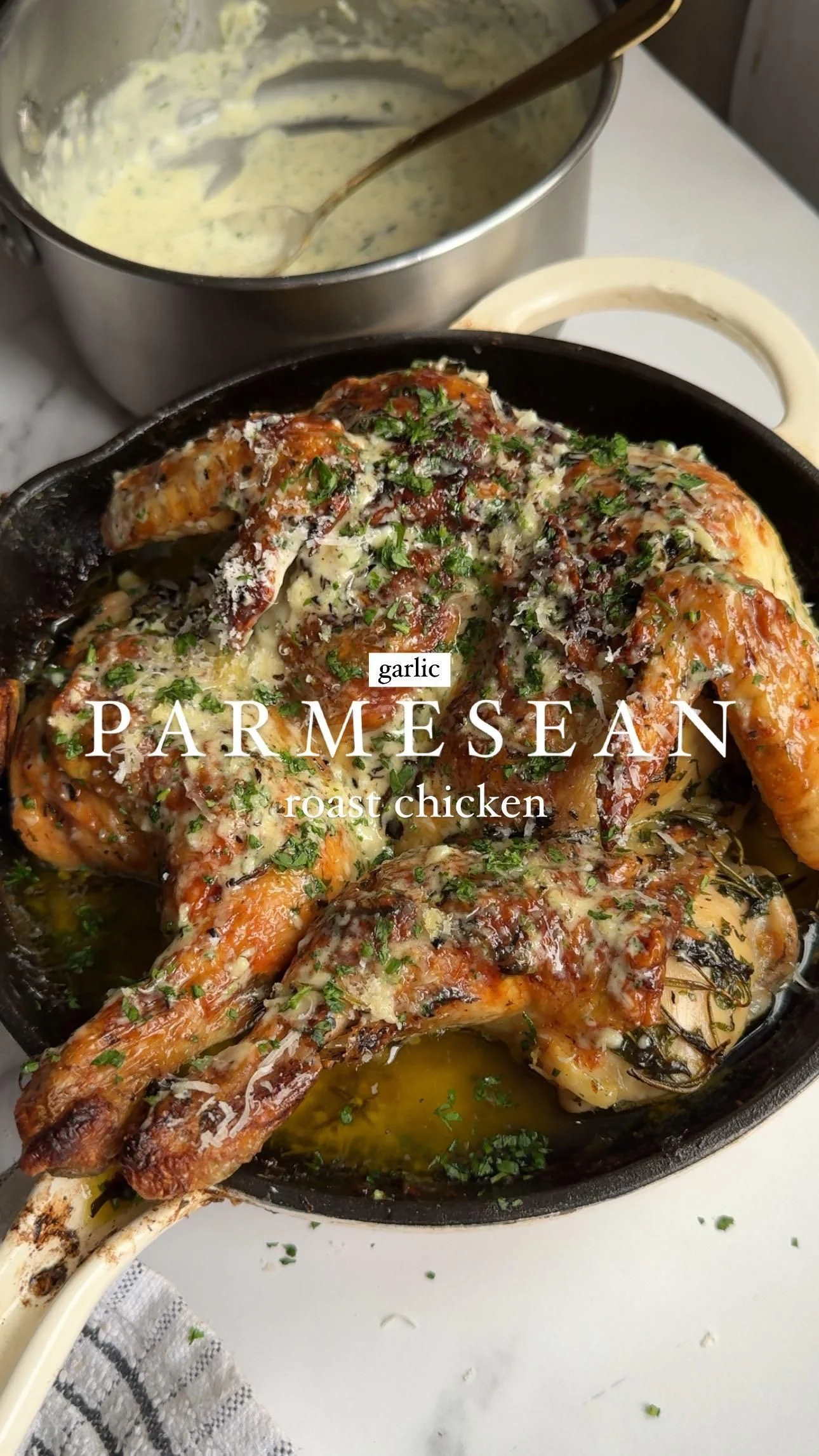
Garlic Parmesan Roast Chicken
Garlic Parmesan roast chicken delivers crackling golden skin and juicy meat with a savory garlic-Parmesan crust ready in under an hour.
🧂 Ingredients
- 1 whole chicken, about 4 to 4.5 lb (1.8 to 2 kg), giblets removed
- 6 tablespoons (85 g) unsalted butter, softened
- 4 garlic cloves, finely grated or minced
- 1 cup (90 g) finely grated Parmesan, divided
- 1 tablespoon olive oil
- 1 1/2 teaspoons kosher salt
- 1/2 teaspoon freshly ground black pepper
- 1 teaspoon dried Italian herbs
- 1 lemon, halved
- 1/2 cup (120 ml) low-sodium chicken broth
📋 Instructions
- 1Preheat and prep the pan — Preheat the oven to 425°F (220°C). Set a rack in a roasting pan or use a cast-iron skillet, and pour in the chicken broth so the drippings stay loose while roasting.
- 2Dry and season the bird — Pat the chicken very dry inside and out, then season the cavity with a pinch of the salt and pepper and stuff it with the lemon halves. This dry surface is what lets the skin crisp.
- 3Butter under the skin — Mash 3 tablespoons of the softened butter with half the garlic and rub it under the loosened skin of the breasts and thighs, spreading it evenly with your fingers.
- 4Build the Parmesan topping — Mix the remaining 3 tablespoons butter with the rest of the garlic, the olive oil, the remaining salt and pepper, the herbs, and half the Parmesan until it forms a thick paste.
- 5Coat the chicken — Rub the Parmesan butter all over the outside of the chicken, pressing it gently into the skin, then scatter the remaining Parmesan over the top and breasts.
- 6Roast at high heat — Roast at 425°F (220°C) for 20 minutes to set the crust, then reduce to 400°F (200°C) and continue roasting 30 to 35 minutes, until the skin is deep golden brown and bubbling and a thigh reads 165°F (74°C) on an instant-read thermometer.
- 7Rest the chicken — Transfer the chicken to a cutting board and tent loosely with foil for 10 minutes. The internal temperature will climb a few degrees as it rests and the juices will settle.
- 8Make the pan sauce — Set the roasting pan over medium heat, scrape up the browned bits with a wooden spoon, and simmer the drippings with the broth for 2 to 3 minutes until slightly thickened. Taste and add salt if needed.
- 9Carve and serve — Carve the chicken into breasts, thighs, and drumsticks, spoon the warm pan sauce over the top, and finish with extra grated Parmesan if you like.