Cozy Cravings Recipes
Garlic Parmesan Roast Chicken – Crispy, Juicy Weeknight

I have roasted a lot of chickens in my life, but this Garlic Parmesan Roast Chicken is the one that made my family stop mid-conversation. The trick is a three-part garlic Parmesan butter that goes under the skin, over the skin, and into the cavity, so every bite carries that savory, nutty, roasted-garlic flavor instead of just the surface.
I have never seen this done before, so of course I had to test it until it was foolproof. The butter is loaded with freshly grated Parmigiano-Reggiano and minced garlic, then slathered under the breast skin so it bastes the meat from the inside while the outside turns deep golden brown. The result is a bird with crackly skin, meat that releases clear juices at the thigh, and a pan of garlicky drippings begging to be spooned over potatoes.
It takes about 15 minutes of hands-on work and roasts in under an hour at 425F (220C), which makes it a realistic Sunday dinner or a showstopper for guests. Serve it with the pan juices and a squeeze of lemon to cut the richness.
Why You'll Love This Recipe
About the Ingredients
1 whole chicken, about 4.5 lb (2 kg), giblets removed and patted very dry
Buy a bird labeled air-chilled or free-range if you can; drier skin means crisper skin. Substitute a 4 lb (1.8 kg) chicken and reduce the roast time by 5 to 8 minutes.
6 tablespoons (85 g) unsalted butter, softened
Softened butter spreads under the skin without tearing it. Substitute ghee or a high-quality olive oil if you need it dairy-free, though the crust will be less rich.
1 cup (90 g) freshly grated Parmigiano-Reggiano
Grate it yourself on a microplane; pre-shredded cheese has anti-caking starch that turns gritty. Substitute Pecorino Romano for a sharper, saltier crust, and cut the added salt in half.
6 garlic cloves, finely minced (about 2 tablespoons)
Fresh garlic only here, since jarred garlic tastes flat when roasted. Substitute 1 1/2 teaspoons garlic powder mixed into the butter if you are out of fresh.
2 teaspoons kosher salt, plus more for the cavity
Kosher salt dissolves and seasons evenly; use 1 teaspoon fine sea salt if that is what you have. Do not skip salting the cavity, it seasons the bird from the inside.
1 teaspoon freshly cracked black pepper
Crack it right before mixing for the strongest aroma. Substitute white pepper for a milder, more floral heat.
1 teaspoon dried oregano or Italian seasoning
This rounds out the garlic-Parmesan flavor so it tastes layered rather than one-note. Substitute fresh thyme leaves, about 1 teaspoon, if you have them.
1 lemon, halved
The lemon goes inside the cavity to steam the bird from within and brighten the pan drippings. Substitute a small onion quartered plus 2 extra garlic cloves for a sweeter, less acidic pan sauce.
1 tablespoon olive oil
A thin coat of oil over the buttered skin helps it brown evenly at high heat. Substitute avocado oil, which has a higher smoke point.
Tips & Tricks
Dry the bird thoroughly
Pat the chicken inside and out with paper towels and let it sit uncovered in the fridge for 30 minutes if you have time. Surface moisture is the number one reason chicken skin turns pale and rubbery instead of crisp.
Loosen the skin gently
Slide your fingers between the breast skin and meat slowly, working from the neck end. If you tear the skin, the butter leaks out and the breast dries out, so go slow and keep your fingers flat against the meat.
Do not crowd the pan
Use a rack in a rimmed sheet pan or a shallow roasting pan so hot air circulates under the bird. A deep roasting pan steams the bottom and leaves you with soggy skin.
Rest before carving
Let the chicken sit 10 to 15 minutes tented loosely with foil so the juices redistribute. Cutting immediately dumps all that garlicky juice onto the cutting board instead of keeping it in the meat.
Pro Tips
Step-by-Step Instructions
1. Preheat and prep the pan
Heat the oven to 425F (220C) and set a rack inside a rimmed sheet pan. Pat the chicken completely dry with paper towels, inside and out, then season the cavity with a pinch of kosher salt.
2. Make the garlic Parmesan butter
Mash the softened butter with the grated Parmesan, minced garlic, 2 teaspoons kosher salt, black pepper, and oregano until it forms a thick, evenly speckled paste.
3. Loosen the breast skin
Slide your fingers under the skin over each breast, working from the neck end toward the legs, separating the skin from the meat without tearing it. You want a pocket on each side.
4. Stuff the butter under the skin
Push about two-thirds of the Parmesan butter into the pockets, spreading it flat over the breast meat. Rub the remaining butter all over the outside of the chicken, then rub the olive oil over the top for even browning.
5. Fill the cavity and truss lightly
Place the lemon halves inside the cavity and tie the legs together with kitchen twine if they splay open. Tucking the wings under the body keeps the tips from burning at high heat.
6. Roast at high heat
Roast at 425F (220C) for 20 minutes, then reduce to 400F (200C) and continue roasting 30 to 40 minutes, until the skin is deep golden brown and a thermometer in the thickest part of the thigh reads 175F (79C).
7. Rest the bird
Transfer the chicken to a cutting board and tent it loosely with foil for 10 to 15 minutes. The juices should run clear when you pierce the thigh, and the breast should read 160F (71C) after resting.
8. Carve and serve with drippings
Carve into breasts, thighs, and drumsticks, then spoon the warm garlicky pan drippings over the meat. Squeeze the roasted lemon halves over the top just before serving.
Delicious Variations
Lemon-Herb Garlic Parmesan Chicken
Add the zest of one lemon and 2 teaspoons chopped fresh rosemary to the butter for a brighter, more herbal crust.
Spicy Garlic Parmesan Chicken
Stir 1 teaspoon red pepper flakes and 1/2 teaspoon smoked paprika into the butter for a gentle heat that plays well with the Parmesan.
Garlic Parmesan Chicken Thighs
Use 6 bone-in, skin-on thighs instead of a whole bird and roast at 425F (220C) for 35 to 40 minutes, until the skin is crisp and the thighs reach 175F (79C).
How to Store Garlic Parmesan Roast Chicken
Refrigerator
Store carved chicken in an airtight container in the refrigerator for up to 4 days. Keep the pan drippings in a separate small jar, since they solidify into a flavorful fat you can re-melt.
Freezer
Freeze cooled chicken off the bone in a freezer-safe container for up to 3 months. Wrap pieces tightly or press out all the air to prevent freezer burn, and freeze the drippings separately.
Reheating
Reheat covered in a 350F (175C) oven for 12 to 15 minutes, or until the internal temperature reaches 165F (74C). Avoid the microwave for skin-on pieces, since it steams the crust soft; if you must, reheat uncovered at 50 percent power.
Frequently Asked Questions
Q: How do I get crispy skin on roast chicken?
Dry the skin completely and roast at high heat, 425F (220C) to start, so the moisture evaporates fast and the fat renders. Leaving the chicken uncovered in the fridge for 30 minutes before roasting helps even more.
Q: What internal temperature should roast chicken be?
Pull the chicken when the thickest part of the thigh reads 175F (79C) and the breast reads 160F (71C). Carryover heat during the 10 to 15 minute rest brings the breast up to a safe 165F (74C).
Q: Can I make garlic Parmesan roast chicken ahead of time?
Yes, you can rub the butter under and over the skin up to 24 hours ahead and refrigerate the bird uncovered. Roast it straight from the fridge, adding about 10 minutes to the total cook time.
Q: Why did my garlic Parmesan butter burn?
The garlic and Parmesan on the surface burn when the oven is too hot or the butter layer is too thick. Keep the oven at 400F (200C) after the first 20 minutes and tent the bird with foil if the top darkens before the thigh reaches temperature.
Q: How many people does a 4.5 lb roast chicken serve?
A 4.5 lb (2 kg) chicken serves 4 to 6 people, depending on appetite and whether you carve it into 8 pieces. Add extra sides if you are feeding 6 hungry adults.
If you make this Garlic Parmesan Roast Chicken, I want to hear how the skin turned out. Snap a photo of that golden bird and leave a comment below with your favorite side, because the pan drippings deserve a worthy companion.
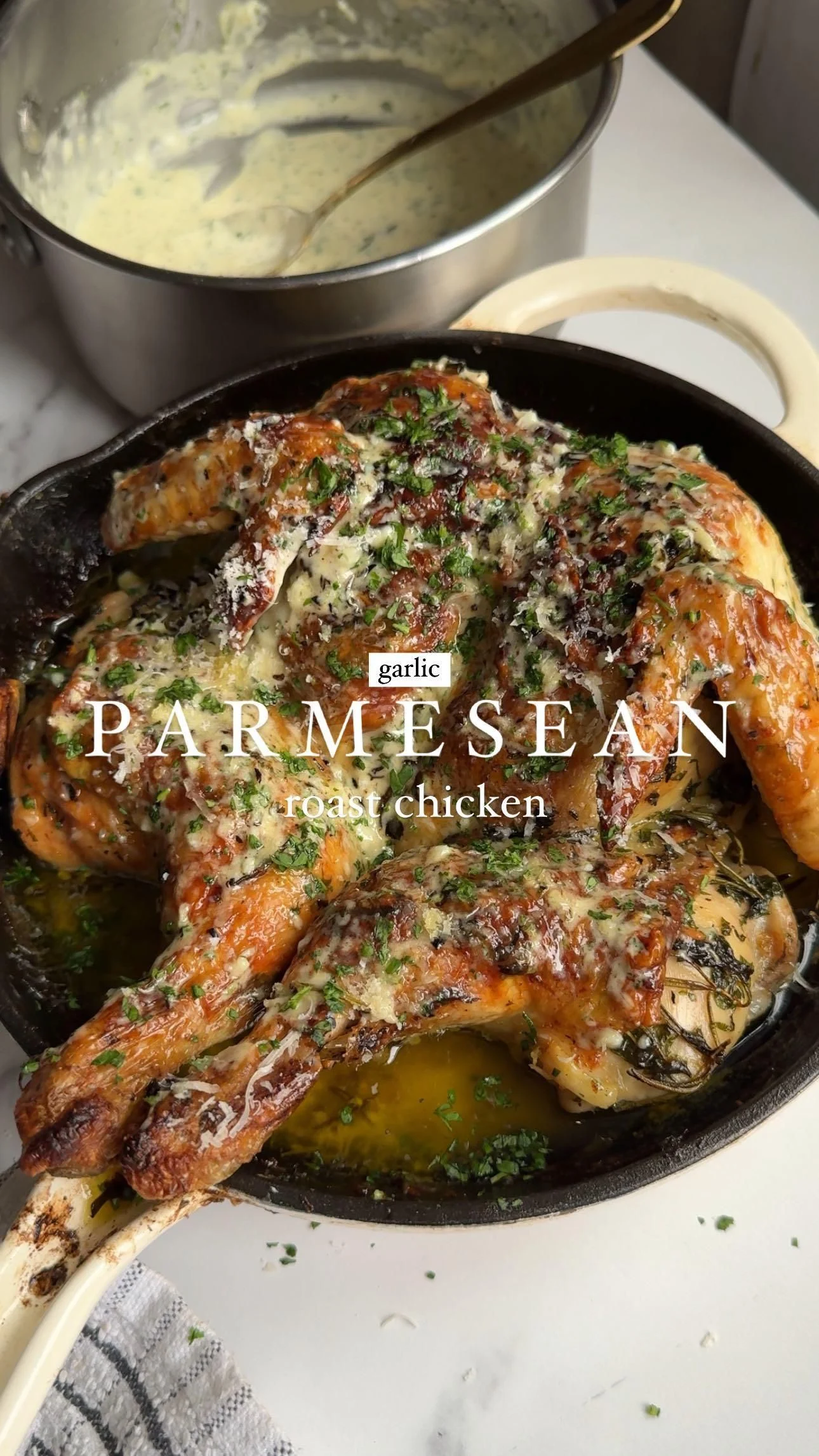
Garlic Parmesan Roast Chicken
Garlic Parmesan Roast Chicken delivers shatteringly crisp skin and juicy meat with a rich garlicky Parmesan crust your family will devour.
🧂 Ingredients
- 1 whole chicken, about 4.5 lb (2 kg), giblets removed and patted very dry
- 6 tablespoons (85 g) unsalted butter, softened
- 1 cup (90 g) freshly grated Parmigiano-Reggiano
- 6 garlic cloves, finely minced (about 2 tablespoons)
- 2 teaspoons kosher salt, plus more for the cavity
- 1 teaspoon freshly cracked black pepper
- 1 teaspoon dried oregano or Italian seasoning
- 1 lemon, halved
- 1 tablespoon olive oil
📋 Instructions
- 1Preheat and prep the pan — Heat the oven to 425F (220C) and set a rack inside a rimmed sheet pan. Pat the chicken completely dry with paper towels, inside and out, then season the cavity with a pinch of kosher salt.
- 2Make the garlic Parmesan butter — Mash the softened butter with the grated Parmesan, minced garlic, 2 teaspoons kosher salt, black pepper, and oregano until it forms a thick, evenly speckled paste.
- 3Loosen the breast skin — Slide your fingers under the skin over each breast, working from the neck end toward the legs, separating the skin from the meat without tearing it. You want a pocket on each side.
- 4Stuff the butter under the skin — Push about two-thirds of the Parmesan butter into the pockets, spreading it flat over the breast meat. Rub the remaining butter all over the outside of the chicken, then rub the olive oil over the top for even browning.
- 5Fill the cavity and truss lightly — Place the lemon halves inside the cavity and tie the legs together with kitchen twine if they splay open. Tucking the wings under the body keeps the tips from burning at high heat.
- 6Roast at high heat — Roast at 425F (220C) for 20 minutes, then reduce to 400F (200C) and continue roasting 30 to 40 minutes, until the skin is deep golden brown and a thermometer in the thickest part of the thigh reads 175F (79C).
- 7Rest the bird — Transfer the chicken to a cutting board and tent it loosely with foil for 10 to 15 minutes. The juices should run clear when you pierce the thigh, and the breast should read 160F (71C) after resting.
- 8Carve and serve with drippings — Carve into breasts, thighs, and drumsticks, then spoon the warm garlicky pan drippings over the meat. Squeeze the roasted lemon halves over the top just before serving.