Cozy Cravings Recipes
Garlic Butter Roasted Turkey – Juicy and Golden
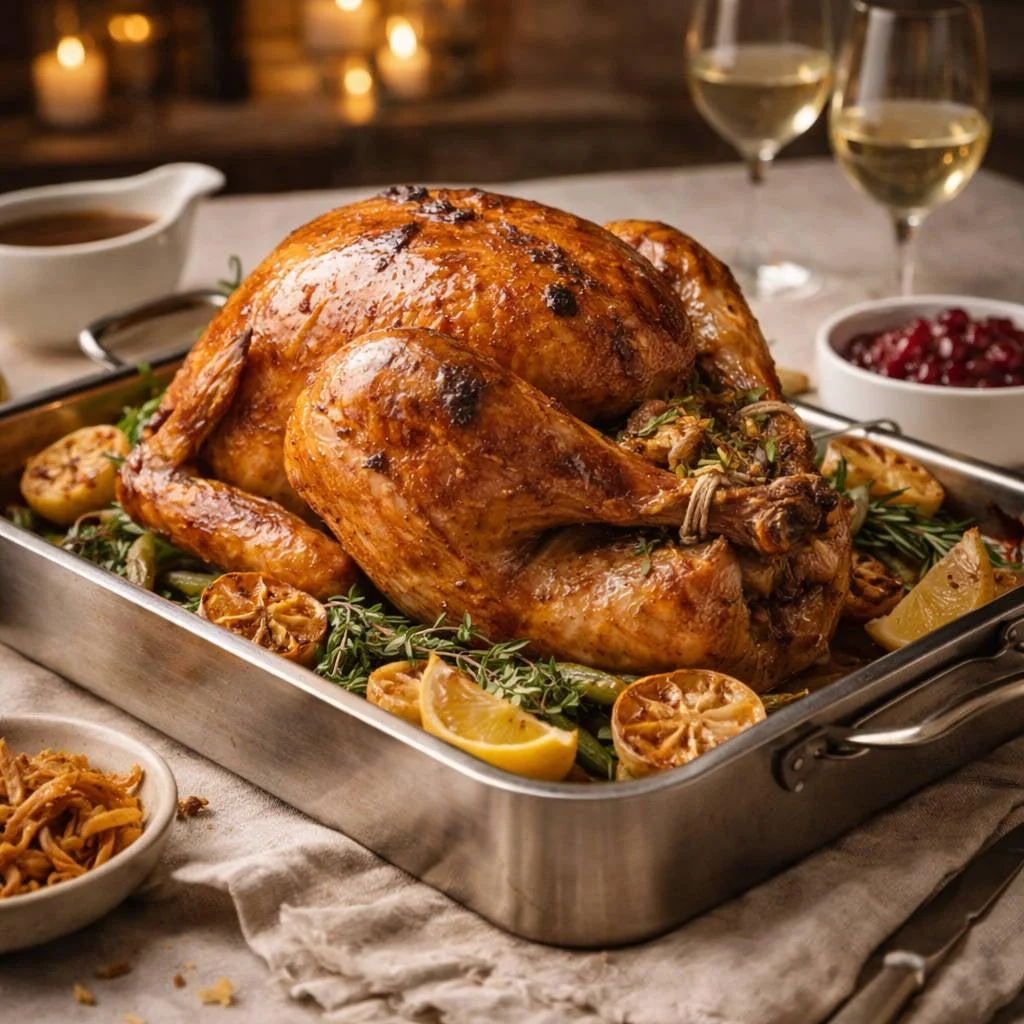
This Garlic Butter Roasted Turkey is the answer to every dry-holiday-bird horror story. A compound butter loaded with roasted garlic, fresh thyme, and lemon zest gets slathered under and over the skin, so every slice stays succulent while the skin turns deeply golden and crackling crisp.
The method is straightforward: dry-brine the bird overnight for seasoned meat, then roast it breast-up at high heat before dropping the temperature to finish gently. Basting with the garlic butter pan drippings every 30 minutes builds a glossy, flavor-packed crust without any fussy flipping.
Whether it is your first Thanksgiving or your twentieth, this recipe gives you exact temperatures, a reliable internal-temperature cue, and a make-ahead butter you can prep days in advance. The result is a centerpiece that looks impressive but comes together with surprisingly little effort.
Why You'll Love This Recipe
About the Ingredients
1 whole turkey, 12 to 14 pounds (5.4 to 6.3 kg), fully thawed
Look for a bird labeled 'pre-basted' or 'self-basting' only if you want extra salt; otherwise a natural turkey gives you control. A 12-pound bird feeds a crowd with leftovers, while 14 pounds is best for 10 or more guests.
1 cup (2 sticks / 225g) unsalted butter, softened
European-style butter with higher fat browns more beautifully. In a pinch, use salted butter and skip the added salt in the butter mixture.
8 cloves garlic, finely minced (about 3 tablespoons)
Fresh garlic is essential here; jarred garlic tastes flat and bitter when roasted. For a mellower bite, roast the cloves first and mash them into the butter.
2 tablespoons fresh thyme leaves, chopped
If thyme is unavailable, use 1 tablespoon dried thyme or swap in fresh sage for a more traditional holiday flavor. Strip leaves from stems just before mixing so they stay fragrant.
1 tablespoon fresh rosemary, finely chopped
Rosemary can overpower, so measure carefully. Dried rosemary works but should be crushed between your fingers first to soften the needles.
Zest of 1 lemon plus 1 tablespoon fresh lemon juice
Zest only the yellow layer to avoid bitter pith. A microplane makes quick work of it; a vegetable peeler plus a fine chop works too.
2 teaspoons smoked paprika
Smoked paprika deepens the skin color and adds a subtle smoky note. Sweet paprika is a fine substitute if you prefer a milder profile.
1 1/2 teaspoons kosher salt, plus more for dry-brining
Kosher salt dissolves and seasons more evenly than table salt. If using fine table salt, reduce the amount by about one third.
1 teaspoon freshly cracked black pepper
Crack pepper fresh for the best aroma. White pepper is a good swap if you want to avoid dark flecks on the skin.
1 large onion, quartered
Onion goes in the cavity and roasting pan to perfume the drippings. Yellow or white onion both work; skip red onion, which can turn the gravy pink.
1 cup (240ml) low-sodium chicken broth, for the pan
Broth keeps the drippings from scorching and becomes the base of your gravy. Vegetable broth or dry white wine can replace half of it.
Tips & Tricks
Thaw completely before roasting
A partially frozen turkey roasts unevenly and can take hours longer; thaw in the refrigerator allowing 24 hours per 4 to 5 pounds.
Dry-brine overnight uncovered
Salting the skin and leaving the bird uncovered in the fridge dries the surface, which is the secret to truly crispy skin.
Do not rely on the pop-up timer
Those plastic timers often pop at 180F, well past juicy; use an instant-read thermometer in the thickest thigh instead.
Rest longer than you think
A 30-minute rest lets juices redistribute; tent loosely with foil, not tightly, or the skin will steam and soften.
Pro Tips
Step-by-Step Instructions
1. Dry-Brine the Turkey
Pat the turkey completely dry inside and out with paper towels, then rub 1 tablespoon kosher salt all over the skin and inside the cavity. Place it breast-up on a rack in a roasting pan and refrigerate uncovered for 12 to 24 hours; the skin should feel tacky and dry to the touch.
2. Make the Garlic Butter
Mash the softened butter with the minced garlic, thyme, rosemary, lemon zest, lemon juice, smoked paprika, 1 1/2 teaspoons salt, and pepper until evenly combined. The mixture should smell intensely garlicky and hold together in a smooth paste.
3. Butter Under the Skin
Starting at the neck, slide your fingers between the skin and breast meat to loosen it, being careful not to tear the skin. Spread about two thirds of the butter directly onto the meat, then smooth the skin back down and rub the remaining butter all over the outside.
4. Stuff and Truss
Fill the cavity with the quartered onion, then tie the legs together with kitchen twine and tuck the wing tips under the body. This keeps the bird compact so it roasts evenly and the breast does not dry out.
5. Roast at High Heat
Pour the chicken broth into the bottom of the roasting pan and place the turkey on the middle rack of an oven preheated to 450F (230C). Roast for 30 minutes, until the skin is blistered and deep golden brown.
6. Lower and Continue
Reduce the oven to 350F (175C) and continue roasting, basting with pan drippings every 30 minutes, for about 1 hour 45 minutes more for a 12-pound bird. The turkey is done when a thermometer in the thickest thigh reads 165F (74C) and the juices run clear.
7. Rest Before Carving
Transfer the turkey to a carving board, tent loosely with foil, and rest for 30 minutes. The internal temperature will climb about 5 to 10 degrees as it rests, and the juices will settle so they do not run out when sliced.
8. Carve and Serve
Strain the pan drippings into a fat separator and use the defatted juices for gravy. Carve the turkey against the grain, starting with the legs and thighs, then slice the breast into thick pieces and serve hot with the garlicky pan sauce.
Delicious Variations
Herb-Citrus Turkey
Swap the lemon for orange zest and juice and add 2 tablespoons chopped fresh sage for a brighter, more classic holiday flavor.
Spicy Honey-Garlic Turkey
Add 1 teaspoon red pepper flakes to the butter and brush the skin with 2 tablespoons honey mixed with 1 tablespoon melted butter during the last 20 minutes for a lacquered, sweet-heat crust.
Smoked Paprika Butter Turkey
Double the smoked paprika to 4 teaspoons and add 1 teaspoon ground cumin for a smoky, almost barbecue-style bird that pairs beautifully with cornbread stuffing.
How to Store Garlic Butter Roasted Turkey
Refrigerator
Store carved turkey in an airtight container in the refrigerator for up to 4 days; keep the drippings in a separate jar for up to 5 days.
Freezer
Freeze sliced turkey in portion-sized freezer bags with a splash of pan juices for up to 3 months; press out all air to prevent freezer burn.
Reheating
Reheat gently at 300F (150C) covered with foil and a splash of broth for 15 to 20 minutes, or microwave individual portions covered with a damp paper towel to keep the meat moist.
Frequently Asked Questions
Q: How long do you roast a 12-pound turkey at 350F?
A 12-pound unstuffed turkey takes roughly 2 hours 15 minutes to 2 hours 30 minutes at 350F (175C) after an initial 30-minute blast at 450F (230C). Always confirm doneness with a thermometer reading 165F (74C) in the thickest part of the thigh rather than relying on time alone.
Q: Should I put butter under or on top of the turkey skin?
Put most of the butter under the skin, directly on the breast meat, and rub the rest on the outside. Butter under the skin bastes the meat from within and keeps the breast juicy, while the surface butter helps the skin brown and crisp.
Q: Do you cover a turkey with foil while roasting?
Leave the turkey uncovered for the first two thirds of roasting so the skin can brown and crisp, then tent it loosely with foil if the breast is darkening too fast. Never wrap it tightly, or trapped steam will turn the crispy skin soggy.
Q: Can I make garlic butter turkey ahead of time?
Yes, the garlic herb butter can be made and refrigerated up to 5 days ahead, or frozen for up to 2 months. You can also dry-brine the turkey the night before, which actually improves both flavor and skin texture.
Q: How do I keep the turkey breast from drying out?
Roast it breast-up, keep the butter under the skin, and pull the bird at 165F (74C) in the thigh rather than cooking to a higher temperature. Resting for 30 minutes tented with foil also lets juices redistribute so the breast stays moist.
If you make this Garlic Butter Roasted Turkey, snap a photo of that golden crackling skin and tag me on social media. Save the recipe to your holiday board and leave a comment letting me know how your guests reacted.
Garlic Butter Roasted Turkey
Garlic Butter Roasted Turkey delivers a juicy, golden bird with crispy herb-kissed skin, basted in rich garlic butter for an unforgettable holiday centerpiece.
🧂 Ingredients
- 1 whole turkey, 12 to 14 pounds (5.4 to 6.3 kg), fully thawed
- 1 cup (2 sticks / 225g) unsalted butter, softened
- 8 cloves garlic, finely minced (about 3 tablespoons)
- 2 tablespoons fresh thyme leaves, chopped
- 1 tablespoon fresh rosemary, finely chopped
- Zest of 1 lemon plus 1 tablespoon fresh lemon juice
- 2 teaspoons smoked paprika
- 1 1/2 teaspoons kosher salt, plus more for dry-brining
- 1 teaspoon freshly cracked black pepper
- 1 large onion, quartered
- 1 cup (240ml) low-sodium chicken broth, for the pan
📋 Instructions
- 1Dry-Brine the Turkey — Pat the turkey completely dry inside and out with paper towels, then rub 1 tablespoon kosher salt all over the skin and inside the cavity. Place it breast-up on a rack in a roasting pan and refrigerate uncovered for 12 to 24 hours; the skin should feel tacky and dry to the touch.
- 2Make the Garlic Butter — Mash the softened butter with the minced garlic, thyme, rosemary, lemon zest, lemon juice, smoked paprika, 1 1/2 teaspoons salt, and pepper until evenly combined. The mixture should smell intensely garlicky and hold together in a smooth paste.
- 3Butter Under the Skin — Starting at the neck, slide your fingers between the skin and breast meat to loosen it, being careful not to tear the skin. Spread about two thirds of the butter directly onto the meat, then smooth the skin back down and rub the remaining butter all over the outside.
- 4Stuff and Truss — Fill the cavity with the quartered onion, then tie the legs together with kitchen twine and tuck the wing tips under the body. This keeps the bird compact so it roasts evenly and the breast does not dry out.
- 5Roast at High Heat — Pour the chicken broth into the bottom of the roasting pan and place the turkey on the middle rack of an oven preheated to 450F (230C). Roast for 30 minutes, until the skin is blistered and deep golden brown.
- 6Lower and Continue — Reduce the oven to 350F (175C) and continue roasting, basting with pan drippings every 30 minutes, for about 1 hour 45 minutes more for a 12-pound bird. The turkey is done when a thermometer in the thickest thigh reads 165F (74C) and the juices run clear.
- 7Rest Before Carving — Transfer the turkey to a carving board, tent loosely with foil, and rest for 30 minutes. The internal temperature will climb about 5 to 10 degrees as it rests, and the juices will settle so they do not run out when sliced.
- 8Carve and Serve — Strain the pan drippings into a fat separator and use the defatted juices for gravy. Carve the turkey against the grain, starting with the legs and thighs, then slice the breast into thick pieces and serve hot with the garlicky pan sauce.