Cozy Cravings Recipes
Easy Thai Coconut Curry Dumpling Soup – 50-Minute Comfort
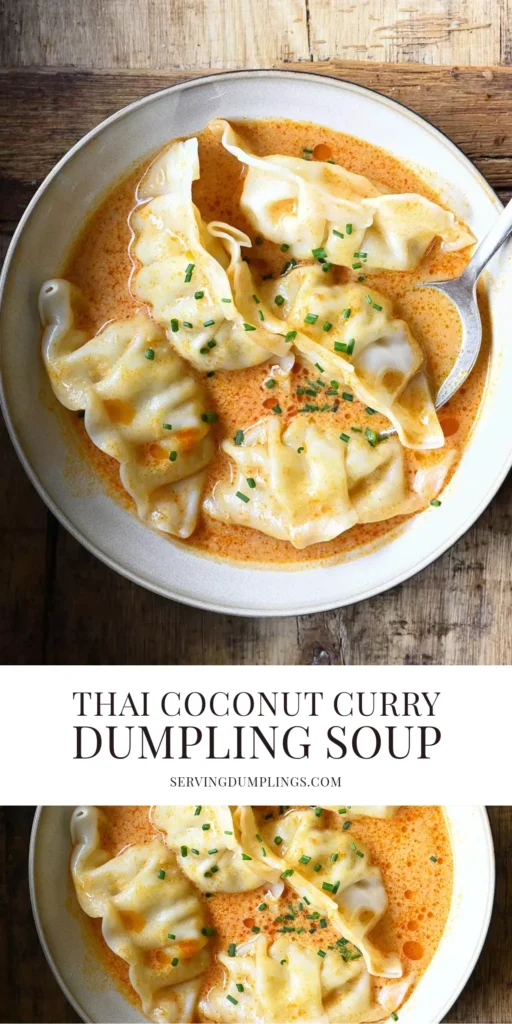
This Easy Thai Coconut Curry Dumpling Soup is the answer to every cold night when you want something rich and warming but refuse to spend an hour at the stove. Frozen dumplings drop straight into a fragrant coconut-red curry broth, so the wrappers soak up spice and the filling stays juicy.
The broth comes together in one pot with red curry paste, coconut milk, chicken stock, and a splash of fish sauce for that salty-sweet depth you taste in Thai restaurants. Baby bok choy and lime juice go in at the very end so they stay bright instead of turning to mush.
Serve it in deep bowls with plenty of broth, a shower of cilantro, and a squeeze of lime. It tastes like takeout, costs less than takeout, and dirties exactly one pot.
Why You'll Love This Recipe
About the Ingredients
2 tablespoons coconut oil or neutral oil
Coconut oil adds a subtle sweetness that matches the curry; canola or avocado oil works just as well. Buy unrefined coconut oil if you want the aroma to carry through.
3 tablespoons Thai red curry paste
Use a Thai brand like Mae Ploy or Maesri for authentic flavor; massaman or green curry paste can substitute if you want it milder or herbier. Check the label for shrimp paste if you are cooking for shellfish allergies.
2 cloves garlic, minced
Fresh garlic is best, but 1 teaspoon garlic paste from a tube saves time. Avoid garlic powder here; it turns bitter in the hot curry paste.
1 tablespoon freshly grated ginger
Grated ginger melts into the broth; frozen ginger cubes work in a pinch. If you only have ground ginger, use 1/2 teaspoon and add it with the stock.
1 can (13.5 oz / 400 ml) full-fat coconut milk
Full-fat gives the creamy body this soup needs; light coconut milk makes a thinner broth. Shake the can hard before opening so the cream and water combine.
4 cups (950 ml) low-sodium chicken stock
Vegetable stock makes this vegetarian if you also use veggie dumplings. Low-sodium matters because the fish sauce and dumplings both add salt.
1 tablespoon fish sauce
Soy sauce or tamari is a good vegetarian swap. Taste the broth before adding more, since brands vary wildly in saltiness.
24 frozen pork and chive dumplings (about 1 lb / 450 g)
Any frozen Asian dumpling works, including chicken, shrimp, or vegetable. Do not thaw them; frozen dumplings hold their shape and release less starch.
4 heads baby bok choy, halved lengthwise
Regular bok choy or napa cabbage can substitute, sliced into 2-inch pieces. Look for firm, bright green leaves with no yellowing at the tips.
1 tablespoon fresh lime juice, plus lime wedges for serving
Fresh lime is non-negotiable for brightness; bottled juice tastes flat. Add it off the heat so the flavor stays sharp.
1/4 cup chopped fresh cilantro, plus more for serving
Thai basil or scallions can stand in if you dislike cilantro. Add the stems too; they carry a lot of flavor.
1 teaspoon brown sugar
Palm sugar is traditional, but brown sugar rounds out the curry's heat nicely. Skip it if your curry paste already tastes sweet.
Tips & Tricks
Taste and season in layers
add fish sauce a teaspoon at a time, since curry pastes and stocks vary in salt content.
- Do not boil the broth hard once the dumplings go in: a gentle simmer at 200 F (93 C) keeps the wrappers intact instead of shredding them.
- Add the lime juice and cilantro only after you turn off the heat, because heat mutes the fresh citrus and herb notes.
Pro Tips
Step-by-Step Instructions
1. Bloom the aromatics
Heat the coconut oil in a large Dutch oven over medium heat to 350 F (175 C). Add the curry paste, garlic, and ginger and fry for 60 seconds, stirring constantly, until the paste darkens slightly and smells fragrant and nutty.
2. Build the broth
Pour in the coconut milk and stir to dissolve the paste, then add the chicken stock, fish sauce, and brown sugar. Bring to a gentle simmer at 200 F (93 C) and cook for 8 minutes so the flavors marry.
3. Add the dumplings
Slide in the frozen dumplings and simmer gently for 8 to 10 minutes, stirring once or twice, until they float and the wrappers look glossy and slightly translucent. Do not let the pot boil hard.
4. Cook the bok choy
Nestle the halved bok choy into the broth and simmer for 3 to 4 minutes, until the stems are tender when pierced with a knife and the leaves are wilted but still bright green.
5. Finish off heat
Turn off the burner and stir in the lime juice and cilantro. Taste and add more fish sauce or lime if the broth needs salt or brightness.
6. Serve hot
Ladle 4 dumplings and plenty of broth into each deep bowl, top with bok choy, and garnish with extra cilantro and lime wedges.
Delicious Variations
Green Curry Version
Swap green curry paste for red and add 1 cup of frozen peas at the end for a fresher, grassier broth.
Spicy Tom Yum Twist
Add 1 sliced lemongrass stalk and 4 kaffir lime leaves with the stock, plus a pinch of chili flakes.
Veggie Dumpling Soup
Use vegetable stock and veggie dumplings, and replace fish sauce with soy sauce for a fully vegetarian pot.
How to Store Easy Thai Coconut Curry Dumpling Soup
Refrigerator
Store in an airtight container in the refrigerator for up to 3 days; keep the dumplings submerged in broth so they do not dry out.
Freezer
Freeze the broth and dumplings together in a freezer-safe container for up to 2 months; the dumpling texture softens slightly on thawing.
Reheating
Reheat gently on the stovetop over medium-low heat at 180 F (82 C) for 5 minutes, adding a splash of stock or water to loosen the broth. Avoid the microwave, which toughens the wrappers.
Frequently Asked Questions
Q: Can I use fresh dumplings instead of frozen?
Yes, but reduce the simmering time to 4 to 5 minutes so the wrappers do not fall apart. Fresh dumplings are already tender and cook much faster than frozen ones.
Q: How do I keep the dumplings from falling apart in soup?
Keep the broth at a gentle simmer and never let it boil hard. A rolling boil agitates the wrappers and tears them, so watch for small bubbles at 200 F (93 C) rather than a full boil.
Q: Is this Thai coconut curry dumpling soup spicy?
It has a mild-to-medium heat from the red curry paste, roughly a 2 out of 5. Use 2 tablespoons of paste instead of 3 for a milder pot, or add chili oil at the table for more heat.
Q: Can I make this soup vegetarian?
Yes, use vegetable stock, vegetable dumplings, and soy sauce or tamari in place of the fish sauce. Check that your curry paste is shrimp-paste free, since many Thai brands include it.
Q: What can I serve with this soup?
Steamed jasmine rice, crusty bread, or a simple cucumber salad all work well. The broth is rich, so a crisp, acidic side balances it nicely.
Grab a bag of frozen dumplings and a can of coconut milk tonight, and you are 50 minutes from a steaming bowl of this curry soup. Make it once, then tell me in the comments which dumpling filling you used.
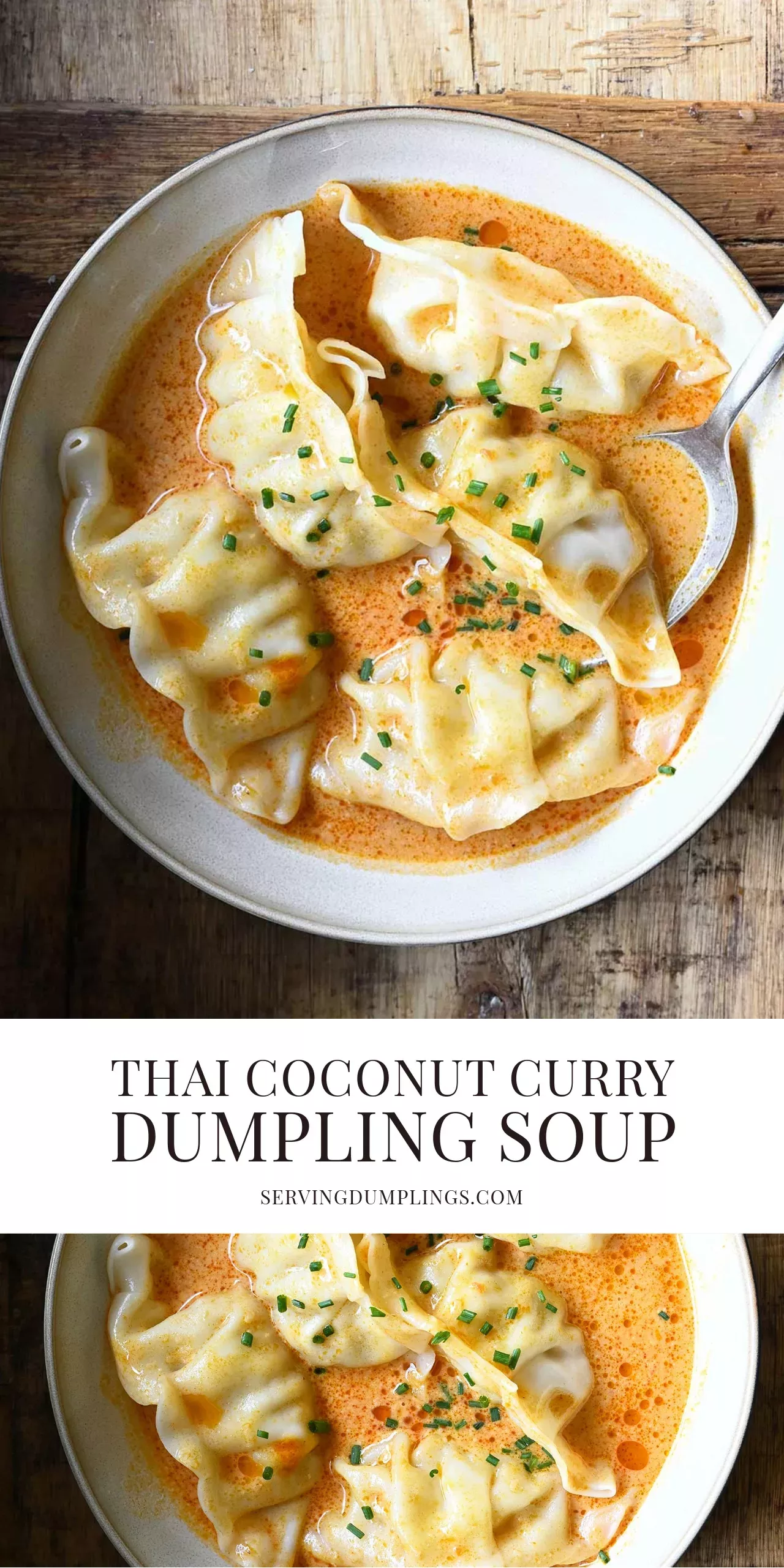
Easy Thai Coconut Curry Dumpling Soup
This Easy Thai Coconut Curry Dumpling Soup simmers plump pork dumplings in a creamy red curry coconut broth for a cozy one-pot dinner.
🧂 Ingredients
- 2 tablespoons coconut oil or neutral oil
- 3 tablespoons Thai red curry paste
- 2 cloves garlic, minced
- 1 tablespoon freshly grated ginger
- 1 can (13.5 oz / 400 ml) full-fat coconut milk
- 4 cups (950 ml) low-sodium chicken stock
- 1 tablespoon fish sauce
- 24 frozen pork and chive dumplings (about 1 lb / 450 g)
- 4 heads baby bok choy, halved lengthwise
- 1 tablespoon fresh lime juice, plus lime wedges for serving
- 1/4 cup chopped fresh cilantro, plus more for serving
- 1 teaspoon brown sugar
📋 Instructions
- 1Bloom the aromatics — Heat the coconut oil in a large Dutch oven over medium heat to 350 F (175 C). Add the curry paste, garlic, and ginger and fry for 60 seconds, stirring constantly, until the paste darkens slightly and smells fragrant and nutty.
- 2Build the broth — Pour in the coconut milk and stir to dissolve the paste, then add the chicken stock, fish sauce, and brown sugar. Bring to a gentle simmer at 200 F (93 C) and cook for 8 minutes so the flavors marry.
- 3Add the dumplings — Slide in the frozen dumplings and simmer gently for 8 to 10 minutes, stirring once or twice, until they float and the wrappers look glossy and slightly translucent. Do not let the pot boil hard.
- 4Cook the bok choy — Nestle the halved bok choy into the broth and simmer for 3 to 4 minutes, until the stems are tender when pierced with a knife and the leaves are wilted but still bright green.
- 5Finish off heat — Turn off the burner and stir in the lime juice and cilantro. Taste and add more fish sauce or lime if the broth needs salt or brightness.
- 6Serve hot — Ladle 4 dumplings and plenty of broth into each deep bowl, top with bok choy, and garnish with extra cilantro and lime wedges.