

These easy potato noodles are the kind of humble, old-fashioned comfort food that quietly becomes a weeknight favorite. Grated potato meets flour and a single egg, gets rolled into soft ropes, and simmers into tender, pleasantly chewy noodles that soak up whatever sauce you toss them in.
Advertisements1
The magic is in the potato-to-flour balance: too much flour and the noodles turn dense and gummy, too little and they fall apart in the water. The ratios below are tested and forgiving, and the dough comes together in one bowl with no mixer and no fancy equipment.
Finish them in a quick garlic butter with a shower of Parmesan and parsley, or keep them plain and let a rich stew or ragu do the work. Either way, you get a satisfying homemade pasta-style dinner for six from pantry basics.
Why You'll Love This Recipe
About the Ingredients
3 large russet potatoes (about 2 lb / 900 g), peeled and cut into chunks
Russets are starchy and give the lightest noodles; waxy potatoes turn gluey. Yukon Golds work as a substitute if you add 2 extra tablespoons of flour.
2 cups (250 g) all-purpose flour, plus more for dusting
Add flour gradually because potato moisture varies by batch. Bread flour makes slightly chewier noodles, while a 1-to-1 gluten-free blend works for a gluten-free version.
1 large egg, lightly beaten
The egg binds the dough and adds richness. For an egg-free version, swap in 3 tablespoons of warm water plus 1 teaspoon of olive oil.
1 teaspoon fine sea salt, plus more for the boiling water
Salt the dough lightly and salt the water generously, like seawater. Kosher salt can be substituted using 1 1/4 teaspoons.
4 tablespoons (56 g) unsalted butter
Butter gives the finish a nutty richness. Olive oil or a plant-based butter works for a dairy-free version, though the flavor will be less rounded.
3 garlic cloves, thinly sliced
Fresh garlic is essential here; slice rather than mince so it turns golden instead of burning. Jarred garlic is a last-resort substitute with a milder punch.
1/3 cup (30 g) finely grated Parmesan
Buy a wedge and grate it yourself for the best melt. Pecorino Romano is a sharper substitute, or use nutritional yeast for a vegan finish.
2 tablespoons chopped fresh flat-leaf parsley
Parsley adds a bright, fresh finish. Chopped chives or dill can stand in, and 2 teaspoons of dried parsley works in a pinch.
1/4 teaspoon freshly ground black pepper
Fresh-cracked pepper blooms in the warm butter. White pepper gives a milder heat if you prefer a smoother look.
Tips & Tricks
Squeeze the potatoes dry
After grating, wring the potato in a clean kitchen towel to remove excess water, or you will need far too much flour and the noodles will turn dense.
Keep the dough soft but not sticky
Add flour one tablespoon at a time until the dough just stops clinging to your fingers; a slightly tacky dough gives the tenderest noodles.
Test one noodle first
Drop a single noodle into the boiling water to check it holds together; if it disintegrates, knead in another tablespoon of flour before cutting the rest.
Do not overcrowd the pot
Boil the noodles in two batches so the water stays at a rolling boil; crowded noodles stick together and cook unevenly.
Pro Tips
Step-by-Step Instructions
1. Boil the potatoes
Cover the potato chunks with cold salted water in a large pot and bring to a boil over high heat, then reduce to a simmer at 200F (93C) for 15 to 18 minutes, until a knife slides in with no resistance. Drain well and let the steam escape for 5 minutes.
2. Rice and cool
Pass the hot potatoes through a ricer or mash them until completely smooth, then spread them on a plate to cool for 10 minutes at room temperature. Cooling prevents the egg from cooking when it hits the warm potato.
3. Mix the dough
In a large bowl, combine the cooled potato, egg, 1 teaspoon salt, and 1 cup of the flour. Mix with a fork, then add the remaining flour a few tablespoons at a time until a soft, slightly tacky dough forms that pulls away from the bowl.
4. Knead gently
Turn the dough onto a floured surface and knead for 2 to 3 minutes, until smooth and no longer sticky, dusting with flour only as needed. Over-kneading develops gluten and makes the noodles tough, so stop as soon as the dough feels supple.
5. Roll and cut
Divide the dough into 4 pieces and roll each into a rope about 1/2 inch (1.3 cm) thick, then cut into 2-inch (5 cm) lengths. Dust the noodles lightly with flour and spread them on a floured tray so they do not stick.
6. Boil the noodles
Bring a large pot of generously salted water to a rolling boil at 212F (100C). Drop in half the noodles and cook for 2 to 3 minutes, until they float to the surface and look puffed and opaque; scoop them out with a slotted spoon and repeat with the second batch.
7. Brown the garlic butter
Melt the butter in a large skillet over medium heat at 300F (149C) for 2 minutes, until foaming, then add the sliced garlic and cook for 60 to 90 seconds, until fragrant and pale golden at the edges. Do not let the garlic brown deeply or it will taste bitter.
8. Toss and serve
Add the drained noodles to the skillet with 3 tablespoons of the cooking water and toss for 1 to 2 minutes at 300F (149C), until the sauce turns glossy and coats each noodle. Off the heat, stir in the Parmesan, parsley, and black pepper, then serve immediately.
Delicious Variations
Crispy Pan-Fried
After boiling, pan-fry the noodles in 2 tablespoons of oil at 375F (190C) for 4 minutes per side until golden and crisp, then toss with chili crisp.
Creamy Mushroom
Saute 8 oz sliced mushrooms with the garlic, add 1/2 cup heavy cream, and simmer for 3 minutes before folding in the noodles.
Spicy Tomato
Swap the butter for olive oil, add a pinch of red pepper flakes and 1 cup of marinara, and simmer the noodles in the sauce for 2 minutes.
How to Store Easy Potato Noodles
Refrigerator
Store cooked noodles in an airtight container in the refrigerator for up to 3 days; keep the sauce separate if possible.
Freezer
Freeze uncooked, flour-dusted noodles on a tray for 1 hour, then transfer to a freezer bag for up to 2 months; boil from frozen, adding 1 extra minute.
Reheating
Reheat in a skillet over medium heat at 300F (149C) with a splash of water for 3 to 4 minutes, or microwave covered with a damp paper towel for 90 seconds.
Frequently Asked Questions
Q: Why did my potato noodles fall apart in the water?
The dough was too wet, usually because the potatoes were not drained well enough. Wring the grated or riced potato in a towel and knead in 1 to 2 extra tablespoons of flour until a test noodle holds together in the boiling water.
Q: Can I make potato noodles without eggs?
Yes, replace the egg with 3 tablespoons of warm water and 1 teaspoon of olive oil, then add flour until the dough is workable. Egg-free noodles are slightly more delicate, so handle them gently and boil them in a wide pot.
Q: What potatoes are best for potato noodles?
Russet potatoes are best because their high starch content gives light, tender noodles. Yukon Golds work too, but add about 2 extra tablespoons of flour since they hold more moisture.
Q: How do I know when the potato noodles are done?
They are done when they float to the surface and look puffed and opaque, usually after 2 to 3 minutes. Pull one out and bite it; it should be tender with a slight chew and no raw flour taste in the center.
Q: Can I make the dough ahead of time?
Yes, wrap the dough tightly and refrigerate it for up to 24 hours, then let it sit at room temperature for 15 minutes before rolling. You can also cut and freeze the noodles so they are ready to boil straight from the freezer.
If you make these easy potato noodles, I would love to hear how you served them – garlic butter, crispy with chili crisp, or swimming in your favorite sauce. Snap a photo, tag me on social, and save this recipe for the next night you need dinner on the table fast.
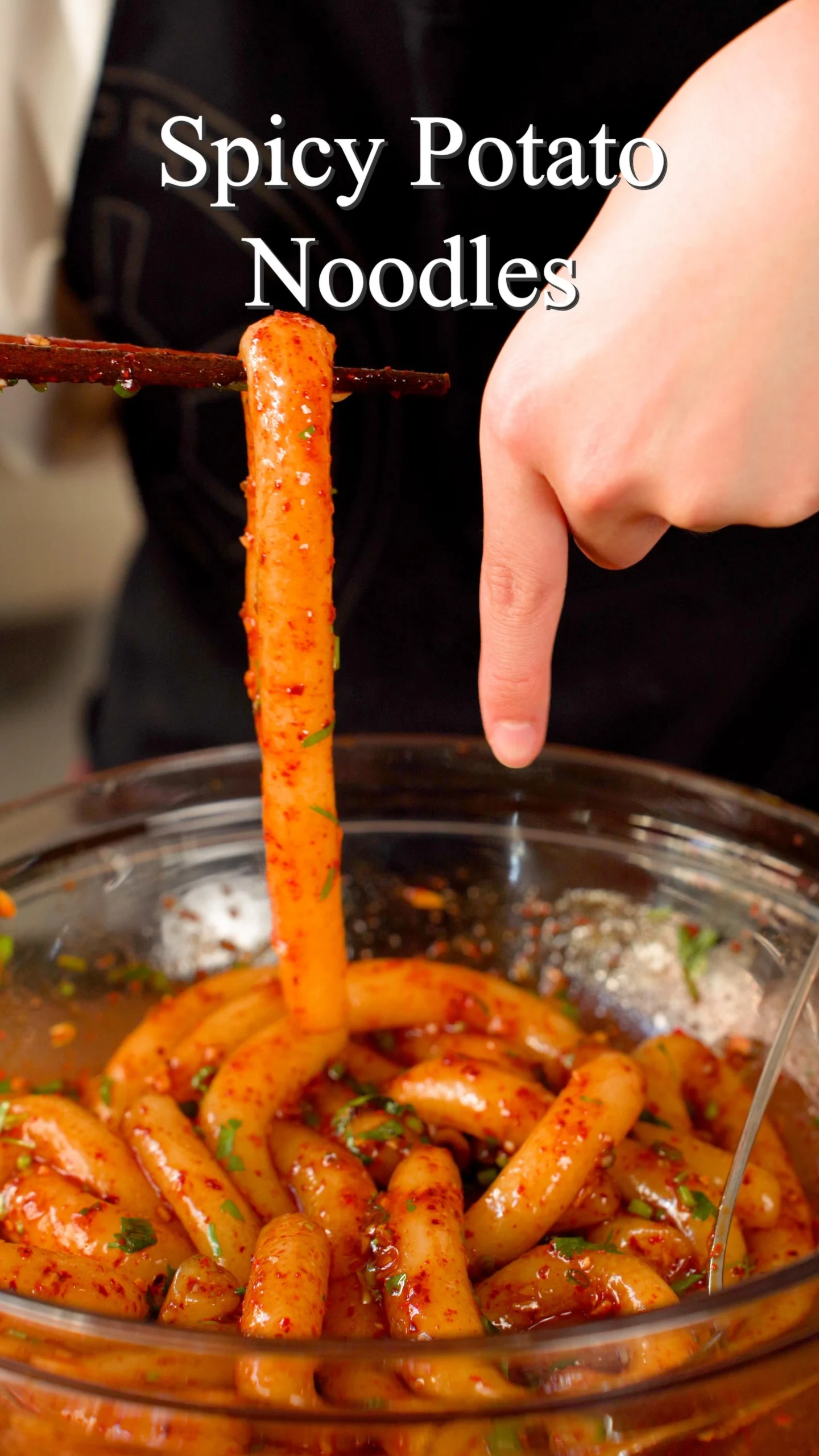
Easy Potato Noodles
Easy Potato Noodles are pillowy, chewy potato dumplings tossed in garlic butter – a comforting 50-minute dish that turns 3 humble potatoes into dinner.
🧂 Ingredients
- 3 large russet potatoes (about 2 lb / 900 g), peeled and cut into chunks
- 2 cups (250 g) all-purpose flour, plus more for dusting
- 1 large egg, lightly beaten
- 1 teaspoon fine sea salt, plus more for the boiling water
- 4 tablespoons (56 g) unsalted butter
- 3 garlic cloves, thinly sliced
- 1/3 cup (30 g) finely grated Parmesan
- 2 tablespoons chopped fresh flat-leaf parsley
- 1/4 teaspoon freshly ground black pepper
📋 Instructions
- 1Boil the potatoes — Cover the potato chunks with cold salted water in a large pot and bring to a boil over high heat, then reduce to a simmer at 200F (93C) for 15 to 18 minutes, until a knife slides in with no resistance. Drain well and let the steam escape for 5 minutes.
- 2Rice and cool — Pass the hot potatoes through a ricer or mash them until completely smooth, then spread them on a plate to cool for 10 minutes at room temperature. Cooling prevents the egg from cooking when it hits the warm potato.
- 3Mix the dough — In a large bowl, combine the cooled potato, egg, 1 teaspoon salt, and 1 cup of the flour. Mix with a fork, then add the remaining flour a few tablespoons at a time until a soft, slightly tacky dough forms that pulls away from the bowl.
- 4Knead gently — Turn the dough onto a floured surface and knead for 2 to 3 minutes, until smooth and no longer sticky, dusting with flour only as needed. Over-kneading develops gluten and makes the noodles tough, so stop as soon as the dough feels supple.
- 5Roll and cut — Divide the dough into 4 pieces and roll each into a rope about 1/2 inch (1.3 cm) thick, then cut into 2-inch (5 cm) lengths. Dust the noodles lightly with flour and spread them on a floured tray so they do not stick.
- 6Boil the noodles — Bring a large pot of generously salted water to a rolling boil at 212F (100C). Drop in half the noodles and cook for 2 to 3 minutes, until they float to the surface and look puffed and opaque; scoop them out with a slotted spoon and repeat with the second batch.
- 7Brown the garlic butter — Melt the butter in a large skillet over medium heat at 300F (149C) for 2 minutes, until foaming, then add the sliced garlic and cook for 60 to 90 seconds, until fragrant and pale golden at the edges. Do not let the garlic brown deeply or it will taste bitter.
- 8Toss and serve — Add the drained noodles to the skillet with 3 tablespoons of the cooking water and toss for 1 to 2 minutes at 300F (149C), until the sauce turns glossy and coats each noodle. Off the heat, stir in the Parmesan, parsley, and black pepper, then serve immediately.