Cozy Cravings Recipes
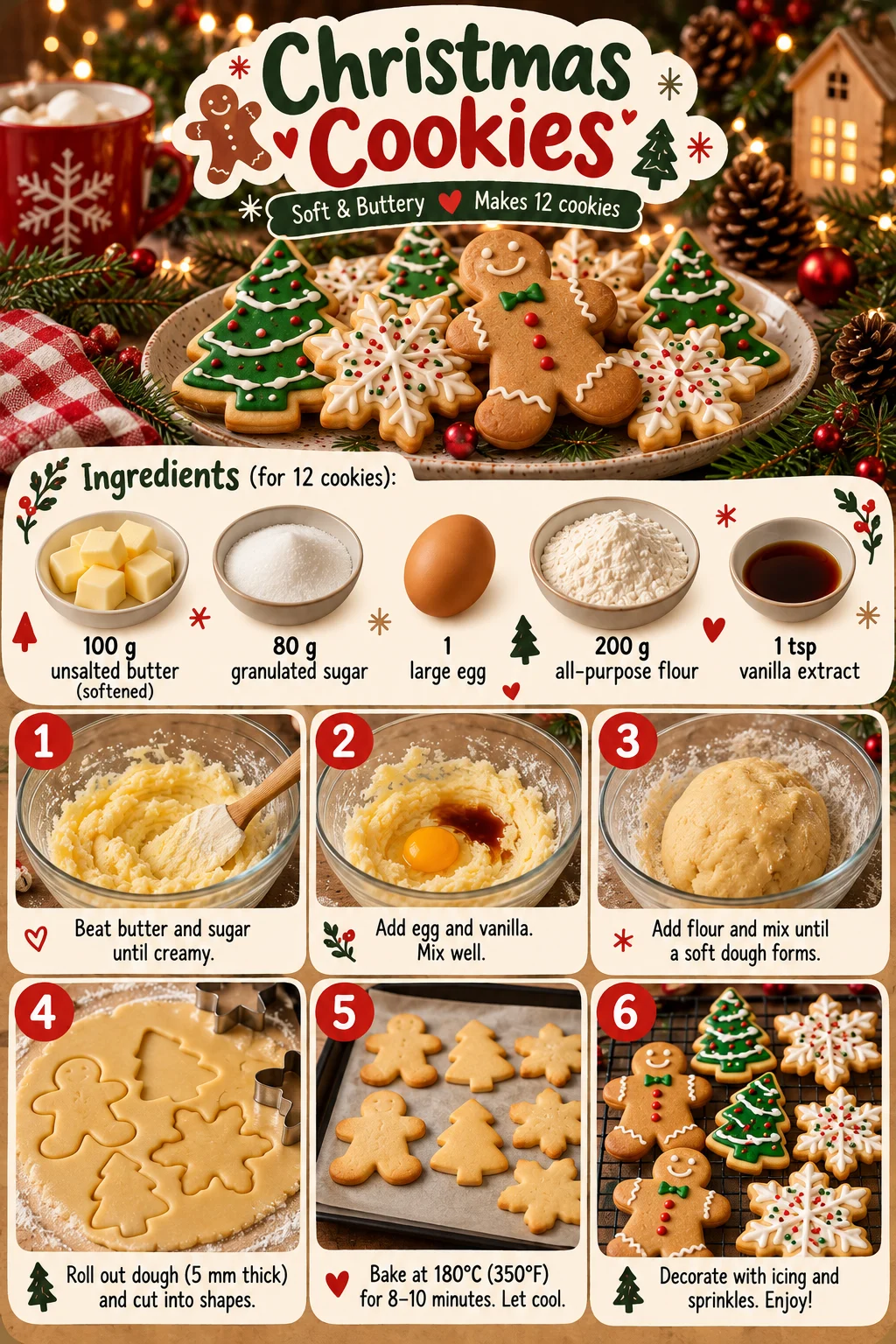
Easy Christmas Sugar Cookies – 12 Festive Cookies

These easy Christmas sugar cookies are the small-batch holiday recipe you have been looking for: exactly 12 soft, buttery cookies that hold their shape and take icing like a dream. No giant dough batch, no wasted leftovers, just one baking sheet of festive cheer.
The dough comes together in one bowl with pantry staples, chills for just 30 minutes, and rolls out without crumbling thanks to a touch of cornstarch and a careful butter-to-flour ratio. You get crisp edges, a tender center, and a clean canvas for royal icing, sprinkles, or a simple vanilla glaze.
They are ideal for cookie exchanges, classroom treats, or an afternoon of decorating with kids. Bake them once and you will be making a double batch by December 20th.
Why You'll Love This Recipe
About the Ingredients
1 1/2 cups (188g) all-purpose flour
Spoon and level the flour rather than scooping, or the cookies turn dry and crumbly. For a gluten-free version, swap in a 1:1 gluten-free baking blend and add 1/4 teaspoon xanthan gum.
2 tablespoons (16g) cornstarch
Cornstarch is the secret to that soft, tender crumb and keeps the cookies from spreading. If you are out, substitute 2 tablespoons of cake flour or arrowroot powder.
1/2 teaspoon baking powder
Use aluminum-free baking powder for a clean flavor; check the date because expired powder gives flat, dense cookies. Baking soda is not a good swap here.
1/4 teaspoon fine sea salt
Fine sea salt dissolves evenly into the dough; if using table salt, reduce to a scant 1/4 teaspoon. Kosher salt flakes should be crushed first so no salty pockets form.
1/2 cup (113g) unsalted butter, softened
The butter should dent when pressed but still feel cool, not greasy. Salted butter works too, just omit the added salt; vegan butter sticks (not tub spread) are a solid dairy-free swap.
3/4 cup (150g) granulated sugar
Granulated sugar gives the classic crisp-edge texture; caster sugar dissolves faster if you have it. Do not swap in brown sugar, which makes the dough sticky and hard to roll.
1 large egg, room temperature
A room-temperature egg emulsifies better and prevents curdling. Out of eggs? Use 3 tablespoons aquafaba or 1/4 cup unsweetened applesauce, though the cookies will be slightly softer.
1 1/2 teaspoons vanilla extract
Pure vanilla extract gives the best flavor; imitation vanilla is fine in a pinch. For a holiday twist, use 1 teaspoon vanilla plus 1/2 teaspoon almond extract.
1 cup (120g) powdered sugar, for the glaze
Sift the powdered sugar before mixing so the glaze stays lump-free. If you only have granulated sugar, pulse it in a blender until fine.
2 to 3 teaspoons whole milk, for the glaze
Add the milk one teaspoon at a time until the glaze ribbons off the spoon. Heavy cream or oat milk both work as substitutes.
Holiday sprinkles and sanding sugar, for decorating
Add sprinkles before the glaze sets so they stick. Nonpareils bleed color over time, so sanding sugar or jimmies hold their look longer.
Tips & Tricks
Weigh or spoon-and-level your flour
Scooping straight from the bag can pack in 20% extra flour, which is the number one cause of dry, crumbly sugar cookies.
Chill the dough, not the cutouts
Roll and cut the dough while it is cool but pliable, then slide the whole sheet of cutouts into the freezer for 5 minutes before baking to lock in sharp edges.
Watch the first batch like a hawk
Sugar cookies go from pale to over-baked in under a minute, so pull them when the edges are just barely golden and let the residual heat finish them on the sheet.
Pro Tips
Step-by-Step Instructions
1. Whisk Dry Ingredients
In a medium bowl, whisk together the flour, cornstarch, baking powder, and salt until evenly combined. This distributes the leavener so the cookies rise evenly instead of in pockets.
2. Cream Butter and Sugar
Beat the softened butter and granulated sugar with a hand or stand mixer on medium speed for 2 to 3 minutes, until pale and fluffy. Scrape down the bowl, then beat in the egg and vanilla until smooth and glossy.
3. Combine Into Dough
Add the dry ingredients to the butter mixture in two additions on low speed, mixing just until no dry streaks remain. Overmixing develops gluten and makes the cookies tough, so stop as soon as the dough comes together.
4. Chill the Dough
Flatten the dough into a 1-inch (2.5cm) disc, wrap it in plastic, and refrigerate for 30 minutes, until firm but still indents slightly when pressed. Chilling firms the butter so the cookies keep their shape.
5. Preheat and Roll
Preheat the oven to 350°F (175°C) and line two baking sheets with parchment. Roll the dough on a lightly floured surface to 1/4 inch (6mm) thick and cut out 12 shapes, re-rolling scraps once.
6. Bake the Cookies
Arrange the cutouts 2 inches (5cm) apart on the prepared sheets and bake one sheet at a time for 9 to 11 minutes, until the edges are just barely golden and the centers look set but soft. The cookies should register about 190°F (88°C) on an instant-read thermometer.
7. Cool Completely
Let the cookies rest on the hot sheet for 5 minutes, then transfer them to a wire rack to cool completely, about 20 minutes. Cooling fully prevents steam from softening the glaze.
8. Glaze and Decorate
Whisk the powdered sugar with 2 to 3 teaspoons of milk until thick but pourable, then spread or pipe it over the cooled cookies and finish with sprinkles. Let the glaze set for 20 to 30 minutes before stacking.
Delicious Variations
Lemon Almond Sugar Cookies
Swap the vanilla for 1 teaspoon lemon zest and 1/2 teaspoon almond extract, then add a squeeze of lemon juice to the glaze.
Cocoa Christmas Cookies
Replace 3 tablespoons of the flour with unsweetened cocoa powder for a chocolate version that pairs beautifully with white icing.
Gingerbread-Spiced Cutouts
Add 1 teaspoon cinnamon, 1/2 teaspoon ginger, and a pinch of nutmeg to the dry ingredients for a cozy holiday flavor.
How to Store Easy Christmas Sugar Cookies 🎄🍪 | 12 Cookies Recipe
Refrigerator
Store undecorated cookies in an airtight container at room temperature for up to 5 days, or refrigerate glazed cookies in a single layer once the icing is fully set for up to 1 week.
Freezer
Freeze baked undecorated cookies in a zip-top bag with parchment between layers for up to 3 months, or freeze the dough disc for up to 2 months and thaw overnight in the fridge before rolling.
Reheating
No reheating needed; bring frozen cookies to room temperature for 15 minutes. To refresh slightly stale cookies, warm them at 300°F (150°C) for 3 to 4 minutes.
Frequently Asked Questions
Q: Why did my sugar cookies spread in the oven?
Your butter was too warm or the dough was not chilled long enough. Use cool, softened butter, chill the dough for the full 30 minutes, and chill the cutouts for 5 minutes before baking to keep edges sharp.
Q: Can I make Christmas sugar cookie dough ahead of time?
Yes, the dough can be made up to 3 days ahead and kept wrapped in the refrigerator. Let it sit at room temperature for 10 to 15 minutes before rolling so it does not crack.
Q: How do I know when sugar cookies are done without browning them?
Pull them when the edges are just barely golden and the centers look set but still soft, about 9 to 11 minutes at 350°F (175°C). They continue firming up as they cool on the hot sheet.
Q: Can I use this recipe for royal icing instead of glaze?
Absolutely, these cookies are sturdy enough for royal icing. Use a 15-second flood consistency and let the icing dry for 6 to 8 hours before stacking.
Q: How many cookies does this small-batch recipe make?
This recipe makes exactly 12 cookies at 1/4 inch (6mm) thickness. For a bigger batch, double everything and bake in two rounds so the oven temperature stays steady.
Grab your cookie cutters and a jar of sprinkles, and bake a batch of these easy Christmas sugar cookies this week. Snap a photo of your decorated dozen and tag me so I can see your festive creations.
Easy Christmas Sugar Cookies 🎄🍪 | 12 Cookies Recipe
These easy Christmas sugar cookies bake up buttery, tender and ready to decorate in 50 minutes, making exactly 12 festive cookies for holiday gifting.
🧂 Ingredients
- 1 1/2 cups (188g) all-purpose flour
- 2 tablespoons (16g) cornstarch
- 1/2 teaspoon baking powder
- 1/4 teaspoon fine sea salt
- 1/2 cup (113g) unsalted butter, softened
- 3/4 cup (150g) granulated sugar
- 1 large egg, room temperature
- 1 1/2 teaspoons vanilla extract
- 1 cup (120g) powdered sugar, for the glaze
- 2 to 3 teaspoons whole milk, for the glaze
- Holiday sprinkles and sanding sugar, for decorating
📋 Instructions
- 1Whisk Dry Ingredients — In a medium bowl, whisk together the flour, cornstarch, baking powder, and salt until evenly combined. This distributes the leavener so the cookies rise evenly instead of in pockets.
- 2Cream Butter and Sugar — Beat the softened butter and granulated sugar with a hand or stand mixer on medium speed for 2 to 3 minutes, until pale and fluffy. Scrape down the bowl, then beat in the egg and vanilla until smooth and glossy.
- 3Combine Into Dough — Add the dry ingredients to the butter mixture in two additions on low speed, mixing just until no dry streaks remain. Overmixing develops gluten and makes the cookies tough, so stop as soon as the dough comes together.
- 4Chill the Dough — Flatten the dough into a 1-inch (2.5cm) disc, wrap it in plastic, and refrigerate for 30 minutes, until firm but still indents slightly when pressed. Chilling firms the butter so the cookies keep their shape.
- 5Preheat and Roll — Preheat the oven to 350°F (175°C) and line two baking sheets with parchment. Roll the dough on a lightly floured surface to 1/4 inch (6mm) thick and cut out 12 shapes, re-rolling scraps once.
- 6Bake the Cookies — Arrange the cutouts 2 inches (5cm) apart on the prepared sheets and bake one sheet at a time for 9 to 11 minutes, until the edges are just barely golden and the centers look set but soft. The cookies should register about 190°F (88°C) on an instant-read thermometer.
- 7Cool Completely — Let the cookies rest on the hot sheet for 5 minutes, then transfer them to a wire rack to cool completely, about 20 minutes. Cooling fully prevents steam from softening the glaze.
- 8Glaze and Decorate — Whisk the powdered sugar with 2 to 3 teaspoons of milk until thick but pourable, then spread or pipe it over the cooled cookies and finish with sprinkles. Let the glaze set for 20 to 30 minutes before stacking.