

If you have ever ordered spicy tuna on crispy rice at a sushi bar and wished you could make a whole tray at home, this recipe is for you. We press seasoned sushi rice into a pan, chill it, cube it, and fry it until each block has a shatteringly crisp golden shell and a chewy, sticky center.
Advertisements1
On top goes a punchy mix of diced raw salmon, Kewpie mayo, sriracha, and scallion, plus a little toasted sesame oil for depth. The contrast of hot crispy rice and cool spicy salmon is the whole point, so we serve them immediately while the crust still crackles.
Everything is doable in a home kitchen with a skillet or air fryer, and the rice cubes can be prepped a day ahead so assembly takes minutes. Six generous servings, about 3 bites each, makes this ideal for game day, date night, or a potluck starter.
Why You'll Love This Recipe
About the Ingredients
2 cups (400g) cooked short-grain sushi rice, cooled
Short-grain rice is sticky enough to hold a cube shape; if you only have jasmine rice, add 1 extra tablespoon rice vinegar to help it bind. Buy rice labeled 'sushi rice' for the best texture.
2 tablespoons (30ml) rice vinegar
Seasoned rice vinegar already contains sugar and salt, so taste before adding more. In a pinch, mix 2 tablespoons white vinegar with 1 teaspoon sugar and a pinch of salt.
1 teaspoon (4g) granulated sugar
Sugar rounds out the vinegar's sharpness the way sushi chefs do it. Honey works as a 1:1 swap but darkens the rice slightly.
1/2 teaspoon (3g) fine sea salt
Fine sea salt dissolves evenly into warm rice; kosher salt needs a slightly heaped measure. Avoid table salt with iodine for a cleaner flavor.
10 ounces (285g) sashimi-grade salmon, finely diced
Sashimi-grade means it was frozen to parasite-killing temperature and is safe raw; ask your fishmonger for the freshest center-cut piece. Frozen-then-thawed sashimi salmon is a fine substitute.
3 tablespoons (45g) Kewpie mayonnaise
Japanese mayo is tangier and richer than American mayo thanks to egg yolks only; regular mayo plus 1/2 teaspoon rice vinegar is a decent stand-in.
1 to 2 tablespoons (15-30ml) sriracha, to taste
Start with 1 tablespoon for a mild-medium heat; chili garlic sauce or gochujang thinned with water also works. Taste the mix before adding more.
1 teaspoon (5ml) toasted sesame oil
Toasted oil is dark and intensely nutty; regular sesame oil is nearly flavorless, so do not swap blindly. A drop of chili oil adds extra warmth.
2 scallions, thinly sliced (about 1/4 cup)
Use both white and green parts for bite and color; chives or finely minced red onion are good substitutes. Slice just before mixing so they stay crisp.
1/4 cup (30g) cornstarch, for dusting
Cornstarch creates the glassy crust on the rice cubes; potato starch or rice flour work equally well. Shake off excess so it does not clump in the oil.
1/2 cup (120ml) neutral oil, for frying (plus more as needed)
Canola, grapeseed, or avocado oil all have high smoke points; olive oil will smoke and taste bitter. You need only a shallow layer, not a deep fry.
1 teaspoon (3g) toasted sesame seeds and 1 sheet nori, cut into slivers, to garnish
Furikake seasoning can replace both in one shake. Check nori labels for added MSG if that matters to you.
Tips & Tricks
Chill the rice thoroughly
Warm rice will not hold a cube and will fall apart in the oil, so press it into the pan and refrigerate at least 1 hour, ideally 2.
Dice the salmon small
Pieces larger than 1/4 inch make the topping fall off the rice; a sharp knife and a cold fillet give the cleanest dice.
Fry in small batches
Crowding the pan drops the oil temperature and makes greasy, pale cubes; keep the oil at 350F (175C) and cook 4 to 5 cubes at a time.
Season the salmon at the end
Mix the spicy mayo just before serving so the salt does not draw water out of the fish and make the topping soupy.
Pro Tips
Step-by-Step Instructions
1. Season the rice
While the rice is still warm, fold in the rice vinegar, sugar, and salt with a cutting motion using a rice paddle or spatula. Let it cool to room temperature, about 20 minutes, so it stops steaming.
2. Press and chill
Line an 8-inch (20cm) square pan with plastic wrap and press the rice into a firm, even 1-inch (2.5cm) layer. Cover and refrigerate at least 1 hour, or up to 24 hours, until the slab is firm and cold to the touch.
3. Mix the spicy salmon
In a bowl, combine the diced salmon, Kewpie mayo, sriracha, sesame oil, and scallions. Fold gently until every piece is coated, then refrigerate until needed; the mixture should look glossy and hold together, not drip.
4. Cube and dust
Lift the rice slab out by the plastic and cut it into 24 squares with a wet knife. Toss the cubes in cornstarch and shake off the excess so only a thin, even film remains.
5. Heat the oil
Pour 1/2 cup neutral oil into a heavy skillet to a depth of about 1/2 inch and heat over medium-high to 350F (175C). A rice cube should sizzle steadily the moment it touches the oil.
6. Fry the rice
Fry the cubes in batches for 2 to 3 minutes per side, turning once, until deep golden brown and crisp on all faces, 6 to 8 minutes total. Transfer to a rack or paper towels and sprinkle lightly with salt.
7. Top and garnish
Spoon about 1 tablespoon of the spicy salmon onto each hot rice cube, mounding it slightly. Finish with sesame seeds and nori slivers and serve immediately while the rice is still crunchy.
Delicious Variations
Air-Fryer Version
Brush the dusted cubes with oil and air-fry at 400F (200C) for 10 to 12 minutes, flipping halfway, for a lighter but still crisp result.
Baked Salmon Topping
Swap raw salmon for 8 ounces of cooked, flaked salmon mixed with the same spicy mayo for a fully cooked version.
Tuna or Yellowtail Swap
Replace the salmon with sashimi-grade tuna or yellowtail and add a teaspoon of yuzu juice for a brighter, citrusy bite.
How to Store Crunchy Perfection Spicy Salmon atop Crispy Rice
Refrigerator
Store fried rice cubes separately from the salmon mix in airtight containers for up to 2 days; the salmon mix should be eaten within 24 hours of mixing for best quality.
Freezer
Freeze the plain fried rice cubes in a single layer, then bag them for up to 1 month; do not freeze the salmon topping.
Reheating
Re-crisp rice cubes in a 400F (200C) oven or air fryer for 5 to 6 minutes, then top with freshly mixed chilled salmon and serve.
Frequently Asked Questions
Q: Can I use regular mayo instead of Kewpie?
Yes, regular mayonnaise works, but add 1/2 teaspoon rice vinegar and a pinch of sugar to mimic Kewpie's tangier, richer flavor. The topping will taste slightly less authentic but still delicious.
Q: Is it safe to eat raw salmon in this dish?
Only if the salmon is labeled sashimi-grade, meaning it was frozen to at least -4F (-20C) for a week or commercially treated to kill parasites. If you cannot confirm that, use the cooked-salmon variation instead.
Q: Can I make crispy rice without deep frying?
Yes, an air fryer at 400F (200C) for 10 to 12 minutes gives a crisp exterior with far less oil. Brush the cubes lightly with oil first so they brown rather than dry out.
Q: Why did my crispy rice fall apart in the oil?
The rice was likely too warm or not pressed firmly enough, so it had no chance to bind. Press it hard into the pan and chill at least 1 hour before cutting and frying.
Q: How spicy is the salmon topping?
With 1 tablespoon of sriracha it is a mild-medium heat that most people handle comfortably. Use 2 tablespoons for a real kick, or cut it to 1 teaspoon for a kid-friendly version.
Grab your sushi rice and a fresh piece of sashimi-grade salmon and make these crunchy, spicy bites tonight. Snap a photo of your golden rice cubes and tag me so I can see your flavor explosion, and leave a rating below if you loved them!
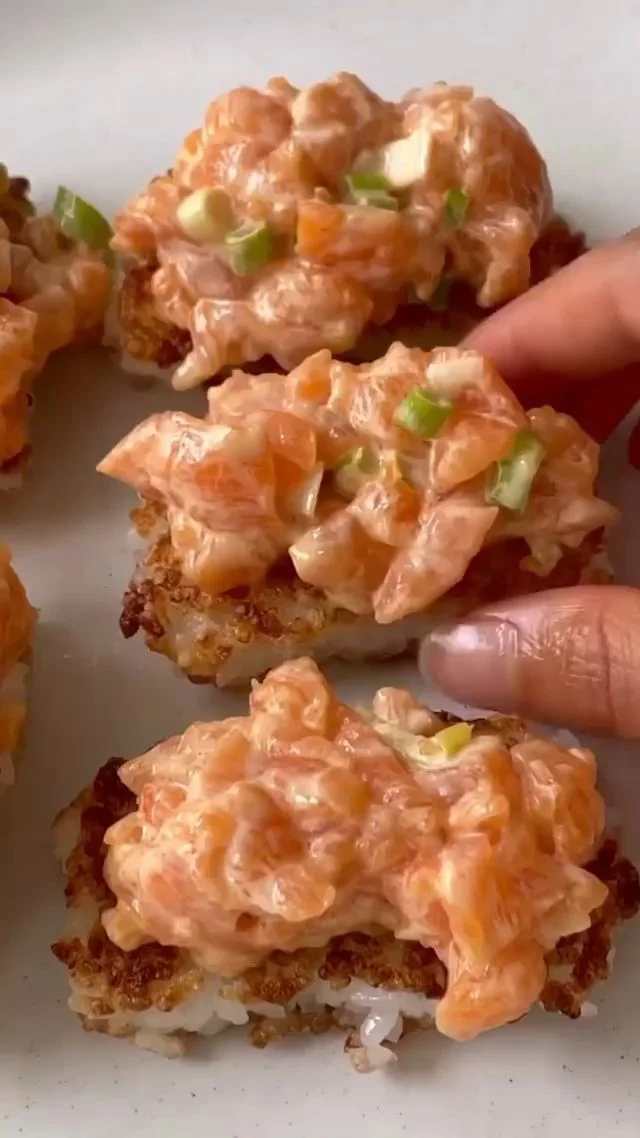
Crunchy Perfection Spicy Salmon atop Crispy Rice
Crunchy Perfection Spicy Salmon atop Crispy Rice delivers a crispy-bottom, creamy-spicy bite that turns everyday salmon into a party-worthy appetizer in 50 minutes.
🧂 Ingredients
- 2 cups (400g) cooked short-grain sushi rice, cooled
- 2 tablespoons (30ml) rice vinegar
- 1 teaspoon (4g) granulated sugar
- 1/2 teaspoon (3g) fine sea salt
- 10 ounces (285g) sashimi-grade salmon, finely diced
- 3 tablespoons (45g) Kewpie mayonnaise
- 1 to 2 tablespoons (15-30ml) sriracha, to taste
- 1 teaspoon (5ml) toasted sesame oil
- 2 scallions, thinly sliced (about 1/4 cup)
- 1/4 cup (30g) cornstarch, for dusting
- 1/2 cup (120ml) neutral oil, for frying (plus more as needed)
- 1 teaspoon (3g) toasted sesame seeds and 1 sheet nori, cut into slivers, to garnish
📋 Instructions
- 1Season the rice — While the rice is still warm, fold in the rice vinegar, sugar, and salt with a cutting motion using a rice paddle or spatula. Let it cool to room temperature, about 20 minutes, so it stops steaming.
- 2Press and chill — Line an 8-inch (20cm) square pan with plastic wrap and press the rice into a firm, even 1-inch (2.5cm) layer. Cover and refrigerate at least 1 hour, or up to 24 hours, until the slab is firm and cold to the touch.
- 3Mix the spicy salmon — In a bowl, combine the diced salmon, Kewpie mayo, sriracha, sesame oil, and scallions. Fold gently until every piece is coated, then refrigerate until needed; the mixture should look glossy and hold together, not drip.
- 4Cube and dust — Lift the rice slab out by the plastic and cut it into 24 squares with a wet knife. Toss the cubes in cornstarch and shake off the excess so only a thin, even film remains.
- 5Heat the oil — Pour 1/2 cup neutral oil into a heavy skillet to a depth of about 1/2 inch and heat over medium-high to 350F (175C). A rice cube should sizzle steadily the moment it touches the oil.
- 6Fry the rice — Fry the cubes in batches for 2 to 3 minutes per side, turning once, until deep golden brown and crisp on all faces, 6 to 8 minutes total. Transfer to a rack or paper towels and sprinkle lightly with salt.
- 7Top and garnish — Spoon about 1 tablespoon of the spicy salmon onto each hot rice cube, mounding it slightly. Finish with sesame seeds and nori slivers and serve immediately while the rice is still crunchy.