Cozy Cravings Recipes
Crispy Korean Chicken Tenders – 50-Minute Gochujang Glazed
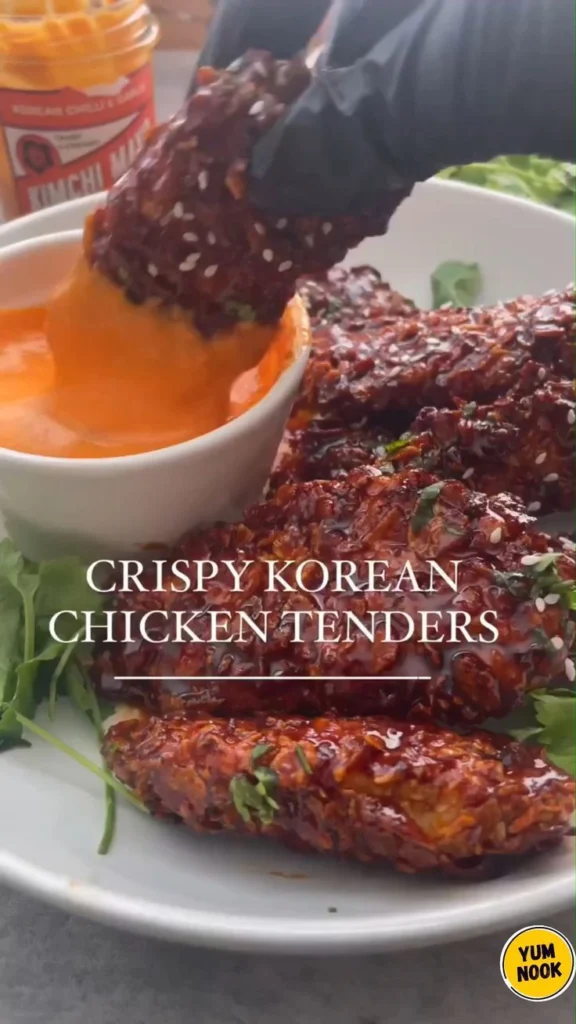
Korean fried chicken is famous for a crust that shatters instead of sogging, and these tenders bring that magic to a weeknight kitchen. Boneless chicken strips get a cornstarch-heavy coating, a quick first fry to set the crust, and a hotter second fry that drives out moisture so the shell stays crisp even after it is tossed in sauce.
The glaze is the real star: gochujang, honey, soy, garlic, and a splash of rice vinegar simmer into a glossy lacquer that clings to every ridge of the crust. It is sweet first, then a slow warm burn, exactly like the takeout boxes from Korean fried chicken shops.
Serve them over steamed rice with quick-pickled radish and sesame, or pile them on a platter for game day. The whole thing is about 15 minutes of prep and 35 minutes of cooking, and the double-fry method means you can hold the plain tenders in a warm oven and sauce them right before serving.
Why You'll Love This Recipe
About the Ingredients
1 3/4 lbs (800g) boneless skinless chicken breast, cut into 1-inch thick tenders
Cut against the grain into even strips so they cook at the same rate. Boneless thighs work beautifully here and stay juicier if you tend to overcook breast meat.
1 1/2 tsp kosher salt
Kosher salt seasons the meat from the inside; if using fine table salt, reduce to 1 tsp. Do not skip the 15-minute rest after salting, it is a mini dry brine.
1/2 tsp freshly ground black pepper
Fresh-cracked pepper has far more aroma than pre-ground. White pepper is a fine swap for a more traditional Korean flavor.
1 cup (120g) cornstarch
Cornstarch is the secret to that glassy, shattering crust; potato starch is the closest traditional substitute and behaves almost identically.
1/2 cup (65g) all-purpose flour
Flour adds body so the coating does not slide off. A gluten-free 1:1 blend works if you need this dish gluten-free.
2 large eggs, beaten
Eggs are the glue between the dry dredge and the chicken. For an egg-free version, use 1/3 cup buttermilk or 3 tbsp cornstarch slurry instead.
1/3 cup (80ml) gochujang (Korean red chile paste)
Look for a tub labeled gochujang, not gochujang sauce, in the Asian aisle or online. Ssamjang or a mix of miso and sriracha is a decent substitute in a pinch.
3 tbsp honey
Honey gives the glaze its glossy stickiness; maple syrup or brown sugar dissolved in the sauce also works.
2 tbsp soy sauce
Use regular soy sauce, not dark soy, which would make the glaze too salty and inky. Tamari makes it gluten-free.
1 tbsp rice vinegar
The acid cuts through the sweetness and keeps the glaze from tasting flat. Apple cider vinegar is a fine substitute.
3 cloves garlic, finely grated
Fresh garlic is essential here; 1 tsp garlic paste can stand in but has a flatter flavor.
2 tsp toasted sesame oil, plus toasted sesame seeds and sliced scallions to finish
Toasted sesame oil is added off the heat so its aroma survives. Regular sesame oil is lighter and less nutty.
Tips & Tricks
Dry the chicken before dredging
Pat the strips bone-dry with paper towels, because surface moisture is the number one cause of a coating that slides off in the oil.
Keep the oil temperature steady
Fry at 340F (170C) for the first pass and 375F (190C) for the second, and let the oil recover between batches so the crust never turns greasy.
Sauce at the last second
Toss the tenders in the glaze only when you are ready to eat, and use a large bowl with a quick fold rather than stirring, which knocks off the crust.
Let fried tenders drain on a wire rack
A rack keeps steam from getting trapped underneath, which is what makes a crispy crust go soft on the bottom.
Pro Tips
Step-by-Step Instructions
1. Salt and rest the chicken
Toss the chicken strips with the kosher salt and black pepper in a bowl and let them sit at room temperature for 15 minutes while you set up the dredge. This short dry brine seasons the meat and helps it hold onto the coating.
2. Set up the dredge
Whisk the cornstarch and flour together in a wide dish. Beat the eggs in a second dish. Line a sheet pan with parchment for the breaded tenders.
3. Dredge in two stages
Dip each strip in the cornstarch mixture, then the egg, then back into the cornstarch mixture, pressing gently so the coating adheres. Shake off the excess and place on the sheet pan; a double dredge builds the craggy shell that sauce clings to.
4. Heat the frying oil
Pour 2 inches of neutral oil into a heavy pot and heat to 340F (170C) on a thermometer. Fry in batches of 4 to 5 tenders so the oil temperature does not drop.
5. First fry until pale gold
Fry each batch for 4 to 5 minutes until the coating is pale golden and the chicken reaches 160F (71C) at the thickest point. Transfer to a wire rack and repeat with the remaining tenders.
6. Second fry for crunch
Raise the oil to 375F (190C) and fry the tenders again, in batches, for 90 seconds to 2 minutes until deep golden brown and bubbling hard at the edges. Drain on the rack; the second fry is what makes the crust shatter.
7. Simmer the gochujang glaze
In a small saucepan over medium heat, whisk the gochujang, honey, soy sauce, rice vinegar, and garlic. Simmer for 2 to 3 minutes until slightly thickened and glossy, then remove from the heat and stir in the sesame oil.
8. Toss and garnish
Put the hot tenders in a large bowl, pour over the warm glaze, and fold gently to coat. Pile onto a platter and finish with toasted sesame seeds and sliced scallions. Serve immediately with rice and pickled radish.
Delicious Variations
Air Fryer Version
Spray the breaded tenders with oil and air fry at 400F (200C) for 12 to 14 minutes, flipping halfway, then toss in the glaze for a lighter take.
Korean Fried Chicken Sandwich
Pile two glazed tenders into a toasted brioche bun with quick slaw and mayo for a spicy-crunchy sandwich.
Soy Garlic Tenders
Swap the gochujang for 3 tbsp soy sauce plus 1 tbsp mirin and extra garlic for a mild, kid-friendly glaze.
How to Store Crispy Korean Chicken Tenders
Refrigerator
Store sauced tenders in an airtight container in the refrigerator for up to 3 days; the crust will soften, so re-crisp before serving.
Freezer
Freeze unsauced tenders after the first fry on a sheet pan, then transfer to a bag for up to 2 months. Reheat by frying at 375F (190C) for 3 to 4 minutes straight from frozen.
Reheating
Reheat in a 400F (200C) oven or air fryer for 6 to 8 minutes to bring back crunch, then toss with a freshly warmed batch of glaze.
Frequently Asked Questions
Q: What is the secret to crispy Korean fried chicken?
The secret is a cornstarch-heavy coating and a double fry at two different temperatures. The first fry at 340F (170C) cooks the chicken through, and the second fry at 375F (190C) drives out surface moisture so the crust stays crunchy even after it is glazed.
Q: Can I make these Korean chicken tenders in an air fryer?
Yes, and they turn out surprisingly crisp. Spray the breaded tenders generously with oil and air fry at 400F (200C) for 12 to 14 minutes, flipping halfway through, then toss in the glaze right before serving.
Q: Is gochujang very spicy?
Gochujang is moderately spicy, roughly medium heat, and much of that burn is tamed by the honey in this glaze. If you are heat-sensitive, start with 3 tbsp of gochujang and add a spoonful of extra honey.
Q: What do you serve with Korean chicken tenders?
Steamed short-grain rice, quick-pickled daikon radish, and a simple cucumber salad are the classic pairing. The cool, crunchy pickles balance the sticky, spicy glaze perfectly.
Q: Can I make the tenders ahead of time?
Yes, fry the tenders through the first fry, cool them on a rack, and refrigerate for up to a day. Do the second fry at 375F (190C) for 2 to 3 minutes just before glazing so they come out as crisp as fresh.
If you make these Crispy Korean Chicken Tenders, snap a photo of that glossy gochujang glaze and tag me, and leave a comment below telling me how spicy you like your sauce.
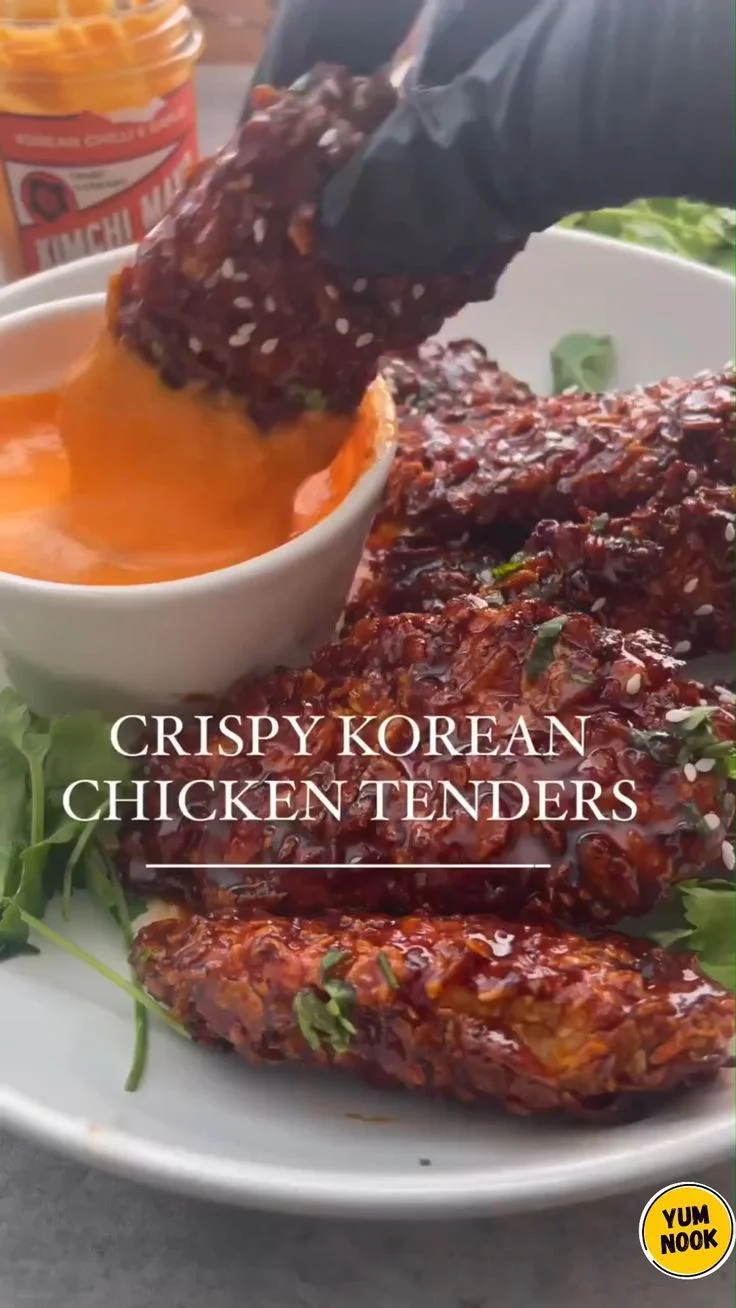
Crispy Korean Chicken Tenders
Crispy Korean Chicken Tenders are juicy double-fried chicken strips glazed in a sticky sweet-spicy gochujang sauce that stays crunchy for 20 minutes.
🧂 Ingredients
- 1 3/4 lbs (800g) boneless skinless chicken breast, cut into 1-inch thick tenders
- 1 1/2 tsp kosher salt
- 1/2 tsp freshly ground black pepper
- 1 cup (120g) cornstarch
- 1/2 cup (65g) all-purpose flour
- 2 large eggs, beaten
- 1/3 cup (80ml) gochujang (Korean red chile paste)
- 3 tbsp honey
- 2 tbsp soy sauce
- 1 tbsp rice vinegar
- 3 cloves garlic, finely grated
- 2 tsp toasted sesame oil, plus toasted sesame seeds and sliced scallions to finish
📋 Instructions
- 1Salt and rest the chicken — Toss the chicken strips with the kosher salt and black pepper in a bowl and let them sit at room temperature for 15 minutes while you set up the dredge. This short dry brine seasons the meat and helps it hold onto the coating.
- 2Set up the dredge — Whisk the cornstarch and flour together in a wide dish. Beat the eggs in a second dish. Line a sheet pan with parchment for the breaded tenders.
- 3Dredge in two stages — Dip each strip in the cornstarch mixture, then the egg, then back into the cornstarch mixture, pressing gently so the coating adheres. Shake off the excess and place on the sheet pan; a double dredge builds the craggy shell that sauce clings to.
- 4Heat the frying oil — Pour 2 inches of neutral oil into a heavy pot and heat to 340F (170C) on a thermometer. Fry in batches of 4 to 5 tenders so the oil temperature does not drop.
- 5First fry until pale gold — Fry each batch for 4 to 5 minutes until the coating is pale golden and the chicken reaches 160F (71C) at the thickest point. Transfer to a wire rack and repeat with the remaining tenders.
- 6Second fry for crunch — Raise the oil to 375F (190C) and fry the tenders again, in batches, for 90 seconds to 2 minutes until deep golden brown and bubbling hard at the edges. Drain on the rack; the second fry is what makes the crust shatter.
- 7Simmer the gochujang glaze — In a small saucepan over medium heat, whisk the gochujang, honey, soy sauce, rice vinegar, and garlic. Simmer for 2 to 3 minutes until slightly thickened and glossy, then remove from the heat and stir in the sesame oil.
- 8Toss and garnish — Put the hot tenders in a large bowl, pour over the warm glaze, and fold gently to coat. Pile onto a platter and finish with toasted sesame seeds and sliced scallions. Serve immediately with rice and pickled radish.