Cozy Cravings Recipes
Crispy Garlic Parmesan Chicken Tenders – Best 50-Minute
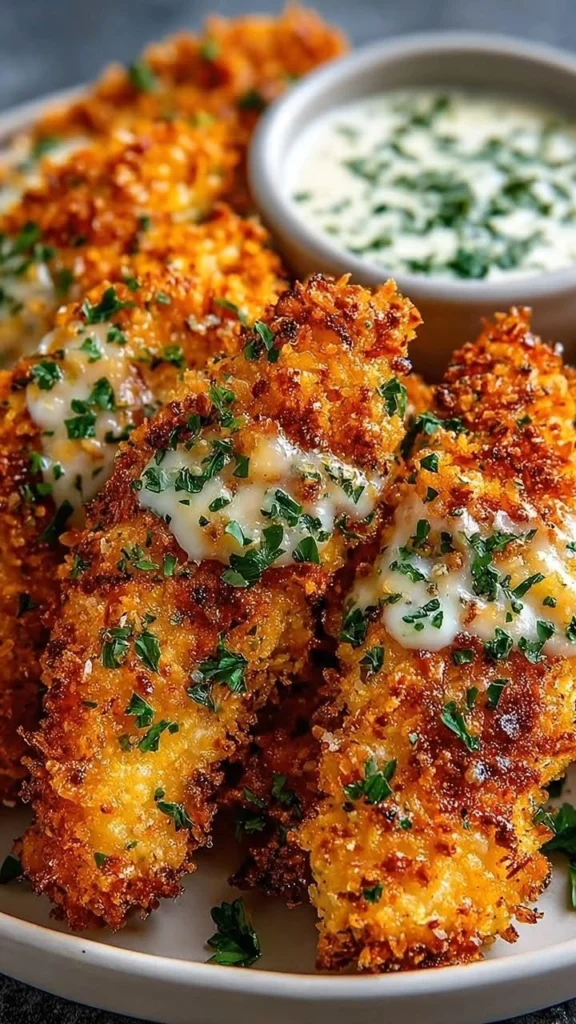
These Crispy Garlic Parmesan Chicken Tenders are the answer to every weeknight dinner dilemma: a sheet-pan chicken tender that stays genuinely crunchy, tastes like garlic bread met fried chicken, and comes together with pantry staples you probably already own. The secret is a three-step breading station with a garlic-Parmesan panko coating that gets showered with a little melted butter before baking, so the crumbs turn deep golden instead of pale and dusty.
I tested this recipe more times than I care to admit, because chicken tenders are notorious for two failures: the coating slides off, or the chicken dries out while you wait for the crust to brown. The fixes are simple. Pat the tenders bone-dry, let the breaded tenders rest for ten minutes so the coating hydrates and locks on, and bake at a high 425°F (220°C) so the exterior crisps before the interior overcooks.
Serve them with marinara, honey mustard, or a squeeze of lemon and a pile of garlicky green beans. They are equally good piled on a salad, tucked into a sandwich, or eaten straight off the pan while you claim you are 'testing' them.
Why You'll Love This Recipe
About the Ingredients
2 pounds (900g) boneless skinless chicken tenders (about 16 to 18 pieces)
Chicken tenders are the small tenderloin muscle and stay juiciest; if your store only has breasts, slice them lengthwise into 1-inch strips and pound to even thickness. Look for tenders that are similar in size so they cook evenly.
1 1/2 cups (180g) panko breadcrumbs
Panko's large flakes give the crispiest crust; regular dry breadcrumbs will work but produce a denser, finer coating. For gluten-free tenders, use gluten-free panko and gluten-free all-purpose flour in place of the flour.
3/4 cup (75g) finely grated Parmesan cheese
Grate it yourself from a wedge for the best melt and flavor; pre-shredded Parmesan has anti-caking starch that can make the coating sandy. Pecorino Romano is a sharper, saltier substitute if you love a punchy crust.
1/2 cup (65g) all-purpose flour
Flour is the glue that helps the egg and crumbs adhere; cornstarch can replace half of it for an even crispier shell. Whisk in 1/2 teaspoon salt and 1/4 teaspoon pepper before dredging.
2 large eggs
Beat them with 1 tablespoon Dijon mustard or water to loosen so the egg wash coats evenly. If you are out of eggs, 1/2 cup buttermilk makes an excellent dipping substitute.
4 cloves garlic, finely minced or grated
Fresh garlic is essential here; garlic powder (1 teaspoon) is a fine substitute in a pinch but tastes flatter. Grate it on a microplane so no raw chunks burn on the pan.
6 tablespoons (85g) unsalted butter, melted
Drizzling melted butter over the crumbs is what makes them taste fried; olive oil works but browns more slowly. Use a pastry brush or spoon to dab, not soak, so the coating stays crisp.
1 teaspoon kosher salt, plus more for the chicken
Kosher salt is less dense than table salt, so if using fine table salt, start with 3/4 teaspoon. Season the chicken itself lightly before breading, not just the crumbs.
1/2 teaspoon freshly ground black pepper
Fresh-cracked pepper blooms in the warm crumbs; a pinch of cayenne or smoked paprika can be added here for a little heat or smokiness.
Nonstick spray or 2 tablespoons olive oil, for the pan
Line the sheet pan with parchment and lightly grease it so the underside of the tenders crisps rather than sticks. A wire rack set inside the pan gives even crispier results if you have one.
Tips & Tricks
Dry Chicken Is Crispy Chicken
Pat the tenders thoroughly with paper towels and season them before breading; surface moisture is the number one cause of soggy coating.
Let Them Rest Before Baking
Give the breaded tenders 10 minutes on the pan so the egg and crumbs set, which prevents the coating from sliding off in the oven.
Use One Hand for Wet, One for Dry
Keep one hand in the egg and the other in the crumbs to avoid cement fingers and clumpy breading.
Do Not Crowd the Pan
Leave an inch between tenders so hot air circulates; steam trapped between pieces is what turns a crisp crust soft.
Pro Tips
Step-by-Step Instructions
1. Heat the Oven and Prep
Preheat the oven to 425°F (220°C) and line a large sheet pan with parchment paper, then lightly grease it. Set out three shallow bowls for flour, egg, and crumbs.
2. Build the Breading Station
Whisk the flour with 1/2 teaspoon salt and the pepper in bowl one. Beat the eggs in bowl two. In bowl three, combine the panko, Parmesan, minced garlic, and 1 teaspoon kosher salt, rubbing the garlic into the crumbs with your fingers.
3. Dry and Season the Chicken
Pat the chicken tenders completely dry with paper towels and sprinkle lightly with salt. If any tenders are thicker than 1 inch, press them flat with the palm of your hand so they cook evenly.
4. Dredge, Dip, and Coat
Roll each tender in flour and shake off the excess, dip it in egg letting the extra drip back, then press firmly into the panko mixture, coating all sides. Place the breaded tenders on the prepared pan with a little space between them.
5. Rest and Butter the Crust
Let the breaded tenders sit for 10 minutes at room temperature so the coating sets. Brush or dab the tops with the melted butter, using about half of it now and reserving the rest.
6. Bake Until Golden
Bake at 425°F (220°C) for 18 minutes. Remove the pan, drizzle the remaining butter over the tenders, and bake another 8 to 10 minutes until the crust is deep golden brown and an instant-read thermometer in the thickest tender reads 165°F (74°C).
7. Rest and Serve
Let the tenders rest on the pan for 3 to 5 minutes so the juices settle and the crust firms up. Serve warm with marinara, honey mustard, or lemon wedges.
Delicious Variations
Spicy Honey-Butter Tenders
Add 1/2 teaspoon cayenne to the crumb mixture and brush the baked tenders with a mix of 2 tablespoons honey and 1 tablespoon hot sauce.
Lemon-Herb Parmesan Tenders
Swap half the Parmesan for pecorino and add 1 tablespoon lemon zest plus 1 teaspoon dried oregano to the panko for a bright, herby crust.
Air Fryer Version
Cook breaded tenders in a single layer at 400°F (200°C) for 10 to 12 minutes, flipping once, for an even faster route to crispy.
How to Store Crispy Garlic Parmesan Chicken Tenders
Refrigerator
Store cooled tenders in an airtight container in the refrigerator for up to 3 days; keep them in a single layer or separated by parchment so the crust does not steam.
Freezer
Freeze baked, cooled tenders on a tray for 1 hour, then transfer to a freezer bag for up to 2 months. Reheat from frozen without thawing for the best texture.
Reheating
Reheat on a wire rack in a 375°F (190°C) oven for 8 to 10 minutes, or in an air fryer at 350°F (175°C) for 4 to 5 minutes; avoid the microwave, which makes the crust rubbery.
Frequently Asked Questions
Q: Why did my breading fall off the chicken tenders?
The coating usually slides off because the chicken was wet or the tenders went straight into the oven without resting. Pat the tenders bone-dry, press the crumbs on firmly, and let them sit for 10 minutes before baking so the egg sets.
Q: Can I make these crispy garlic Parmesan chicken tenders ahead of time?
Yes, you can bread the tenders up to 4 hours ahead and keep them covered in the refrigerator on the sheet pan. Add 3 to 4 minutes to the bake time since they start cold, and do not butter them until just before they go in the oven.
Q: How do I know when chicken tenders are fully cooked?
Chicken tenders are done when an instant-read thermometer inserted into the thickest part reads 165°F (74°C). They should also be firm to the touch with clear juices and a deep golden crust.
Q: Can I use chicken breasts instead of tenders?
Yes, slice boneless skinless breasts into 1-inch strips and pound them to an even 1/2-inch thickness. They may need 2 to 4 extra minutes in the oven, so rely on the thermometer rather than the clock.
Q: Why are my baked chicken tenders not crispy?
The most common culprits are an oven that is not fully preheated, overcrowding the pan, or skipping the butter drizzle. Preheat fully to 425°F (220°C), space the tenders apart, and brush the crumbs with melted butter so they brown rather than steam.
If you make these Crispy Garlic Parmesan Chicken Tenders, snap a photo and tag me, and leave a star rating below so I know how that golden crust turned out in your kitchen.

Crispy Garlic Parmesan Chicken Tenders
Crispy Garlic Parmesan Chicken Tenders bake up golden and crunchy with a garlicky panko-Parmesan crust, giving you juicy chicken in every bite.
🧂 Ingredients
- 2 pounds (900g) boneless skinless chicken tenders (about 16 to 18 pieces)
- 1 1/2 cups (180g) panko breadcrumbs
- 3/4 cup (75g) finely grated Parmesan cheese
- 1/2 cup (65g) all-purpose flour
- 2 large eggs
- 4 cloves garlic, finely minced or grated
- 6 tablespoons (85g) unsalted butter, melted
- 1 teaspoon kosher salt, plus more for the chicken
- 1/2 teaspoon freshly ground black pepper
- Nonstick spray or 2 tablespoons olive oil, for the pan
📋 Instructions
- 1Heat the Oven and Prep — Preheat the oven to 425°F (220°C) and line a large sheet pan with parchment paper, then lightly grease it. Set out three shallow bowls for flour, egg, and crumbs.
- 2Build the Breading Station — Whisk the flour with 1/2 teaspoon salt and the pepper in bowl one. Beat the eggs in bowl two. In bowl three, combine the panko, Parmesan, minced garlic, and 1 teaspoon kosher salt, rubbing the garlic into the crumbs with your fingers.
- 3Dry and Season the Chicken — Pat the chicken tenders completely dry with paper towels and sprinkle lightly with salt. If any tenders are thicker than 1 inch, press them flat with the palm of your hand so they cook evenly.
- 4Dredge, Dip, and Coat — Roll each tender in flour and shake off the excess, dip it in egg letting the extra drip back, then press firmly into the panko mixture, coating all sides. Place the breaded tenders on the prepared pan with a little space between them.
- 5Rest and Butter the Crust — Let the breaded tenders sit for 10 minutes at room temperature so the coating sets. Brush or dab the tops with the melted butter, using about half of it now and reserving the rest.
- 6Bake Until Golden — Bake at 425°F (220°C) for 18 minutes. Remove the pan, drizzle the remaining butter over the tenders, and bake another 8 to 10 minutes until the crust is deep golden brown and an instant-read thermometer in the thickest tender reads 165°F (74°C).
- 7Rest and Serve — Let the tenders rest on the pan for 3 to 5 minutes so the juices settle and the crust firms up. Serve warm with marinara, honey mustard, or lemon wedges.