Cozy Cravings Recipes
Crispy Fried Chicken Tenders – Best 50-Minute Crunch
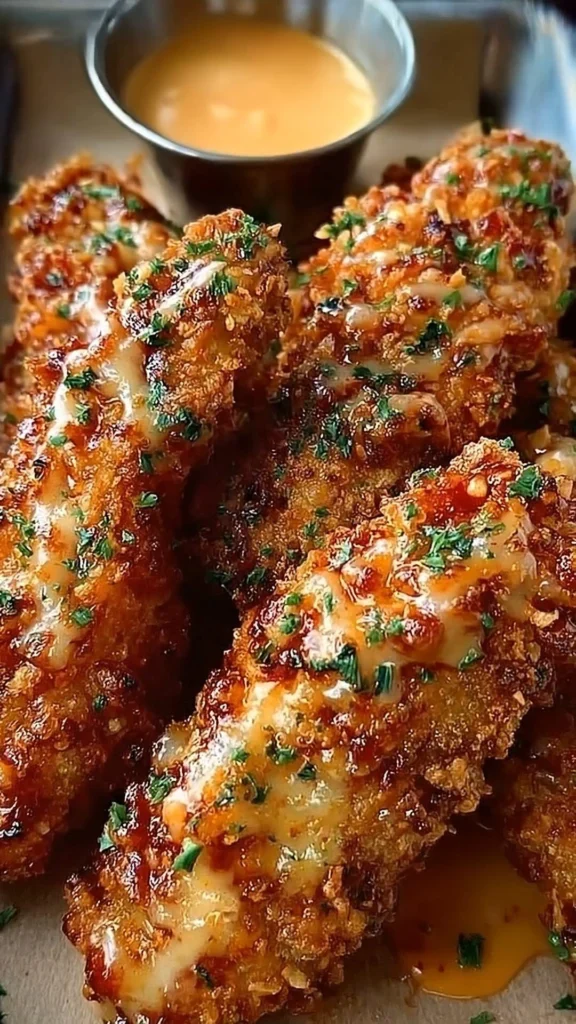
These crispy fried chicken tenders are the pork-free answer to everyone's favorite crunchy strip: no bacon, no lard, no pork rinds, just buttermilk-soaked chicken and a triple-textured coating that stays loud and crackly from the first bite to the last. The secret is a buttermilk marinade that tenderizes the meat, a seasoned flour dredge with a splash of the marinade to create shaggy clumps, and a hot 350°F (175°C) peanut or canola oil fry that sets that craggy shell in under four minutes.
I tested this recipe more than a dozen times because the classic version often leans on pork products for flavor and crunch. Instead, we build savory depth from smoked paprika, garlic powder, and a pinch of cayenne, and we get the crunch from a double-dredge plus a brief rest so the flour hydrates and fries into a glassy, golden shell. The result is a tender that stays crisp on a plate for 20 minutes, which is more than enough time for everyone to sit down.
Serve them with honey mustard, pickles, or a squeeze of lemon, and you have a weeknight dinner that beats the drive-thru. The whole thing comes together in about 50 minutes, most of which is hands-off marinating.
Why You'll Love This Recipe
About the Ingredients
2 pounds (900g) chicken breast tenders, patted dry
Look for tenders that are uniform in thickness so they cook evenly; if yours are thick, slice them lengthwise into 1-inch strips. Boneless skinless chicken thighs work beautifully as a juicier substitute.
1 1/2 cups (360ml) buttermilk
Full-fat buttermilk gives the best tenderizing and cling; if you don't have any, stir 1 1/2 tablespoons lemon juice into 1 1/2 cups whole milk and rest 10 minutes.
2 large eggs
Eggs help the flour adhere; you can swap them for 1/3 cup buttermilk plus 1 tablespoon cornstarch if you're out of eggs.
2 cups (250g) all-purpose flour
Standard all-purpose flour fries into the crispiest shell; a gluten-free 1:1 blend works but will brown slightly faster, so watch the oil temperature.
1/2 cup (60g) cornstarch
Cornstarch is the crunch secret; potato starch is a fine substitute and gives an even lighter, glassier crust.
2 teaspoons smoked paprika
Smoked paprika adds pork-free savory depth; sweet paprika plus a pinch of liquid smoke is a good stand-in.
2 teaspoons garlic powder
Granulated garlic dissolves better than fresh in dry dredges; onion powder can replace half of it for a rounder flavor.
1 1/2 teaspoons kosher salt, plus more for finishing
Diamond Crystal kosher salt is less dense than table salt, so use half the amount if substituting table salt.
1 teaspoon freshly ground black pepper
Fresh-cracked pepper is worth it here; white pepper gives a sharper, more traditional fried-chicken bite.
1/2 teaspoon cayenne pepper
Adjust to taste; ancho chile powder gives mild smokiness if you want less heat.
8 cups (1.9L) peanut or canola oil, for frying
Peanut oil has a high smoke point and clean flavor; canola or vegetable oil are neutral, affordable substitutes. Never use olive oil for deep frying.
Tips & Tricks
Keep the oil at a steady 350°F (175°C)
Use a clip-on thermometer and adjust the burner, because oil that dips below 325°F (160°C) makes greasy tenders and oil above 375°F (190°C) burns the crust before the chicken cooks through.
Don't crowd the pot
Fry in batches of 5 or 6 tenders so the oil temperature doesn't crash; a crowded pot is the number one cause of soggy, pale crust.
- Let the dredged tenders rest 10 minutes before frying: This hydrates the flour into a shaggy, craggy coating that fries up extra crunchy instead of powdery.
- Pat the chicken very dry before marinating: Excess surface water dilutes the buttermilk and makes the coating slide off, so blot the tenders thoroughly with paper towels first.
Pro Tips
Step-by-Step Instructions
1. Marinate the chicken
In a large bowl, whisk the buttermilk, 1 teaspoon of the salt, 1/2 teaspoon of the black pepper, and the cayenne. Add the chicken tenders, toss to coat, cover, and refrigerate for at least 20 minutes or up to 4 hours. The buttermilk tenderizes the meat and helps the coating cling.
2. Build the dredge
In a wide shallow dish, whisk the flour, cornstarch, smoked paprika, garlic powder, remaining 1/2 teaspoon salt, and remaining 1/2 teaspoon pepper. Drizzle in 2 tablespoons of the buttermilk marinade and toss with a fork until shaggy clumps form; these become crunchy ridges.
3. Heat the oil
Pour the oil into a heavy Dutch oven or deep cast-iron skillet to a depth of 2 inches (5cm) and heat over medium-high to 350°F (175°C). Clip a thermometer to the side and keep it there for the whole fry.
4. Dredge the tenders
Lift each tender from the buttermilk, letting excess drip off, then press firmly into the flour mixture, coating all sides. Transfer to a wire rack and repeat with the remaining tenders, then let them rest 10 minutes so the coating hydrates.
5. Fry the first batch
Carefully lower 5 or 6 tenders into the 350°F (175°C) oil and fry for 3 to 4 minutes per side, until deep golden brown, the edges bubble vigorously, and an instant-read thermometer inserted into the thickest part reads 165°F (74°C). Adjust the heat to hold 350°F (175°C).
6. Drain and salt
Transfer the fried tenders to a clean wire rack set over a sheet pan and sprinkle immediately with flaky salt. Let them rest 3 minutes while you fry the next batch, keeping finished tenders in a 200°F (95°C) oven if needed.
7. Fry the remaining batches
Skim any loose flour bits from the oil with a spider strainer between batches, then fry the remaining tenders the same way. Loose bits burn and make the oil bitter, so skimming keeps every batch clean-tasting.
8. Serve hot
Pile the tenders on a platter with honey mustard, pickles, and lemon wedges, and serve within 20 minutes while the crust is at its loudest and crispiest.
Delicious Variations
Nashville Hot
Whisk 3 tablespoons hot frying oil with 1 tablespoon cayenne, 1 teaspoon brown sugar, and 1/2 teaspoon smoked paprika, then brush over the fried tenders for a spicy, glossy finish.
Parmesan Herb
Add 1/2 cup finely grated Parmesan and 1 teaspoon dried oregano to the flour dredge for a nutty, Italian-leaning crust that's excellent dipped in marinara.
Korean Gochujang Glaze
Toss fried tenders in a sauce of 3 tablespoons gochujang, 2 tablespoons honey, 1 tablespoon soy sauce, and 1 minced garlic clove for a sticky, sweet-heat variation.
How to Store Crispy Fried Chicken Tenders (Pork-Free) The Ultimate Crunch
Refrigerator
Store cooled tenders in an airtight container in the refrigerator for up to 3 days; keep them in a single layer with parchment between layers so the crust doesn't get crushed.
Freezer
Freeze fried, cooled tenders on a sheet pan for 1 hour, then transfer to a freezer bag for up to 2 months. Reheat from frozen without thawing.
Reheating
Reheat on a wire rack over a sheet pan in a 375°F (190°C) oven for 10 to 12 minutes, or in an air fryer at 375°F (190°C) for 6 to 8 minutes, until the crust re-crisps and the interior reaches 165°F (74°C). Never microwave them or the crust turns rubbery.
Frequently Asked Questions
Q: Why did my fried chicken tenders turn out soggy?
Soggy tenders are almost always caused by oil that dropped below 325°F (160°C) or by crowding the pot. Fry in small batches of 5 or 6, keep the oil at a steady 350°F (175°C) with a thermometer, and rest the finished tenders on a wire rack instead of paper towels so steam can escape.
Q: Can I make crispy fried chicken tenders without buttermilk?
Yes, you can make a buttermilk substitute by stirring 1 1/2 tablespoons of lemon juice or white vinegar into 1 1/2 cups of whole milk and letting it sit for 10 minutes until slightly thickened. Plain yogurt thinned with a little milk also works and gives the same tenderizing effect.
Q: How do I know when chicken tenders are fully cooked?
The most reliable test is an instant-read thermometer inserted into the thickest part of the tender, which should read 165°F (74°C). Visually, the crust should be deep golden brown and the juices should run clear with no pink in the center when you cut one open.
Q: Can I bake or air fry these tenders instead of deep frying?
Yes, for a lighter version, air fry the dredged tenders at 400°F (200°C) for 10 to 12 minutes, flipping halfway, or bake on a greased wire rack at 425°F (220°C) for 18 to 20 minutes. The crust won't be quite as shattery as deep fried, but it will still be crisp and golden.
Q: What is the best oil for frying chicken tenders?
Peanut oil is the best choice because it has a high smoke point of about 450°F (232°C) and a clean, mild flavor that won't mask the seasoning. Canola, vegetable, or corn oil are all solid, affordable substitutes with smoke points above 400°F (204°C), while olive oil should be avoided for deep frying.
Grab your thermometer, heat that oil to 350°F (175°C), and make these crispy fried chicken tenders tonight. Snap a photo of that golden, craggy crust and tag me so I can see your crunch, then leave a rating below to tell me how your family reacted.
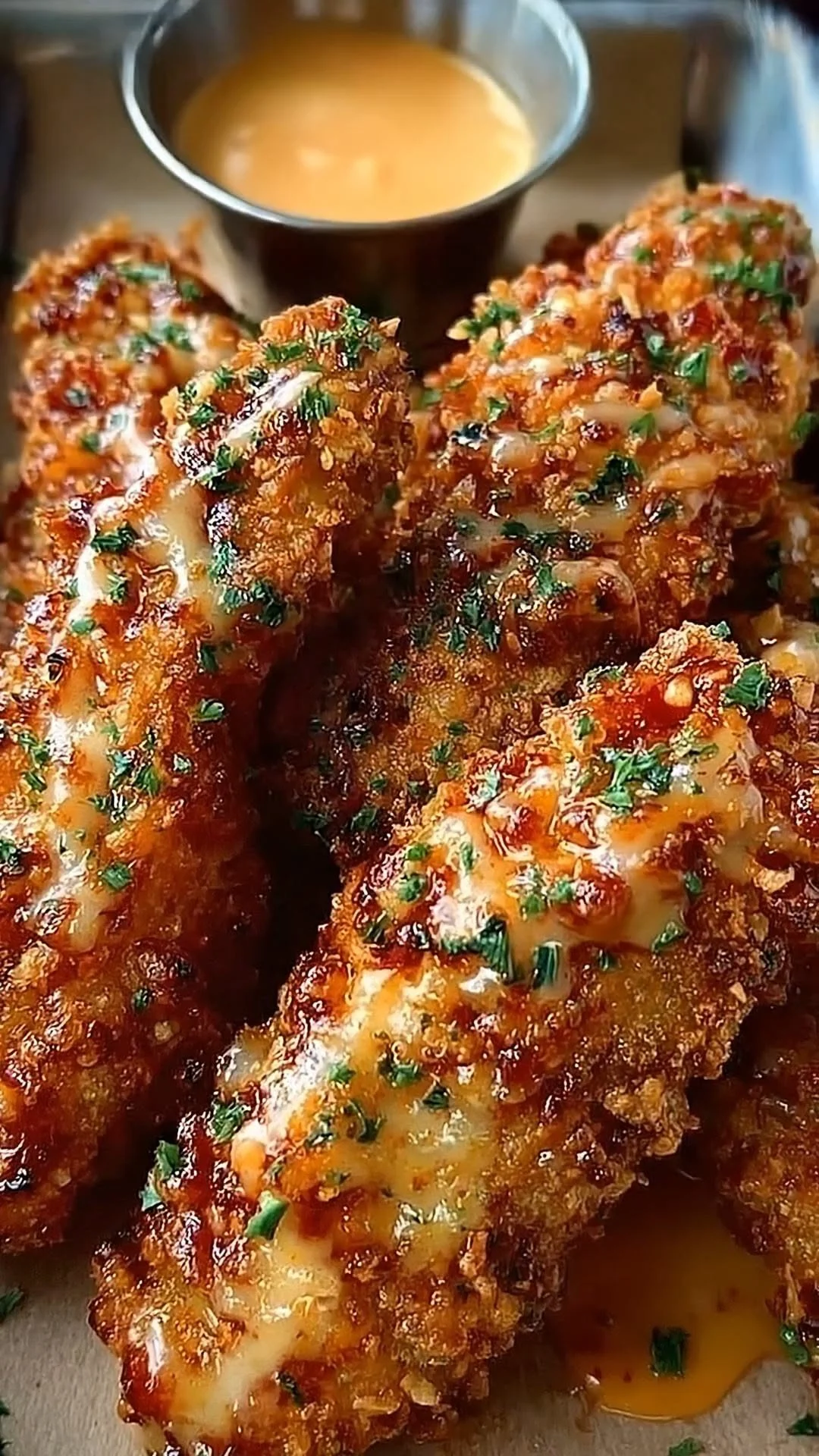
Crispy Fried Chicken Tenders (Pork-Free) The Ultimate Crunch
Crispy Fried Chicken Tenders (Pork-Free) deliver shatteringly crunchy, juicy strips in 50 minutes with a seasoned buttermilk soak and double-dredge coating.
🧂 Ingredients
- 2 pounds (900g) chicken breast tenders, patted dry
- 1 1/2 cups (360ml) buttermilk
- 2 large eggs
- 2 cups (250g) all-purpose flour
- 1/2 cup (60g) cornstarch
- 2 teaspoons smoked paprika
- 2 teaspoons garlic powder
- 1 1/2 teaspoons kosher salt, plus more for finishing
- 1 teaspoon freshly ground black pepper
- 1/2 teaspoon cayenne pepper
- 8 cups (1.9L) peanut or canola oil, for frying
📋 Instructions
- 1Marinate the chicken — In a large bowl, whisk the buttermilk, 1 teaspoon of the salt, 1/2 teaspoon of the black pepper, and the cayenne. Add the chicken tenders, toss to coat, cover, and refrigerate for at least 20 minutes or up to 4 hours. The buttermilk tenderizes the meat and helps the coating cling.
- 2Build the dredge — In a wide shallow dish, whisk the flour, cornstarch, smoked paprika, garlic powder, remaining 1/2 teaspoon salt, and remaining 1/2 teaspoon pepper. Drizzle in 2 tablespoons of the buttermilk marinade and toss with a fork until shaggy clumps form; these become crunchy ridges.
- 3Heat the oil — Pour the oil into a heavy Dutch oven or deep cast-iron skillet to a depth of 2 inches (5cm) and heat over medium-high to 350°F (175°C). Clip a thermometer to the side and keep it there for the whole fry.
- 4Dredge the tenders — Lift each tender from the buttermilk, letting excess drip off, then press firmly into the flour mixture, coating all sides. Transfer to a wire rack and repeat with the remaining tenders, then let them rest 10 minutes so the coating hydrates.
- 5Fry the first batch — Carefully lower 5 or 6 tenders into the 350°F (175°C) oil and fry for 3 to 4 minutes per side, until deep golden brown, the edges bubble vigorously, and an instant-read thermometer inserted into the thickest part reads 165°F (74°C). Adjust the heat to hold 350°F (175°C).
- 6Drain and salt — Transfer the fried tenders to a clean wire rack set over a sheet pan and sprinkle immediately with flaky salt. Let them rest 3 minutes while you fry the next batch, keeping finished tenders in a 200°F (95°C) oven if needed.
- 7Fry the remaining batches — Skim any loose flour bits from the oil with a spider strainer between batches, then fry the remaining tenders the same way. Loose bits burn and make the oil bitter, so skimming keeps every batch clean-tasting.
- 8Serve hot — Pile the tenders on a platter with honey mustard, pickles, and lemon wedges, and serve within 20 minutes while the crust is at its loudest and crispiest.