Cozy Cravings Recipes
Creamy Spinach Artichoke Pasta – 50-Minute Comfort Dinner
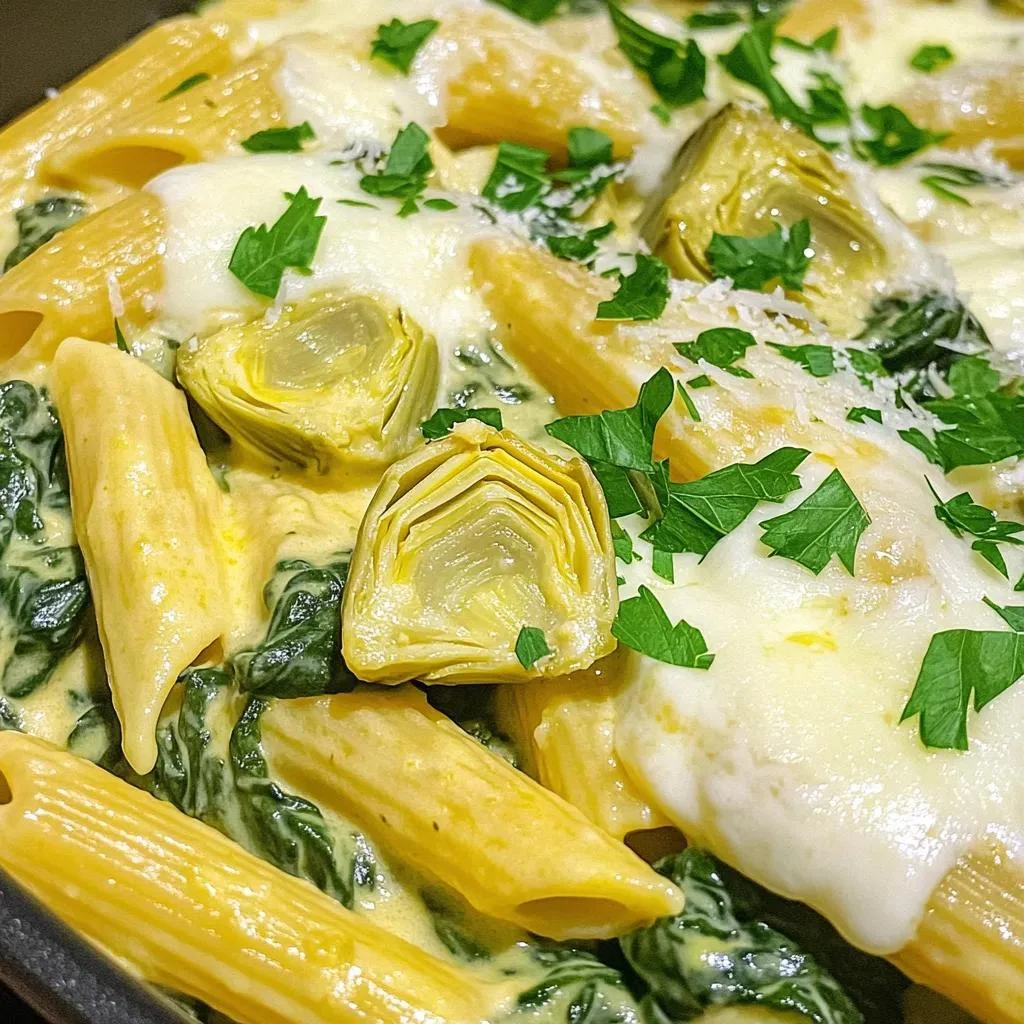
Spinach artichoke dip has a cult following for a reason: the tangy marinated artichokes, the garlicky cream cheese base, and all that melted Parmesan. This recipe takes those exact flavors and folds them into a pot of pasta, so you get the dip experience as an actual dinner instead of an appetizer that disappears before the main course arrives.
The trick is building the sauce in the same skillet you cook the aromatics in, then finishing the pasta right in the pan so the starch from the cooking water helps the cream cheese and Parmesan cling to every tube. Penne rigate is my pick because the ridges trap the spinach and chopped artichoke hearts, but any short shape with texture will work.
From start to table it is about 50 minutes, most of it hands-off simmering. It is rich enough to serve to guests and fast enough for a Tuesday, and it reheats beautifully for leftovers the next day.
Why You'll Love This Recipe
About the Ingredients
12 oz (340g) penne rigate or other ridged short pasta
Ridged shapes hold the thick sauce best. Rigatoni or fusilli are great swaps; avoid long noodles that clump when tossed with spinach.
2 tbsp (28g) unsalted butter
Use butter rather than oil for the nutty base the roux needs. If you only have salted butter, cut the added salt in the pasta water by half.
1 tbsp (15ml) olive oil
Regular olive oil is fine here since it is not a finishing oil. Buy a mid-priced bottle for cooking and save the fancy stuff for drizzling.
1 small yellow onion, finely diced (about 1 cup / 150g)
Yellow onion melts into the sauce; red onion stays too crunchy and sharp. Shallots work as a milder substitute in the same quantity.
4 cloves garlic, minced (about 1 tbsp)
Fresh garlic only; the jarred stuff turns bitter when bloomed in butter. Mince it just before cooking so it does not dry out.
3 tbsp (24g) all-purpose flour
This thickens the sauce before the dairy goes in. For a gluten-free version, use 1 1/2 tbsp cornstarch and whisk it into the cold milk first.
2 cups (480ml) whole milk, warmed
Whole milk gives the creamiest result; 2% works but the sauce will be thinner. Warm it in the microwave 60 seconds so it does not seize the roux.
4 oz (113g) cream cheese, cubed and softened
Full-fat block cream cheese, not spreadable tub style, which contains too much water. Let it sit out 20 minutes before cooking.
1 can (14 oz / 400g) quartered artichoke hearts in brine, drained and chopped
Brine-packed, not oil-marinated, keeps the sauce from turning greasy. Pat them dry so excess liquid does not thin the sauce.
10 oz (283g) frozen chopped spinach, thawed and squeezed very dry
Squeeze it in a clean kitchen towel until no more water drips out, or the sauce will turn gray and loose. Fresh spinach works too: wilt 12 oz, then chop and squeeze.
1 cup (100g) grated Parmesan, plus more for serving
Grate it yourself from a wedge; pre-shredded Parmesan has anti-caking starch that makes the sauce grainy. Pecorino is a sharper substitute.
1/2 tsp kosher salt, 1/2 tsp black pepper, and a pinch of red pepper flakes
Season gradually because Parmesan and artichokes both bring salt. Add the flakes early in the butter for even heat distribution.
Tips & Tricks
Squeeze the spinach like you mean it
thawed spinach holds a surprising amount of water, and any left in the leaves will thin the cream sauce and dull its color.
Warm the milk before it hits the roux
cold milk hitting a hot flour-butter base is the number one cause of lumpy sauce, so microwave it for a minute first.
Add Parmesan off the heat
boiling temperatures make hard cheese clump and string, so stir it in once the skillet is off the burner and the sauce is just steaming.
Undercook the pasta by 2 minutes
it finishes in the sauce and absorbs flavor while it reaches al dente, and the reserved pasta water loosens things if it tightens up.
Pro Tips
Step-by-Step Instructions
1. Boil the pasta
Bring a large pot of well-salted water to a rolling boil (212F / 100C) and cook the penne for 2 minutes less than the package directions, about 9 minutes, until it is firm at the center when you bite it. Scoop out 1 cup of pasta water, then drain.
2. Sweat the aromatics
In a 12-inch skillet over medium heat (about 350F / 175C), melt the butter with the olive oil, then add the onion and a pinch of salt and cook 5 to 6 minutes, stirring, until translucent and soft but not browned. Add the garlic and red pepper flakes and cook 45 seconds, just until fragrant.
3. Build the roux
Sprinkle the flour over the onions and whisk constantly for 1 to 2 minutes, until the raw flour smell disappears and the mixture looks like a loose paste. Do not let it brown; you want a blond roux for a creamy white sauce.
4. Whisk in the milk
Pour the warm milk in a steady stream while whisking, scraping the corners of the skillet. Simmer 3 to 4 minutes, whisking, until the sauce coats the back of a spoon and bubbles lazily at the edges (about 200F / 93C).
5. Melt in the cream cheese
Reduce the heat to low (about 200F / 93C) and add the cubed cream cheese a few pieces at a time, whisking until each addition disappears into the sauce, about 3 minutes total. The sauce should look glossy and pourable.
6. Fold in spinach and artichokes
Stir in the squeezed spinach and chopped artichoke hearts and cook 2 minutes, just until heated through and the sauce turns pale green. Taste and add the salt and pepper now, before the cheese goes in.
7. Melt the Parmesan
Pull the skillet off the heat and stir in the Parmesan in three handfuls, whisking until smooth after each one. If the sauce looks thick, whisk in reserved pasta water 2 tablespoons at a time until it ribbons off the whisk.
8. Toss and serve
Add the drained pasta to the skillet and toss over low heat (about 200F / 93C) for 1 to 2 minutes, until every piece is coated and the sauce clings rather than pools. Serve immediately with extra Parmesan and black pepper.
Delicious Variations
Chicken and bacon version
fold in 2 cups of shredded rotisserie chicken and 4 slices of crumbled cooked bacon with the spinach for a heartier main dish.
Spicy vodka-artichoke twist
swap 1/2 cup of the milk for vodka, cook off the alcohol for 2 minutes after the roux, and double the red pepper flakes.
Baked casserole style
transfer the tossed pasta to a buttered 9x13-inch dish, top with 1 cup mozzarella and 1/4 cup panko, and broil at 500F / 260C for 3 to 4 minutes until the top is golden and bubbling.
How to Store Creamy Spinach Artichoke Pasta
Refrigerator
Store in an airtight container for up to 4 days. The sauce thickens as it chills, so plan to loosen it with a splash of milk when reheating.
Freezer
Freeze in portions for up to 2 months, though the cream sauce may separate slightly and the pasta can soften. Thaw overnight in the refrigerator before reheating.
Reheating
Reheat gently on the stovetop over medium-low (about 250F / 120C) with 2 to 3 tablespoons of milk or water per serving, stirring until creamy again. Avoid the microwave on high, which can make the sauce break.
Frequently Asked Questions
Q: Can I use fresh spinach instead of frozen?
Yes, use about 12 ounces of fresh spinach and wilt it in the skillet for 2 minutes before folding it into the sauce. Chop it roughly and squeeze out any excess moisture so the sauce stays thick.
Q: Why did my spinach artichoke pasta turn out watery?
Watery sauce almost always comes from wet spinach or wet artichoke hearts, so squeeze the spinach in a towel and pat the artichokes dry before adding them. Also simmer the milk mixture until it visibly thickens before the vegetables go in.
Q: Can I make this creamy spinach artichoke pasta ahead of time?
You can build the sauce up to 2 days ahead and refrigerate it in a covered container, then reheat it gently with a splash of milk while you boil fresh pasta. Assembling the whole dish ahead tends to dry out the noodles, so cook the pasta the day you serve it.
Q: What pasta shape is best for spinach artichoke pasta?
Ridged short shapes like penne rigate, rigatoni, or fusilli work best because the texture grips the thick cream sauce and traps bits of spinach and artichoke. Long noodles like spaghetti tend to clump when tossed with the chunky vegetables.
Q: Is this dish vegetarian, and can I make it vegan?
As written it is vegetarian, since it uses no meat and the Parmesan is the only aged cheese. For a vegan version, use plant butter, oat milk, vegan cream cheese, and a plant-based Parmesan alternative, and note the texture will be slightly less rich.
If you make this creamy spinach artichoke pasta, I would love to hear how it turned out. Leave a comment with the pasta shape you used or any swaps you tried, and snap a photo before it disappears, because it goes fast.
Creamy Spinach Artichoke Pasta
Creamy Spinach Artichoke Pasta turns the classic dip into a one-skillet dinner with tender pasta, tangy artichokes, and melty cheese in 50 minutes.
🧂 Ingredients
- 12 oz (340g) penne rigate or other ridged short pasta
- 2 tbsp (28g) unsalted butter
- 1 tbsp (15ml) olive oil
- 1 small yellow onion, finely diced (about 1 cup / 150g)
- 4 cloves garlic, minced (about 1 tbsp)
- 3 tbsp (24g) all-purpose flour
- 2 cups (480ml) whole milk, warmed
- 4 oz (113g) cream cheese, cubed and softened
- 1 can (14 oz / 400g) quartered artichoke hearts in brine, drained and chopped
- 10 oz (283g) frozen chopped spinach, thawed and squeezed very dry
- 1 cup (100g) grated Parmesan, plus more for serving
- 1/2 tsp kosher salt, 1/2 tsp black pepper, and a pinch of red pepper flakes
📋 Instructions
- 1Boil the pasta — Bring a large pot of well-salted water to a rolling boil (212F / 100C) and cook the penne for 2 minutes less than the package directions, about 9 minutes, until it is firm at the center when you bite it. Scoop out 1 cup of pasta water, then drain.
- 2Sweat the aromatics — In a 12-inch skillet over medium heat (about 350F / 175C), melt the butter with the olive oil, then add the onion and a pinch of salt and cook 5 to 6 minutes, stirring, until translucent and soft but not browned. Add the garlic and red pepper flakes and cook 45 seconds, just until fragrant.
- 3Build the roux — Sprinkle the flour over the onions and whisk constantly for 1 to 2 minutes, until the raw flour smell disappears and the mixture looks like a loose paste. Do not let it brown; you want a blond roux for a creamy white sauce.
- 4Whisk in the milk — Pour the warm milk in a steady stream while whisking, scraping the corners of the skillet. Simmer 3 to 4 minutes, whisking, until the sauce coats the back of a spoon and bubbles lazily at the edges (about 200F / 93C).
- 5Melt in the cream cheese — Reduce the heat to low (about 200F / 93C) and add the cubed cream cheese a few pieces at a time, whisking until each addition disappears into the sauce, about 3 minutes total. The sauce should look glossy and pourable.
- 6Fold in spinach and artichokes — Stir in the squeezed spinach and chopped artichoke hearts and cook 2 minutes, just until heated through and the sauce turns pale green. Taste and add the salt and pepper now, before the cheese goes in.
- 7Melt the Parmesan — Pull the skillet off the heat and stir in the Parmesan in three handfuls, whisking until smooth after each one. If the sauce looks thick, whisk in reserved pasta water 2 tablespoons at a time until it ribbons off the whisk.
- 8Toss and serve — Add the drained pasta to the skillet and toss over low heat (about 200F / 93C) for 1 to 2 minutes, until every piece is coated and the sauce clings rather than pools. Serve immediately with extra Parmesan and black pepper.