Cozy Cravings Recipes
Creamy Peanut Udon in 10 Minutes – Easy Weeknight Noodles

These creamy peanut udon noodles exist for the nights when you want something rich, slurpable, and deeply savory but have roughly zero patience left. The sauce comes together in a measuring cup while the udon loosen in hot water, so the whole thing lands on the table in about ten minutes of actual work.
The trick is balance: creamy peanut butter gets sharpened with soy sauce, rice vinegar, and a hit of chili crisp so the noodles taste bright instead of heavy. Reserved noodle water is the secret handshake here, thinning the sauce into something that clings to every strand rather than sitting in a gluey puddle at the bottom of the bowl.
This is a pantry recipe through and through, and it scales beautifully. Cook a single bowl for a quiet lunch or double it for a family of four without changing the method, just use a wider skillet so the sauce reduces evenly.
Why You'll Love This Recipe
About the Ingredients
2 (7-ounce / 200g) packages fresh udon noodles
Fresh vacuum-packed udon cook in 2 minutes and stay springy; dried udon works too, but boil it 8 to 10 minutes first. Look for udon in the refrigerated section near the tofu, or substitute thick lo mein noodles.
1/3 cup (85g) creamy natural peanut butter
Natural peanut butter gives the best peanut flavor without added sugar; stir the jar well before measuring. If you only have conventional sweetened peanut butter, skip the honey and taste before adding more.
3 tablespoons (45ml) low-sodium soy sauce
Low-sodium soy keeps the sauce from turning salty once it reduces. For a gluten-free bowl, use tamari, or swap in coconut aminos and add an extra pinch of salt.
1 tablespoon (15ml) rice vinegar
Rice vinegar adds the brightness that keeps peanut sauce from tasting flat. Seasoned rice vinegar is fine, or use 2 teaspoons lime juice plus 1 teaspoon water instead.
1 tablespoon (20g) honey
Honey rounds out the soy and vinegar; maple syrup is a seamless vegan swap. Taste the sauce before adding more, since peanut butter brands vary in sweetness.
2 teaspoons toasted sesame oil
Toasted sesame oil is the flavor backbone here, so don't substitute neutral oil. A little goes far; buy a small bottle, since it goes rancid after about six months.
2 cloves garlic, finely grated
Fresh garlic is essential; a microplane turns it into a paste that disappears into the sauce. In a pinch, use 1/2 teaspoon garlic powder stirred in with the soy sauce.
1/2 to 1 teaspoon chili crisp, plus more to serve
Chili crisp brings crunch and gentle heat; start with 1/2 teaspoon if you're heat-shy. Sambal oelek or a pinch of red pepper flakes works as a substitute.
1/3 cup (80ml) hot noodle cooking water, plus more as needed
Starchy noodle water emulsifies the peanut butter into a glossy sauce. If you forget to reserve it, hot tap water plus a pinch of cornstarch is a decent stand-in.
2 scallions, thinly sliced
Scallions add fresh bite and color; the green tops go on at the end so they stay crisp. Thinly sliced chives or a small handful of cilantro can stand in.
2 tablespoons (15g) crushed roasted peanuts
Crushed peanuts give the bowl texture and a toasty finish. Salted roasted peanuts are fine, or use toasted sesame seeds if you're avoiding nuts.
1 teaspoon toasted sesame seeds, for serving
Sesame seeds are mostly for looks and a subtle nuttiness. Toast them in a dry pan for 60 seconds over medium heat if you want a deeper flavor.
Tips & Tricks
Don't Skip the Reserved Water
Starchy noodle water is what turns peanut butter into a silky sauce instead of a thick paste. Pull out a full cup before draining, even if the recipe only calls for a third.
Warm the Peanut Butter First
Cold peanut butter seizes when it hits soy sauce and turns lumpy. Whisk it with the hot noodle water first, or microwave it 15 seconds to loosen it.
Taste Before the Noodles Go In
Peanut butter brands vary wildly in salt and sugar. Adjust soy, honey, and vinegar in the bowl first, because once the noodles are coated you can't fix the balance easily.
Use a Wide Skillet
A 12-inch skillet gives the sauce room to coat the noodles evenly. A small saucepan crowds them and leaves the bottom of the bowl swimming in sauce.
Pro Tips
Step-by-Step Instructions
1. Boil the water
Bring a large pot of water to a rolling boil over high heat, about 212°F (100°C). You want enough water that the udon can move freely, roughly 8 cups (2 liters) for two packages.
2. Whisk the peanut sauce
In a medium bowl, whisk 1/3 cup peanut butter, 3 tablespoons soy sauce, 1 tablespoon rice vinegar, 1 tablespoon honey, 2 teaspoons sesame oil, the grated garlic, and 1/2 teaspoon chili crisp until smooth. It will look thick and paste-like at this stage, which is correct.
3. Cook the udon
Drop the udon into the boiling water and cook 2 minutes at 212°F (100°C), just until the strands separate and turn pliable. They should be springy with a slight bite, not soft; pull one out and pinch it to check.
4. Reserve the water
Before draining, scoop out 1 cup (240ml) of the hot starchy cooking water and set it aside. This liquid is what makes the sauce glossy, so don't pour it all down the drain.
5. Loosen the sauce
Whisk 1/3 cup (80ml) of the hot reserved water into the peanut mixture until it turns pale, pourable, and glossy like heavy cream. If it still looks thick, add water 1 tablespoon at a time.
6. Toss the noodles
Drain the udon and add them to a 12-inch skillet with the sauce off the heat. Toss with tongs for 30 to 45 seconds until every strand is coated and the sauce clings rather than pools.
7. Warm through
Set the skillet over medium heat, about 300°F (150°C) on an infrared thermometer, and toss 60 to 90 seconds until the sauce bubbles gently at the edges and the noodles are hot throughout. Pull it off the heat the moment it looks glossy, before the peanut butter tightens.
8. Finish and serve
Divide between bowls and top with sliced scallions, crushed peanuts, sesame seeds, and extra chili crisp. Serve immediately while the sauce is still loose and creamy.
Delicious Variations
Sesame-Ginger Udon
Replace half the peanut butter with tahini and add 1 teaspoon freshly grated ginger for a sharper, nuttier bowl.
Peanut Udon with Crispy Tofu
Pan-fry 8 ounces cubed extra-firm tofu in 1 tablespoon oil over medium-high heat, 350°F (175°C), for 6 to 8 minutes until golden on all sides, then fold it in at the end.
Spicy Peanut Udon
Double the chili crisp and add 1 teaspoon chili-garlic sauce to the peanut mixture for a bowl with real heat.
How to Store Creamy Peanut Udon in 10 minutes 🥜😍
Refrigerator
Store leftovers in an airtight container in the refrigerator for up to 3 days. The noodles absorb sauce as they chill, so keep 2 tablespoons of water alongside to loosen them later.
Freezer
Freezing is not recommended; the udon turn mushy and the sauce separates when thawed. Freeze only the peanut sauce on its own for up to 2 months.
Reheating
Reheat in a skillet over medium heat, about 300°F (150°C), with a splash of water for 2 to 3 minutes, tossing until glossy. Microwaving works in 30-second bursts but tends to dry the noodles out.
Frequently Asked Questions
Q: Can I use dried udon instead of fresh?
Yes, dried udon works fine, but boil it 8 to 10 minutes until just tender before tossing with the sauce. Reserve the cooking water either way, since dried noodles release even more starch and make an excellent sauce base.
Q: How do I make this peanut udon vegan?
Swap the honey for maple syrup and you have a fully vegan bowl, since the rest of the ingredients are plant-based. Check that your chili crisp and soy sauce contain no fish or dairy additives, which some brands do.
Q: Why is my peanut sauce too thick or grainy?
The sauce is usually too thick because the peanut butter was cold or not enough noodle water was added. Whisk in hot reserved water 1 tablespoon at a time until it pours like cream, and use natural peanut butter stirred well from the bottom of the jar to avoid graininess.
Q: Can I make creamy peanut udon ahead of time?
You can make the peanut sauce up to 5 days ahead and refrigerate it in a jar, but cook the noodles fresh. Assembled noodles soak up the sauce and turn sticky within an hour, so toss them just before serving.
Q: Is this peanut udon very spicy?
No, it's only mildly warm at 1/2 teaspoon of chili crisp, and you can leave the chili crisp out entirely for a completely mild bowl. Add it at the table so each person can control their own heat level.
If you make these creamy peanut udon, snap a photo of that glossy bowl and tag me, because I genuinely love seeing your add-ins. Try it once and I promise it earns a permanent spot in your ten-minute dinner rotation.
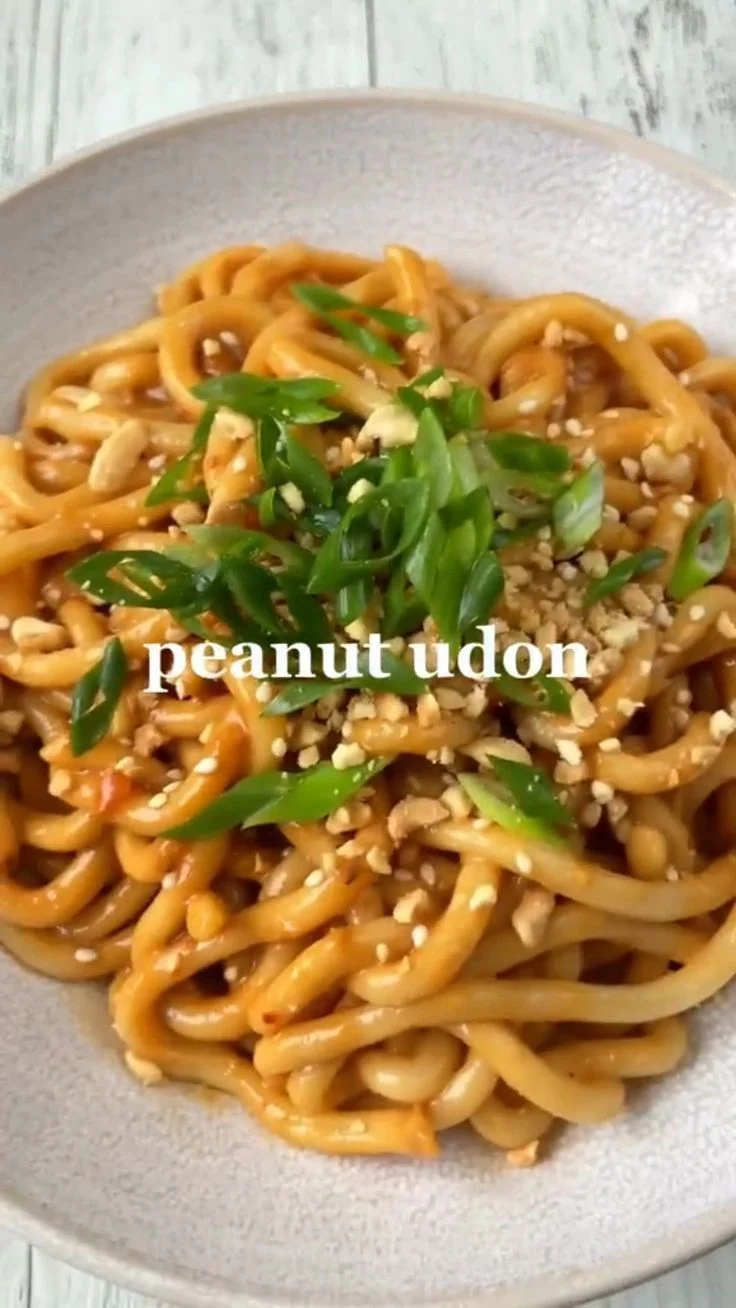
Creamy Peanut Udon in 10 minutes 🥜😍
Creamy Peanut Udon in 10 minutes makes glossy, saucy noodles with peanut butter, soy, and garlic for a faster, cheaper takeout dinner at home.
🧂 Ingredients
- 2 (7-ounce / 200g) packages fresh udon noodles
- 1/3 cup (85g) creamy natural peanut butter
- 3 tablespoons (45ml) low-sodium soy sauce
- 1 tablespoon (15ml) rice vinegar
- 1 tablespoon (20g) honey
- 2 teaspoons toasted sesame oil
- 2 cloves garlic, finely grated
- 1/2 to 1 teaspoon chili crisp, plus more to serve
- 1/3 cup (80ml) hot noodle cooking water, plus more as needed
- 2 scallions, thinly sliced
- 2 tablespoons (15g) crushed roasted peanuts
- 1 teaspoon toasted sesame seeds, for serving
📋 Instructions
- 1Boil the water — Bring a large pot of water to a rolling boil over high heat, about 212°F (100°C). You want enough water that the udon can move freely, roughly 8 cups (2 liters) for two packages.
- 2Whisk the peanut sauce — In a medium bowl, whisk 1/3 cup peanut butter, 3 tablespoons soy sauce, 1 tablespoon rice vinegar, 1 tablespoon honey, 2 teaspoons sesame oil, the grated garlic, and 1/2 teaspoon chili crisp until smooth. It will look thick and paste-like at this stage, which is correct.
- 3Cook the udon — Drop the udon into the boiling water and cook 2 minutes at 212°F (100°C), just until the strands separate and turn pliable. They should be springy with a slight bite, not soft; pull one out and pinch it to check.
- 4Reserve the water — Before draining, scoop out 1 cup (240ml) of the hot starchy cooking water and set it aside. This liquid is what makes the sauce glossy, so don't pour it all down the drain.
- 5Loosen the sauce — Whisk 1/3 cup (80ml) of the hot reserved water into the peanut mixture until it turns pale, pourable, and glossy like heavy cream. If it still looks thick, add water 1 tablespoon at a time.
- 6Toss the noodles — Drain the udon and add them to a 12-inch skillet with the sauce off the heat. Toss with tongs for 30 to 45 seconds until every strand is coated and the sauce clings rather than pools.
- 7Warm through — Set the skillet over medium heat, about 300°F (150°C) on an infrared thermometer, and toss 60 to 90 seconds until the sauce bubbles gently at the edges and the noodles are hot throughout. Pull it off the heat the moment it looks glossy, before the peanut butter tightens.
- 8Finish and serve — Divide between bowls and top with sliced scallions, crushed peanuts, sesame seeds, and extra chili crisp. Serve immediately while the sauce is still loose and creamy.