Cozy Cravings Recipes
Classic Meatloaf Recipe – Juicy Comfort Food Dinner

Classic meatloaf is the kind of dinner that makes a whole house smell like Sunday afternoon. This version keeps the retro charm but fixes the two things that ruin most meatloaves: a dry, crumbly texture and a bland, ketchup-only flavor profile.
The secret is a panade of breadcrumbs soaked in milk, a gentle hand with the mixing bowl, and a sweet-tangy brown sugar glaze brushed on twice so it caramelizes instead of just sitting on top. It bakes in about 35 minutes as a free-form loaf, which means no soggy grease bath and plenty of sticky glaze on every slice.
Serve it with mashed potatoes, green beans, or a pile of buttered peas, and you have a dinner that feeds six with leftovers that make an even better sandwich the next day.
Why You'll Love This Recipe
About the Ingredients
2 lb (900g) ground beef, 80/20 lean-to-fat
The 20% fat is what keeps meatloaf juicy; ground chuck is ideal. If you only have 90/10, add 2 tablespoons of olive oil to the mix to compensate for the lost fat.
1 cup (60g) plain dry breadcrumbs
Panko works too but gives a slightly airier texture; crushed saltine crackers (about 25) are a great pantry swap. Avoid seasoned breadcrumbs, which make the loaf taste like stuffing.
3/4 cup (180ml) whole milk
Whole milk gives the richest panade; 2% is fine, and unsweetened oat milk works for a dairy-free version. Let the crumbs soak until no dry patches remain.
1 medium yellow onion, finely diced (about 1 cup/150g)
Finely dice it or the loaf will crack around the chunks. Grated onion is a faster option and releases more moisture into the meat.
2 large eggs, lightly beaten
Eggs are the binder; if you are short one, substitute 1/4 cup ricotta or 3 tablespoons of the milk-breadcrumb mixture. Beat them just until streaky.
2 garlic cloves, minced
Fresh garlic is best; 1 teaspoon of garlic powder is the substitute if you are out. Mince finely so no raw garlic pockets survive the bake.
1/3 cup (80ml) ketchup, for the glaze
Use a plain, thick ketchup, not a chunky salsa-style one. For a tangier glaze, swap 1 tablespoon of the ketchup for Dijon mustard.
3 tbsp (40g) packed light brown sugar
Dark brown sugar adds a deeper molasses note; honey (2 tablespoons) works in a pinch. Pack it firmly when measuring or the glaze will be too thin.
1 tbsp Worcestershire sauce
This is the umami backbone; soy sauce or coconut aminos are solid substitutes. Buy a brand without high-fructose corn syrup if you care about that.
1 1/2 tsp kosher salt and 1 tsp black pepper
Kosher salt is less dense than table salt, so use only 1 teaspoon if swapping. Fresh-cracked pepper makes a noticeable difference here.
Tips & Tricks
Do Not Overmix
Stop mixing the moment the ingredients come together; overworking the beef turns it dense and bouncy. Use your fingertips or a fork and fold rather than knead.
Skip the Loaf Pan
A free-form loaf on a foil-lined sheet pan lets fat drain away and exposes more surface to the glaze. A loaf pan traps grease and steams the sides.
Check the Temperature, Not the Clock
Pull the loaf at 155F (68C) in the center; carryover heat brings it to a safe 160F (71C) while it rests. An instant-read thermometer is the only reliable doneness test.
Let It Rest
Ten minutes of rest lets the juices redistribute so the slices hold together. Cutting immediately gives you a crumbly, dry-edged loaf.
Pro Tips
Step-by-Step Instructions
1. Heat the oven and prep
Preheat the oven to 350F (175C) and line a rimmed sheet pan with aluminum foil, then lightly grease the foil. The foil catches the rendered fat and makes cleanup a 10-second job.
2. Soak the breadcrumbs
In a large bowl, stir the breadcrumbs into the milk and let them sit for 5 minutes until all the liquid is absorbed and the mixture looks like a soft paste. This panade is what keeps the loaf tender.
3. Mix the meatloaf
Add the beef, onion, eggs, garlic, Worcestershire, salt, and pepper to the bowl and fold with a fork or your hands just until combined, about 30 seconds. Stop as soon as you see no dry spots; overmixing is the enemy of a tender loaf.
4. Shape the loaf
Turn the mixture onto the sheet pan and shape it into a 9-by-4-inch loaf about 2 inches tall, packing it gently. A flatter, wider loaf cooks more evenly than a tall brick.
5. Make the glaze
Whisk the ketchup and brown sugar in a small bowl until smooth. It should be thick enough to cling to a spoon, not runny.
6. Bake the first stage
Bake uncovered for 25 minutes, then pull the pan out and brush half the glaze over the top and sides. The surface should look set and slightly pale at this point, not browned.
7. Glaze and finish
Return to the oven and bake 10 to 12 more minutes, until the glaze is bubbling at the edges and an instant-read thermometer inserted in the center reads 155F (68C). Total bake time is about 35 to 37 minutes.
8. Rest before slicing
Let the meatloaf rest on the pan for 10 minutes, then slice into 1-inch pieces. The internal temperature will rise to 160F (71C) as it rests, and the slices will hold together cleanly.
Delicious Variations
Turkey Meatloaf
Swap the beef for 2 lb ground turkey (93/7) and add 2 extra tablespoons of milk to the panade; bake to 165F (74C).
BBQ Cheddar Loaf
Fold 1 cup shredded sharp cheddar into the meat mixture and replace the ketchup glaze with your favorite barbecue sauce.
Mini Meatloaf Muffins
Press the mixture into a 12-cup muffin tin and bake at 375F (190C) for 20 to 22 minutes for individual portions that cook in half the time.
How to Store Classic Meatloaf
Refrigerator
Store cooled meatloaf in an airtight container in the refrigerator for up to 4 days. Keep the slices whole rather than crumbled so they reheat without drying out.
Freezer
Wrap individual slices tightly in plastic wrap, then foil, and freeze for up to 3 months. You can also freeze the raw shaped loaf (unglazed) for up to 2 months and bake from frozen, adding about 20 minutes.
Reheating
Reheat slices covered at 325F (165C) for 12 to 15 minutes, or microwave single slices for 60 to 90 seconds. A splash of water in the covered baking dish creates steam that keeps the meat moist.
Frequently Asked Questions
Q: Why did my meatloaf fall apart?
It usually fell apart because it lacked enough binder or was overmixed with too-lean beef. Make sure both eggs and the full milk-soaked breadcrumb mixture go in, and use 80/20 beef so the fat helps the loaf hold together. Also let it rest 10 minutes before slicing.
Q: What is the best ground beef for meatloaf?
Ground chuck at 80/20 lean-to-fat is the best choice for meatloaf. The 20% fat bastes the loaf from the inside and keeps it juicy, while 90/10 or leaner beef dries out and crumbles. If you only have lean beef, add a tablespoon of olive oil per pound.
Q: Should I put an egg in my meatloaf?
Yes, one to two eggs per 2 pounds of meat is standard and acts as the binder that holds the loaf together. Without eggs the loaf tends to crumble when sliced. If you cannot eat eggs, 1/4 cup ricotta or 3 tablespoons of the milk mixture per egg works well.
Q: How do I know when meatloaf is done without a thermometer?
The most reliable sign is that the glaze is bubbling at the edges and the loaf pulls away slightly from the pan, but a thermometer is still the safest test. Ground beef should reach 160F (71C); pull it at 155F (68C) and let carryover heat finish the job during the rest.
Q: Can I make meatloaf ahead of time?
Yes, you can assemble the raw loaf up to 24 hours ahead, cover it, and refrigerate it until baking time. Add about 5 to 8 minutes to the bake time since it starts cold. You can also bake it fully a day ahead and reheat covered at 325F (165C).
Give this classic meatloaf a spot in your weeknight rotation and watch it become the dinner everyone asks for by name. Bake it tonight, then tell me in the comments whether your family fought over the end slices like mine does.
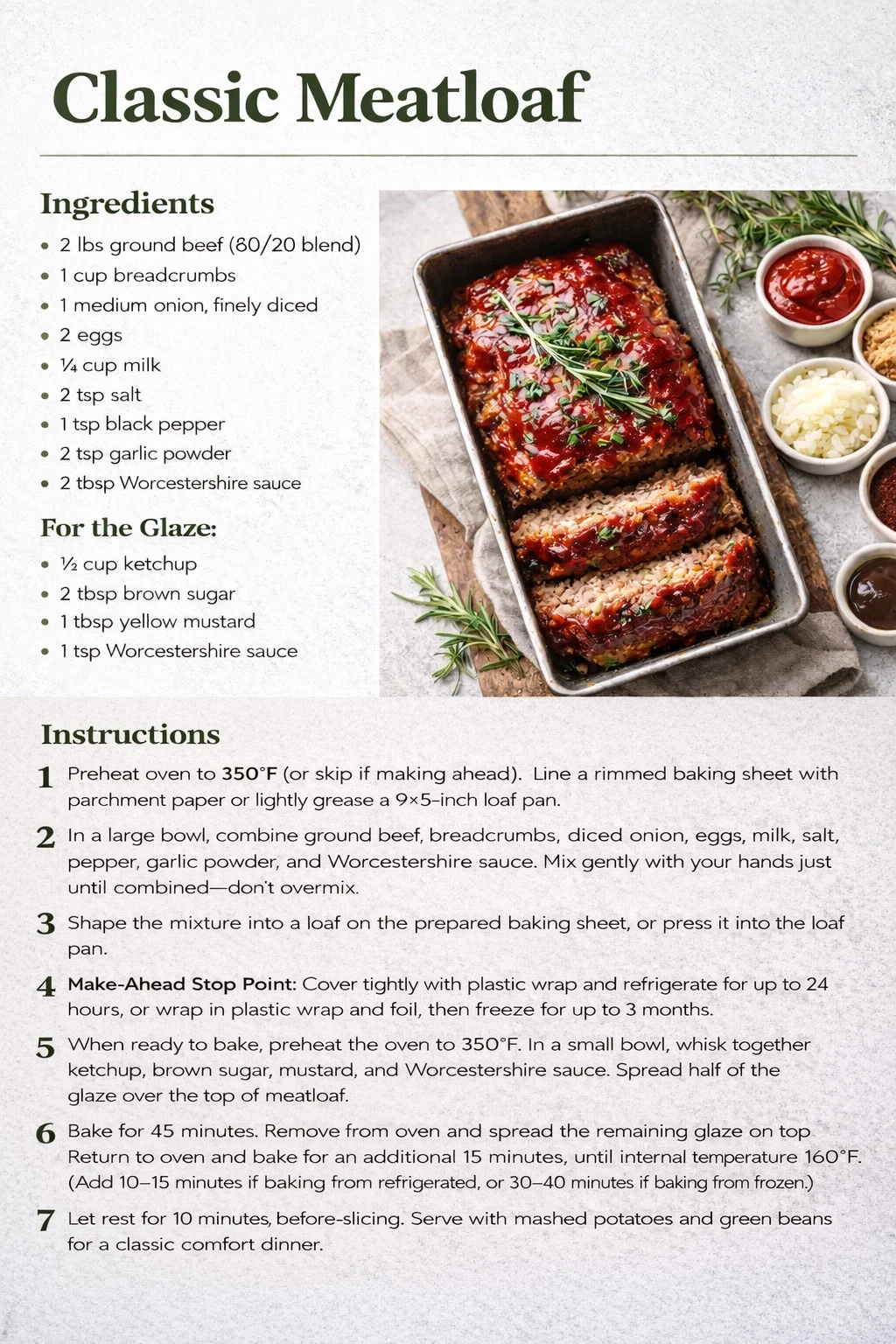
Classic Meatloaf
Classic meatloaf is the juicy, savory comfort dinner your family craves, with a tangy glaze and tender crumb that slices perfectly every time.
🧂 Ingredients
- 2 lb (900g) ground beef, 80/20 lean-to-fat
- 1 cup (60g) plain dry breadcrumbs
- 3/4 cup (180ml) whole milk
- 1 medium yellow onion, finely diced (about 1 cup/150g)
- 2 large eggs, lightly beaten
- 2 garlic cloves, minced
- 1/3 cup (80ml) ketchup, for the glaze
- 3 tbsp (40g) packed light brown sugar
- 1 tbsp Worcestershire sauce
- 1 1/2 tsp kosher salt and 1 tsp black pepper
📋 Instructions
- 1Heat the oven and prep — Preheat the oven to 350F (175C) and line a rimmed sheet pan with aluminum foil, then lightly grease the foil. The foil catches the rendered fat and makes cleanup a 10-second job.
- 2Soak the breadcrumbs — In a large bowl, stir the breadcrumbs into the milk and let them sit for 5 minutes until all the liquid is absorbed and the mixture looks like a soft paste. This panade is what keeps the loaf tender.
- 3Mix the meatloaf — Add the beef, onion, eggs, garlic, Worcestershire, salt, and pepper to the bowl and fold with a fork or your hands just until combined, about 30 seconds. Stop as soon as you see no dry spots; overmixing is the enemy of a tender loaf.
- 4Shape the loaf — Turn the mixture onto the sheet pan and shape it into a 9-by-4-inch loaf about 2 inches tall, packing it gently. A flatter, wider loaf cooks more evenly than a tall brick.
- 5Make the glaze — Whisk the ketchup and brown sugar in a small bowl until smooth. It should be thick enough to cling to a spoon, not runny.
- 6Bake the first stage — Bake uncovered for 25 minutes, then pull the pan out and brush half the glaze over the top and sides. The surface should look set and slightly pale at this point, not browned.
- 7Glaze and finish — Return to the oven and bake 10 to 12 more minutes, until the glaze is bubbling at the edges and an instant-read thermometer inserted in the center reads 155F (68C). Total bake time is about 35 to 37 minutes.
- 8Rest before slicing — Let the meatloaf rest on the pan for 10 minutes, then slice into 1-inch pieces. The internal temperature will rise to 160F (71C) as it rests, and the slices will hold together cleanly.