Cozy Cravings Recipes
Cajun Salmon Alfredo – Creamy 35-Minute Dinner
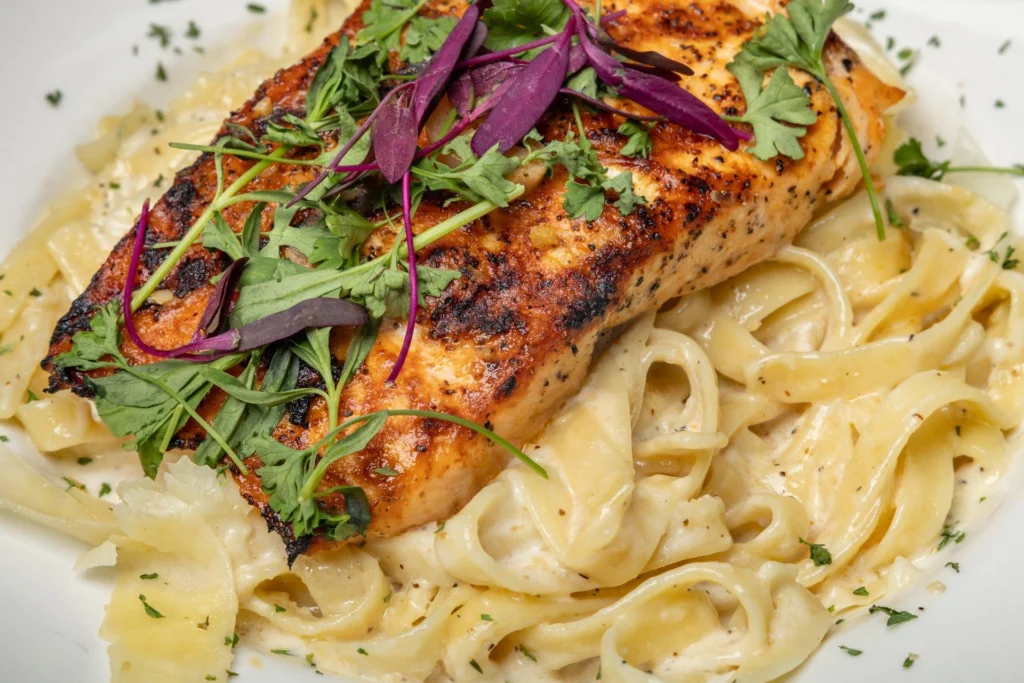
Cajun Salmon Alfredo is what happens when a smoky, spice-crusted salmon fillet lands on a nest of fettuccine coated in garlicky Parmesan cream. The Cajun seasoning does double duty: it crusts the fish and it seasons the sauce, so every bite carries that warm paprika-cayenne hum against the cool richness of cream and butter.
The trick is cooking the salmon in the same pan you build the sauce in. Those browned butter-and-spice drippings left behind are pure flavor, and deglazing them with a splash of white wine or broth lifts them straight into the Alfredo. You get one pan, one pot, and a plate that looks like a restaurant special.
It comes together in about 35 minutes of active cooking, most of which is boiling pasta and searing fish. Use center-cut salmon fillets of even thickness so they cook through at the same moment, and pull them at 125F (52C) so they stay moist while the sauce finishes.
Why You'll Love This Recipe
About the Ingredients
12 oz (340g) fettuccine
Dried fettuccine holds the cream sauce best because of its rough, porous surface. If you only have linguine or penne, use those; just add 1/2 cup of the starchy pasta water to the sauce to help it cling.
4 (6 oz / 170g each) skinless salmon fillets, about 1 inch thick
Look for center-cut fillets of even thickness so they sear evenly; thinner tail pieces will overcook. Frozen fillets work fine if fully thawed and patted bone-dry before seasoning.
1 1/2 tbsp Cajun seasoning, divided
Use a salt-free or low-salt blend so you can control the seasoning, since Parmesan is already salty. If your blend is salty, cut it to 1 tbsp and add a pinch of smoked paprika for color.
1 tsp smoked paprika
This deepens the crust color and adds a smoky note that plain paprika lacks. Sweet paprika is a fine substitute but will give a brighter red rather than a mahogany crust.
2 tbsp olive oil
Olive oil has a higher smoke point than butter, so it protects the spice crust from burning before the fish is done. Avocado oil or grapeseed oil are good neutral swaps.
3 tbsp unsalted butter, divided
Unsalted lets you season the sauce to taste at the end; if you only have salted butter, skip added salt entirely. Keep it cold and cubed so it emulsifies into the cream smoothly.
4 cloves garlic, minced (about 1 tbsp)
Fresh garlic is essential here; the jarred paste turns bitter in hot butter. Mince it finely so it dissolves into the sauce instead of leaving chunks.
1 1/2 cups (360ml) heavy cream
Heavy cream at 36% fat is what keeps the sauce from breaking; half-and-half will thin it and can curdle. For a lighter version, use 1 cup cream plus 1/2 cup whole milk and simmer 3 minutes longer.
1 1/4 cups (125g) freshly grated Parmesan
Grate it yourself from a block; pre-shredded cheese is coated in starch and clumps instead of melting. Pecorino Romano gives a sharper, saltier sauce, so reduce the added salt.
1/2 cup (120ml) dry white wine or low-sodium chicken broth
The wine deglazes the pan and cuts the richness of the cream. Use broth if you prefer no alcohol; either way, let it bubble for a full minute to cook off the raw edge.
1/4 cup chopped fresh parsley, plus lemon wedges to serve
Parsley adds a fresh, grassy finish that balances the cream and cayenne. Thin-sliced scallions or torn basil work as substitutes; lemon wedges are non-negotiable for brightening each bite.
Tips & Tricks
Dry the Salmon Completely
Moisture is the enemy of a Cajun crust, so pat the fillets bone-dry with paper towels and season them right before they hit the pan, not 20 minutes ahead.
Keep the Heat Medium, Not High
Cajun blends contain paprika and garlic powder that scorch fast; medium heat at 350F (177C) pan temperature builds a dark crust without a bitter burnt taste.
Add Cheese Off the Heat
Stir Parmesan in with the burner off or on the lowest setting, because boiling cream plus cheese is the fastest way to a grainy, broken sauce.
Reserve Pasta Water
Save at least 1 cup of starchy cooking water before draining; a splash rescues a sauce that tightens up while you plate.
Pro Tips
Step-by-Step Instructions
1. Boil the pasta
Bring a large pot of well-salted water to a rolling boil and cook the fettuccine 1 minute shy of the package time, about 9 minutes, until it bends but still has a firm bite. Reserve 1 cup of pasta water, then drain.
2. Season the salmon
Pat the fillets bone-dry, then rub them all over with 1 tablespoon of the Cajun seasoning and the smoked paprika until evenly coated. Set them on a plate while the pan heats.
3. Sear the salmon
Heat the olive oil in a large skillet over medium heat until it shimmers, about 350F (177C). Add the fillets and cook undisturbed 4 minutes until a deep mahogany crust forms and the fish releases easily. Flip and cook 3 to 4 minutes more, until the center reads 125F (52C) on an instant-read thermometer. Transfer to a plate.
4. Deglaze the pan
Pour the wine into the hot skillet and scrape up the browned spice bits with a wooden spoon, letting it bubble hard for 1 minute at 350F (177C) until reduced by half. Add 2 tablespoons of the butter and the garlic and cook 30 seconds, until fragrant but not browned.
5. Build the cream sauce
Lower the heat to medium-low, pour in the cream, and simmer gently 4 to 5 minutes at 200F (93C), stirring, until it thickens enough to coat the back of a spoon. Whisk in the remaining 1/2 tablespoon Cajun seasoning.
6. Melt in the Parmesan
Pull the pan off the heat and whisk in the Parmesan and remaining 1 tablespoon cold butter a handful at a time, until the sauce is glossy and smooth. Taste and add salt only if needed.
7. Toss the pasta
Return the pan to low heat, add the drained fettuccine, and toss 1 to 2 minutes until every strand is coated, loosening with splashes of pasta water if it looks tight. The sauce should cling and pool slightly at the bottom.
8. Plate and serve
Twirl the pasta into bowls, set a salmon fillet on top, and spoon over any pan sauce. Scatter with parsley and serve immediately with lemon wedges, while the crust is still crisp.
Delicious Variations
Blackened Shrimp Alfredo
Swap the salmon for 1 1/2 lb (680g) large shrimp, searing them just 90 seconds per side so they stay tender.
Cajun Chicken Alfredo
Use 4 thin-sliced chicken breasts pounded to 1/2 inch and cook to 165F (74C), about 5 minutes per side.
Dairy-Free Cajun Salmon Pasta
Replace the cream with 1 1/2 cups full-fat coconut milk and the Parmesan with 3/4 cup nutritional yeast, simmering 2 minutes longer to thicken.
How to Store Cajun Salmon Alfredo
Refrigerator
Store in an airtight container up to 3 days, keeping the salmon separate from the pasta if possible so it does not dry out.
Freezer
Freeze the sauce and pasta only, not the cooked salmon, for up to 2 months; the fish turns mealy when thawed.
Reheating
Reheat pasta and sauce gently on the stovetop over low heat with 2 tablespoons of water or milk, stirring until loose, and warm the salmon separately in a 300F (149C) oven for 8 minutes.
Frequently Asked Questions
Q: Can I use frozen salmon for Cajun salmon Alfredo?
Yes, as long as it is fully thawed overnight in the refrigerator and patted completely dry before seasoning. Any surface moisture will steam the fish instead of searing a crust, so blot it twice if needed.
Q: Why did my Alfredo sauce turn grainy?
The sauce broke because the cream was boiled after the cheese went in, or the heat was too high. Add Parmesan off the heat in small handfuls and never let the sauce climb above a bare simmer at 200F (93C).
Q: How do I know when the salmon is done without a thermometer?
Press the thickest part with a finger: it should feel firm at the edges with a slight give in the center, and the flesh will flake into moist layers. For accuracy, pull it at 125F (52C) for medium and 145F (63C) for well done.
Q: Can I make Cajun salmon Alfredo ahead of time?
You can cook the salmon and make the sauce up to 1 day ahead, storing them separately in the refrigerator. Boil fresh pasta and reheat the sauce gently with a splash of cream, since reheated Alfredo thickens and can separate.
Q: Is Cajun seasoning too spicy for kids?
Usually not, because most blends are paprika-forward with only a little cayenne. To tone it down, use 1 tablespoon total and stir 2 tablespoons of extra cream into the sauce for a milder, richer finish.
If you make this Cajun Salmon Alfredo, snap a photo of that mahogany crust against the creamy pasta and tag me, and leave a comment telling me whether you went with wine or broth in the pan.
Cajun Salmon Alfredo
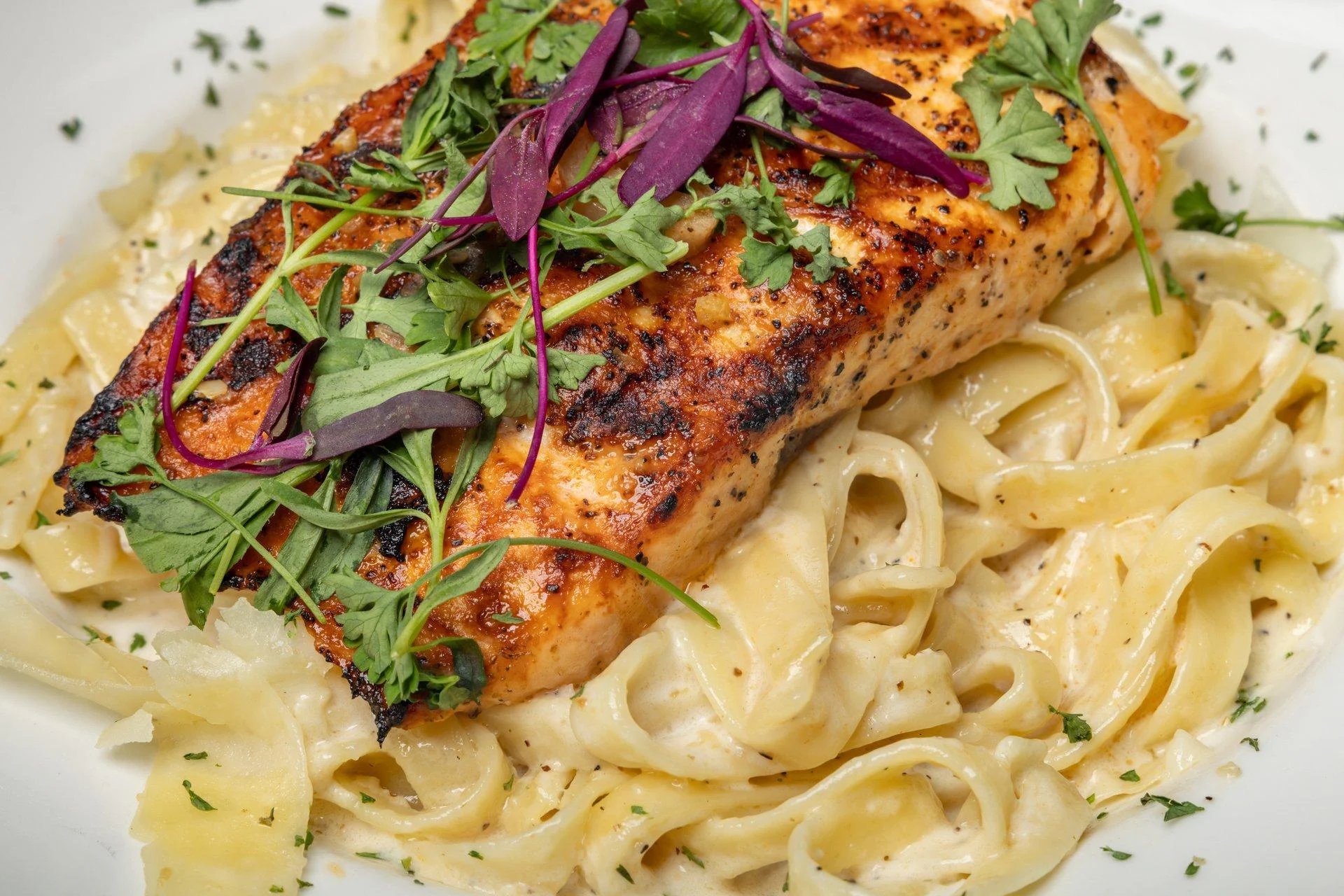
Cajun Salmon Alfredo pairs blackened, buttery salmon fillets with silky garlic Parmesan cream sauce and fettuccine for a 35-minute weeknight win.
🧂 Ingredients
- 12 oz (340g) fettuccine
- 4 (6 oz / 170g each) skinless salmon fillets, about 1 inch thick
- 1 1/2 tbsp Cajun seasoning, divided
- 1 tsp smoked paprika
- 2 tbsp olive oil
- 3 tbsp unsalted butter, divided
- 4 cloves garlic, minced (about 1 tbsp)
- 1 1/2 cups (360ml) heavy cream
- 1 1/4 cups (125g) freshly grated Parmesan
- 1/2 cup (120ml) dry white wine or low-sodium chicken broth
- 1/4 cup chopped fresh parsley, plus lemon wedges to serve
📋 Instructions
- 1Boil the pasta — Bring a large pot of well-salted water to a rolling boil and cook the fettuccine 1 minute shy of the package time, about 9 minutes, until it bends but still has a firm bite. Reserve 1 cup of pasta water, then drain.
- 2Season the salmon — Pat the fillets bone-dry, then rub them all over with 1 tablespoon of the Cajun seasoning and the smoked paprika until evenly coated. Set them on a plate while the pan heats.
- 3Sear the salmon — Heat the olive oil in a large skillet over medium heat until it shimmers, about 350F (177C). Add the fillets and cook undisturbed 4 minutes until a deep mahogany crust forms and the fish releases easily. Flip and cook 3 to 4 minutes more, until the center reads 125F (52C) on an instant-read thermometer. Transfer to a plate.
- 4Deglaze the pan — Pour the wine into the hot skillet and scrape up the browned spice bits with a wooden spoon, letting it bubble hard for 1 minute at 350F (177C) until reduced by half. Add 2 tablespoons of the butter and the garlic and cook 30 seconds, until fragrant but not browned.
- 5Build the cream sauce — Lower the heat to medium-low, pour in the cream, and simmer gently 4 to 5 minutes at 200F (93C), stirring, until it thickens enough to coat the back of a spoon. Whisk in the remaining 1/2 tablespoon Cajun seasoning.
- 6Melt in the Parmesan — Pull the pan off the heat and whisk in the Parmesan and remaining 1 tablespoon cold butter a handful at a time, until the sauce is glossy and smooth. Taste and add salt only if needed.
- 7Toss the pasta — Return the pan to low heat, add the drained fettuccine, and toss 1 to 2 minutes until every strand is coated, loosening with splashes of pasta water if it looks tight. The sauce should cling and pool slightly at the bottom.
- 8Plate and serve — Twirl the pasta into bowls, set a salmon fillet on top, and spoon over any pan sauce. Scatter with parsley and serve immediately with lemon wedges, while the crust is still crisp.