Cozy Cravings Recipes
Best Slow Cooker Pot Roast – Tender 8-Hour Comfort
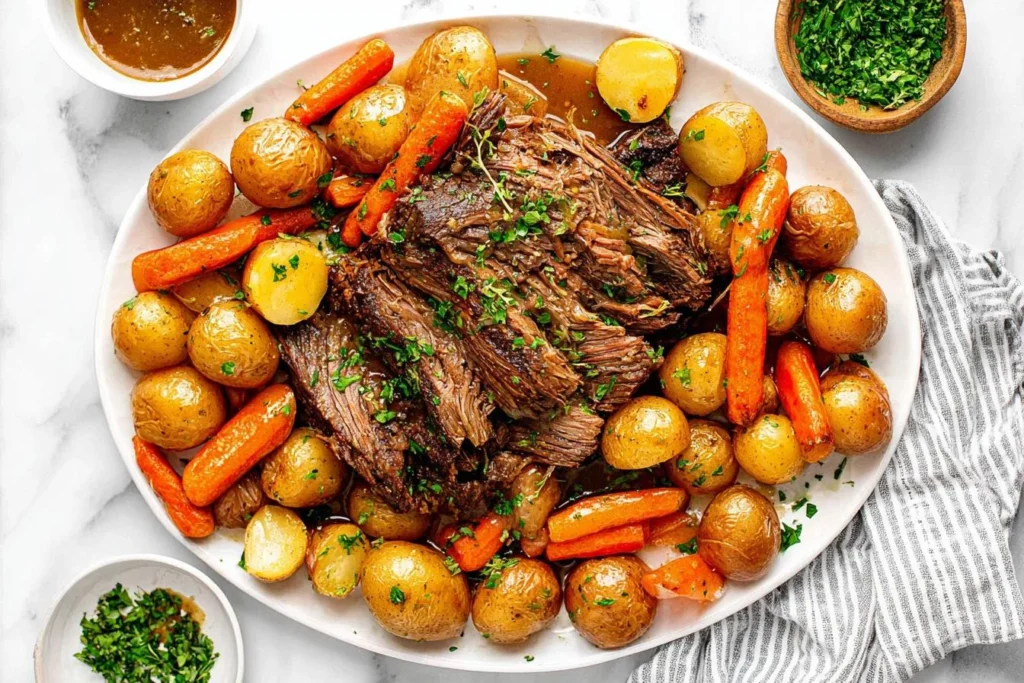
There is nothing quite like walking in the door after a long day to the smell of a chuck roast that has been quietly braising for hours. This slow cooker pot roast takes a tough, inexpensive cut and turns it into something you would happily serve to company, with a gravy that tastes like you fussed over it all afternoon.
The secret is a quick sear before the slow cooker ever gets plugged in. That five-minute browning step builds a deep, savory crust and a fond that melts into the sauce, which is the difference between a decent roast and a memorable one.
Everything else is dump-and-go: chunks of carrot, Yukon gold potatoes, a splash of dry red wine, and a bundle of thyme. By hour eight the beef shreds under a fork and the vegetables are soaked through with beefy, oniony flavor.
Why You'll Love This Recipe
About the Ingredients
3 to 3.5 lb (1.4 to 1.6 kg) boneless beef chuck roast
Chuck is the ideal cut because its marbled collagen breaks down into gelatin during long cooking. If chuck is unavailable, a 3-lb bottom round roast works but will be slightly less juicy.
2 tablespoons (30 ml) olive oil
Use a neutral high-smoke-point oil like canola if you prefer. Olive oil adds a touch of flavor to the sear and is fine here since the pan stays at medium-high heat.
1 1/2 teaspoons kosher salt, plus more to taste
Kosher salt crystals are larger and season more gently than table salt. If using fine table salt, cut the amount to 1 teaspoon.
1 teaspoon freshly ground black pepper
Fresh-cracked pepper blooms in flavor when it hits the hot pan. Pre-ground pepper loses its punch after a few months, so grind it just before using.
2 medium yellow onions (about 1 lb/450 g), cut into 1-inch wedges
Yellow onions give the deepest sweet-savory base. Sweet onions or shallots can substitute if you want a milder, more delicate gravy.
4 medium carrots (about 12 oz/340 g), peeled and cut into 2-inch chunks
Look for thick carrots so they survive the long cook without turning to mush. Parsnips make an excellent swap for a slightly sweeter, nuttier flavor.
1 1/2 lb (680 g) Yukon gold potatoes, scrubbed and halved if large
Yukon golds hold their shape and turn creamy inside. Red potatoes are a fine substitute; avoid russets, which fall apart and cloud the gravy.
3 garlic cloves, smashed and peeled
Smashed garlic releases flavor slowly without burning. One teaspoon of garlic paste can stand in if you are out of fresh cloves.
2 tablespoons (30 g) tomato paste
Tomato paste adds body and a subtle sweetness that rounds out the gravy. No tomato paste? Use 3 tablespoons of ketchup and skip the sugar-free braise debate.
1 cup (240 ml) low-sodium beef broth
Low-sodium broth lets you control the final seasoning. For a richer sauce, use 1 cup of broth plus 1 teaspoon of Better Than Bouillon beef base.
1/2 cup (120 ml) dry red wine, such as Cabernet or Merlot
The wine deglazes the pan and adds acidity. Substitute an equal amount of extra beef broth plus 1 tablespoon red wine vinegar if you prefer no alcohol.
4 sprigs fresh thyme and 1 dried bay leaf
Thyme and bay are the classic pot roast aromatics. Dried thyme works in a pinch: use 1 teaspoon tied in cheesecloth so it is easy to fish out.
Tips & Tricks
Do not skip the sear
Browning the roast for 4 to 5 minutes per side at 400°F (205°C) develops flavor compounds you cannot get any other way. If you are short on time, sear it the night before and refrigerate.
Cut vegetables uniformly
Keep carrots and potatoes in 2-inch chunks so they cook at the same rate as the beef. Smaller pieces will disintegrate into the gravy by hour eight.
Keep the liquid below the roast
The braising liquid should come only halfway up the meat. A roast that swims becomes boiled and bland instead of fork-tender.
Pro Tips
Step-by-Step Instructions
1. Pat and Season the Roast
Pat the chuck roast completely dry with paper towels and season all over with the kosher salt and black pepper. Let it sit at room temperature for 15 minutes while you chop the vegetables.
2. Sear Until Deeply Browned
Heat the olive oil in a large skillet over medium-high heat, about 400°F (205°C), until it shimmers. Sear the roast for 4 to 5 minutes per side, until deeply golden brown and a crust forms, then transfer it to the slow cooker insert.
3. Build the Flavor Base
Lower the skillet to medium heat, about 350°F (175°C), and cook the onions for 4 minutes until softened and lightly golden at the edges. Stir in the garlic and tomato paste and cook 1 minute more, until the paste darkens and smells sweet.
4. Deglaze the Pan
Pour in the red wine and scrape up every browned bit from the bottom of the skillet with a wooden spoon. Simmer for 2 minutes at 350°F (175°C), until the liquid reduces by half and no longer smells sharply of alcohol.
5. Load the Slow Cooker
Scatter the carrots and potatoes in the bottom of the slow cooker, set the seared roast on top, and pour the onion-wine mixture and beef broth over everything. Tuck in the thyme sprigs and bay leaf.
6. Cook Low and Slow
Cover and cook on LOW for 8 to 9 hours, until the beef shreds easily with a fork and reaches an internal temperature of at least 200°F (93°C). On HIGH, cook for 5 to 6 hours.
7. Rest and Strain the Gravy
Lift out the roast, cover loosely with foil, and rest 15 minutes. Discard the thyme stems and bay leaf, then skim the fat from the cooking liquid and simmer it in a saucepan at 375°F (190°C) for 5 minutes, until it coats the back of a spoon.
8. Shred and Serve
Break the roast into large chunks with two forks, spoon the vegetables and gravy over the top, and season to taste. Serve hot with crusty bread or mashed potatoes.
Delicious Variations
Mushroom Red Wine Pot Roast
Add 8 oz (225 g) sliced cremini mushrooms with the onions for an extra-earthy, steakhouse-style gravy.
Mississippi-Style Pot Roast
Swap the wine for 1/2 cup pepperoncini brine, add 4 whole pepperoncini and a packet of ranch seasoning, and use butter instead of olive oil.
Asian Five-Spice Pot Roast
Replace the thyme with 1 teaspoon five-spice powder, use soy sauce instead of salt, and add a 1-inch piece of ginger for a fragrant, soy-glazed twist.
How to Store Slow Cooker Pot Roast
Refrigerator
Store the cooled roast, vegetables, and gravy in an airtight container for up to 4 days. Keep the meat submerged in gravy so it stays moist.
Freezer
Freeze portions in freezer-safe containers for up to 3 months. Leave 1/2 inch of headspace and press plastic wrap against the surface to prevent freezer burn.
Reheating
Reheat gently in a covered saucepan over medium-low heat at 300°F (150°C) for 8 to 10 minutes, or microwave in 1-minute bursts, adding a splash of broth if the gravy looks thick.
Frequently Asked Questions
Q: What is the best cut of beef for slow cooker pot roast?
Chuck roast is the best cut because its heavy marbling and collagen break down into fork-tender meat after 8 hours of low heat. Bottom round and brisket also work but benefit from an extra hour of cooking.
Q: Should I brown the roast before putting it in the slow cooker?
Yes, searing the roast first is worth the extra 10 minutes because it creates a Maillard crust and a richer gravy. Skipping it leaves the meat pale and the sauce noticeably flatter.
Q: How long does pot roast take in a slow cooker on high?
On HIGH, a 3-pound chuck roast needs 5 to 6 hours, versus 8 to 9 hours on LOW. LOW is preferred for the most tender, shreddable result.
Q: Why did my pot roast turn out dry and tough?
It was almost certainly undercooked: chuck needs to reach 200°F (93°C) internally before the collagen melts. Cook it longer, not faster, and keep the liquid at about half the height of the roast.
Q: Can I put frozen pot roast in the slow cooker?
No, a frozen roast should be thawed first because it spends too long in the danger zone and cooks unevenly. Thaw it in the refrigerator overnight, then sear and proceed with the recipe.
Give this slow cooker pot roast a try this weekend and let the smell do the convincing. If you make it, snap a photo of that glossy gravy and tag me, and tell me in the comments whether you went classic or Mississippi-style.
Slow Cooker Pot Roast
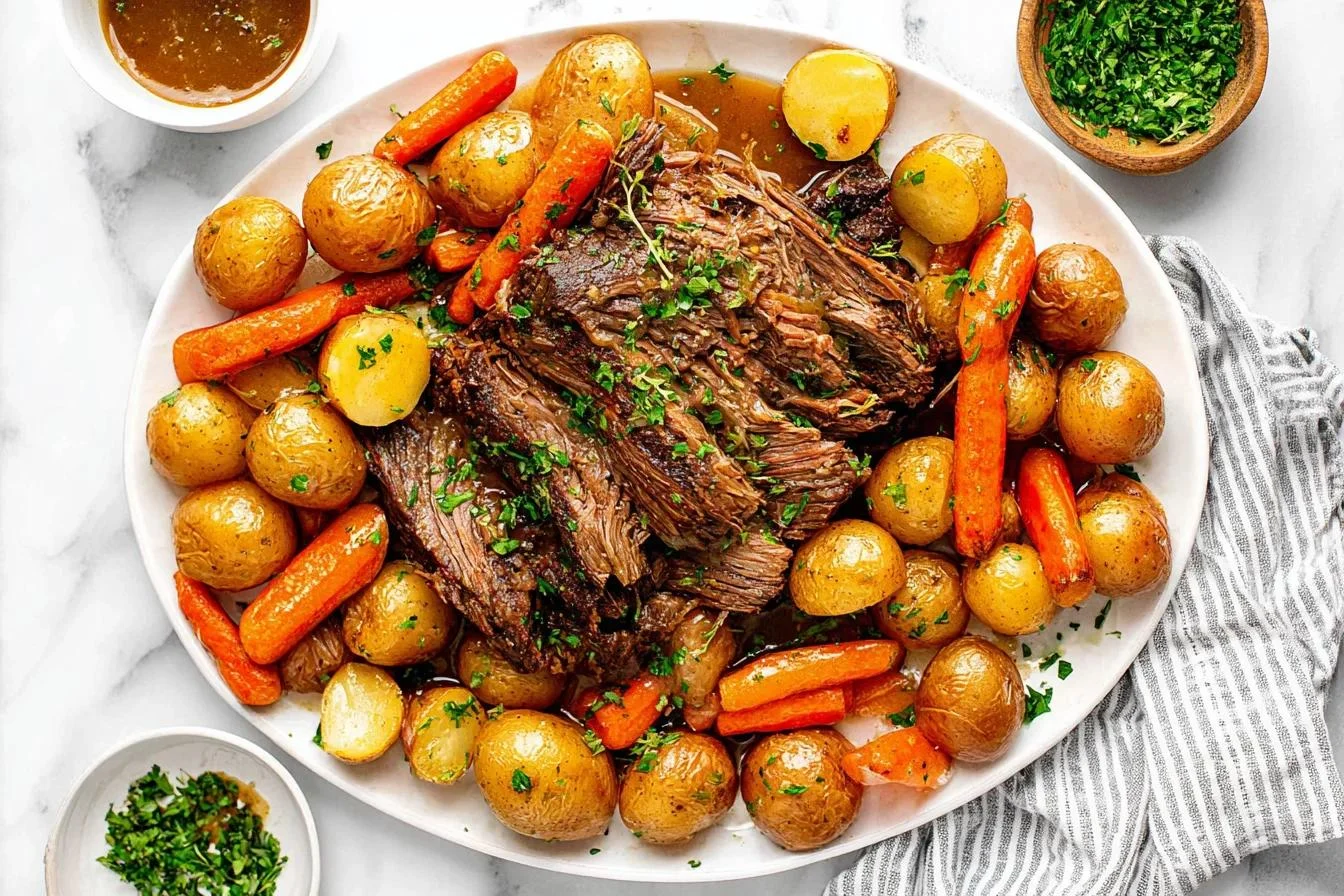
This slow cooker pot roast delivers fork-tender beef, buttery carrots and potatoes in a rich onion-wine gravy with just 20 minutes of hands-on work.
🧂 Ingredients
- 3 to 3.5 lb (1.4 to 1.6 kg) boneless beef chuck roast
- 2 tablespoons (30 ml) olive oil
- 1 1/2 teaspoons kosher salt, plus more to taste
- 1 teaspoon freshly ground black pepper
- 2 medium yellow onions (about 1 lb/450 g), cut into 1-inch wedges
- 4 medium carrots (about 12 oz/340 g), peeled and cut into 2-inch chunks
- 1 1/2 lb (680 g) Yukon gold potatoes, scrubbed and halved if large
- 3 garlic cloves, smashed and peeled
- 2 tablespoons (30 g) tomato paste
- 1 cup (240 ml) low-sodium beef broth
- 1/2 cup (120 ml) dry red wine, such as Cabernet or Merlot
- 4 sprigs fresh thyme and 1 dried bay leaf
📋 Instructions
- 1Pat and Season the Roast — Pat the chuck roast completely dry with paper towels and season all over with the kosher salt and black pepper. Let it sit at room temperature for 15 minutes while you chop the vegetables.
- 2Sear Until Deeply Browned — Heat the olive oil in a large skillet over medium-high heat, about 400°F (205°C), until it shimmers. Sear the roast for 4 to 5 minutes per side, until deeply golden brown and a crust forms, then transfer it to the slow cooker insert.
- 3Build the Flavor Base — Lower the skillet to medium heat, about 350°F (175°C), and cook the onions for 4 minutes until softened and lightly golden at the edges. Stir in the garlic and tomato paste and cook 1 minute more, until the paste darkens and smells sweet.
- 4Deglaze the Pan — Pour in the red wine and scrape up every browned bit from the bottom of the skillet with a wooden spoon. Simmer for 2 minutes at 350°F (175°C), until the liquid reduces by half and no longer smells sharply of alcohol.
- 5Load the Slow Cooker — Scatter the carrots and potatoes in the bottom of the slow cooker, set the seared roast on top, and pour the onion-wine mixture and beef broth over everything. Tuck in the thyme sprigs and bay leaf.
- 6Cook Low and Slow — Cover and cook on LOW for 8 to 9 hours, until the beef shreds easily with a fork and reaches an internal temperature of at least 200°F (93°C). On HIGH, cook for 5 to 6 hours.
- 7Rest and Strain the Gravy — Lift out the roast, cover loosely with foil, and rest 15 minutes. Discard the thyme stems and bay leaf, then skim the fat from the cooking liquid and simmer it in a saucepan at 375°F (190°C) for 5 minutes, until it coats the back of a spoon.
- 8Shred and Serve — Break the roast into large chunks with two forks, spoon the vegetables and gravy over the top, and season to taste. Serve hot with crusty bread or mashed potatoes.