

Bavette, the loose-grained butcher's cut also sold as flap steak or sirloin tip, is the steak that chefs quietly keep for themselves. It is cheap, it cooks in minutes, and its open grain soaks up sauce like a sponge. Paired with a pan sauce built on a whole head of roasted garlic, it turns a weeknight into something you would happily pay for.
Advertisements1
The trick is a two-stage cook: roast the garlic low and slow until the cloves turn jammy, then blast the steak in a screaming-hot cast iron so the crust forms before the inside overcooks. The fond left in the pan becomes the sauce, deglazed with stock and finished with cold butter for a glossy, clingy consistency.
Bavette is thin, so everything moves fast. Read the whole recipe once, set your timer where you can see it, and have the butter and stock measured before the steak hits the pan. From here it is roughly 6 minutes of cooking and 8 minutes of resting.
Why You'll Love This Recipe
About the Ingredients
1 whole head garlic (about 12 to 15 cloves), top sliced off
Look for a tight, heavy head with no green sprouts; sprouts turn bitter. In a pinch, use 10 peeled cloves tossed in oil and roasted 5 minutes less.
2 lb (900g) bavette steak, about 1 inch thick, at room temperature
Ask the butcher for flap steak or sirloin tip if bavette is unavailable. Look for deep red color and fine, open grain running lengthwise.
1 1/2 tsp kosher salt, plus more for the sauce
Diamond Crystal kosher salt is half as dense as table salt, so use only 3/4 tsp if substituting fine salt.
1 tsp freshly cracked black pepper
Crack it coarse on a plate so it adheres; pre-ground pepper scorches and tastes flat.
1 tbsp neutral oil, such as grapeseed or canola
Avocado oil works and has a higher smoke point. Never use olive oil here; it will smoke and turn acrid at 450F.
3/4 cup (180ml) low-sodium beef stock
Chicken stock is a fine swap for a lighter sauce. Choose a stock you would drink; boxed broth concentrates fast and can taste salty.
1 tbsp Worcestershire sauce
Soy sauce or balsamic vinegar substitutes well for the same savory depth. Use tamari if keeping it gluten-free.
4 tbsp cold unsalted butter, cubed, divided
Cold butter emulsifies the sauce; margarine will break. Keep it in the fridge until the last second.
1 tsp fresh thyme leaves, chopped
Oregano or a pinch of dried thyme works. Strip leaves by running your fingers backward down the stem.
1 tsp fresh lemon juice
Red wine vinegar is a sharper substitute; use 1/2 tsp. The acid brightens the heavy butter finish.
Tips & Tricks
Dry the Surface
Pat the steak bone-dry with paper towels before seasoning. Any moisture steams instead of searing, and you lose the crust.
Slice Against the Grain
Bavette has long visible fibers. Find the direction of the grain, then cut perpendicular in 1/2-inch slices or it will chew like rope.
Warm the Plates
Rest the steak on a warm plate, not a cold one. A cold surface drops the internal temperature and toughens the outer fibers.
Pro Tips
Step-by-Step Instructions
1. Roast the Garlic
Heat oven to 400F (200C). Set the garlic head cut-side up on foil, drizzle with 1 tsp oil, wrap tightly, and roast 30 to 35 minutes until cloves are soft enough to squeeze out easily and smell sweet and nutty. Squeeze the cloves into a small bowl and mash to a paste.
2. Season and Heat
Pat the steak dry, season all over with the 1 1/2 tsp salt and the pepper, and let it sit 15 minutes. Heat a 12-inch cast iron skillet over high heat until it registers 450F (230C) on an infrared thermometer, about 4 minutes.
3. Sear the First Side
Add the 1 tbsp oil, then lay the steak in away from you. Sear undisturbed 3 minutes until deeply browned and it releases easily from the pan. Do not move it; the crust needs contact.
4. Flip and Butter-Baste
Flip and cook 2 to 3 minutes more, adding 1 tbsp of the butter and the thyme in the last minute and spooning the foaming butter over the steak. Pull it at 125F (52C) internal for medium-rare. Transfer to a warm plate and rest 8 minutes.
5. Build the Pan Sauce
Pour off all but 1 tbsp fat and set the pan over medium heat. Add the garlic paste and cook 30 seconds until fragrant and bubbling at the edges, then pour in the stock and Worcestershire, scraping up the browned bits with a wooden spoon.
6. Reduce the Sauce
Simmer 3 to 4 minutes until the liquid reduces by half and coats the back of a spoon. It should look slightly syrupy, not watery.
7. Finish with Cold Butter
Drop the heat to low and whisk in the remaining 3 tbsp cold butter one cube at a time, swirling until the sauce turns glossy and thickens enough to coat a spoon. Stir in the lemon juice and taste for salt.
8. Slice and Serve
Slice the rested steak against the grain into 1/2-inch strips, pour any resting juices into the sauce, and spoon the sauce generously over the top. Serve immediately.
Delicious Variations
Red Wine Version
Replace 1/4 cup of the stock with dry red wine and reduce it by half before adding the stock for a deeper, bistro-style sauce.
Chimichurri Twist
Skip the butter finish and spoon a bright parsley-garlic chimichurri over the sliced steak for a lighter, herb-forward plate.
Mushroom Pan Sauce
Saute 4 oz sliced cremini mushrooms in the fond before deglazing for an earthy, meatier sauce that stretches the steak further.
How to Store Bavette Steak & Roasted Garlic Pan Sauce
Refrigerator
Store sliced steak and sauce separately in airtight containers up to 3 days; keep the sauce in its own jar so the steak does not turn soggy.
Freezer
Freeze the sauce alone up to 2 months in a small container; the steak does not freeze well once sliced and will toughen.
Reheating
Reheat the steak gently in a 300F (150C) oven for 5 minutes or just until warm, and warm the sauce over low heat with a splash of stock, whisking to re-emulsify.
Frequently Asked Questions
Q: What is bavette steak and what cut can I substitute?
Bavette is the French name for flap steak, a thin, loose-grained cut from the belly near the flank. Substitute flap steak, sirloin tip, or hanger steak, and adjust cooking time since hanger is thicker.
Q: How do I know when bavette steak is done?
Use an instant-read thermometer and pull it at 125F (52C) for medium-rare, since carryover cooking adds about 5 degrees during the rest. The steak should feel springy but not firm when pressed.
Q: Why did my pan sauce turn greasy or break?
The pan was too hot or the butter was added too fast, so the emulsion split. Let the pan cool to low heat and whisk in cold butter one cube at a time, swirling constantly.
Q: Should I slice bavette with or against the grain?
Always against the grain. Bavette has long, visible fibers that run the length of the steak, so cut perpendicular to them into 1/2-inch slices for the tenderest bite.
Q: Can I make the roasted garlic pan sauce ahead of time?
Yes, roast the garlic and make the sauce up to 2 days ahead and refrigerate it. Reheat gently over low heat with a splash of stock and whisk in a fresh knob of cold butter to restore the gloss.
Grab a bavette from the butcher, roast that garlic, and get the skillet hot. Make it tonight and let the pan sauce do the showing off.
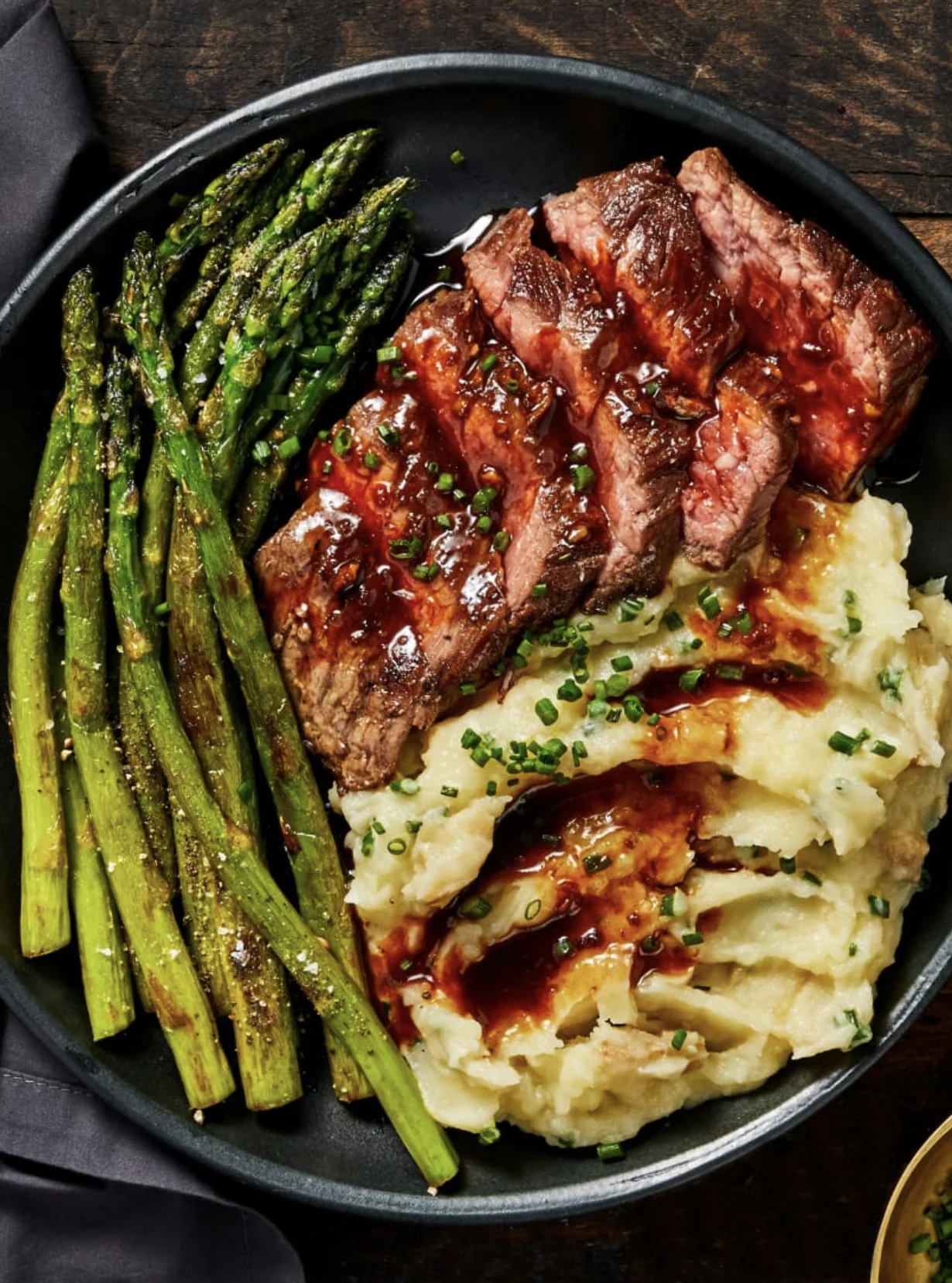
Bavette Steak & Roasted Garlic Pan Sauce
Bavette Steak & Roasted Garlic Pan Sauce delivers juicy, butter-basted steak under a silky 20-clove garlic sauce for a restaurant-worthy dinner at home.
🧂 Ingredients
- 1 whole head garlic (about 12 to 15 cloves), top sliced off
- 2 lb (900g) bavette steak, about 1 inch thick, at room temperature
- 1 1/2 tsp kosher salt, plus more for the sauce
- 1 tsp freshly cracked black pepper
- 1 tbsp neutral oil, such as grapeseed or canola
- 3/4 cup (180ml) low-sodium beef stock
- 1 tbsp Worcestershire sauce
- 4 tbsp cold unsalted butter, cubed, divided
- 1 tsp fresh thyme leaves, chopped
- 1 tsp fresh lemon juice
📋 Instructions
- 1Roast the Garlic — Heat oven to 400F (200C). Set the garlic head cut-side up on foil, drizzle with 1 tsp oil, wrap tightly, and roast 30 to 35 minutes until cloves are soft enough to squeeze out easily and smell sweet and nutty. Squeeze the cloves into a small bowl and mash to a paste.
- 2Season and Heat — Pat the steak dry, season all over with the 1 1/2 tsp salt and the pepper, and let it sit 15 minutes. Heat a 12-inch cast iron skillet over high heat until it registers 450F (230C) on an infrared thermometer, about 4 minutes.
- 3Sear the First Side — Add the 1 tbsp oil, then lay the steak in away from you. Sear undisturbed 3 minutes until deeply browned and it releases easily from the pan. Do not move it; the crust needs contact.
- 4Flip and Butter-Baste — Flip and cook 2 to 3 minutes more, adding 1 tbsp of the butter and the thyme in the last minute and spooning the foaming butter over the steak. Pull it at 125F (52C) internal for medium-rare. Transfer to a warm plate and rest 8 minutes.
- 5Build the Pan Sauce — Pour off all but 1 tbsp fat and set the pan over medium heat. Add the garlic paste and cook 30 seconds until fragrant and bubbling at the edges, then pour in the stock and Worcestershire, scraping up the browned bits with a wooden spoon.
- 6Reduce the Sauce — Simmer 3 to 4 minutes until the liquid reduces by half and coats the back of a spoon. It should look slightly syrupy, not watery.
- 7Finish with Cold Butter — Drop the heat to low and whisk in the remaining 3 tbsp cold butter one cube at a time, swirling until the sauce turns glossy and thickens enough to coat a spoon. Stir in the lemon juice and taste for salt.
- 8Slice and Serve — Slice the rested steak against the grain into 1/2-inch strips, pour any resting juices into the sauce, and spoon the sauce generously over the top. Serve immediately.