Cozy Cravings Recipes
Italian Pot Roast (Stracotto) – Best Fall-Apart Beef
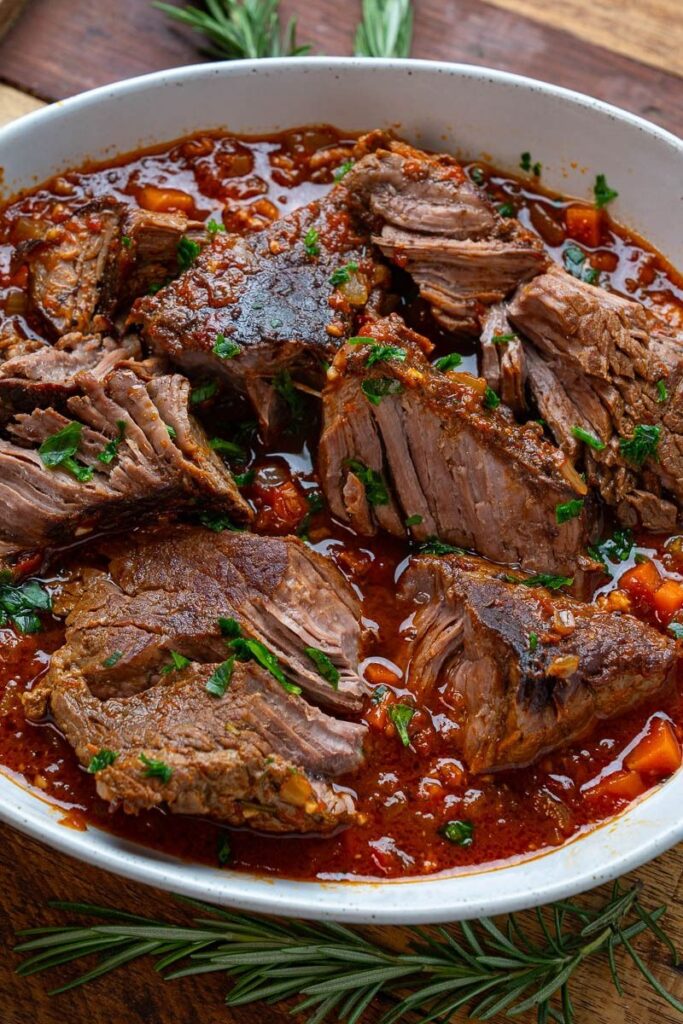
Stracotto means "overcooked" in Italian, and in this case that is the highest compliment. Beef chuck sears until deeply browned, then braises low and slow in red wine, crushed tomatoes, and a soffritto of onion, carrot, and celery until a fork slides through it with no resistance at all.
This is the pot roast Italian grandmothers make for Sunday lunch, sliced thick and ladled with its own glossy sauce over polenta, mashed potatoes, or wide egg noodles. The sauce is the real prize: dark, winey, and concentrated, with just enough body to coat the back of a spoon.
The trick is patience on two fronts, a hard sear at the start and a gentle, barely bubbling braise at the end. Do both and you get meat that shreds into silky strands and a sauce that tastes like it cooked all day, because it did.
Why You'll Love This Recipe
About the Ingredients
3 1/2 lb (1.6 kg) boneless beef chuck roast, tied with kitchen twine
Chuck is ideal because its marbling bastes the meat as it braises. If chuck is unavailable, use beef brisket or a 7-bone pot roast, both of which need the same long, slow cook.
2 1/2 tsp kosher salt, plus more to taste
Kosher salt crystals are larger and season more gently than table salt. If using fine table salt, cut the amount to about 1 3/4 tsp.
1 tsp freshly ground black pepper
Fresh-cracked pepper blooms in the hot oil and tastes far brighter than pre-ground. A coffee grinder reserved for spices works well if you have no pepper mill.
3 tbsp olive oil
Regular (not extra-virgin) olive oil holds up better to the high sear. Avocado oil is a fine neutral substitute with an even higher smoke point.
1 large yellow onion, finely diced (about 1 1/2 cups)
Yellow onion gives the sweetest, deepest soffritto base. White onion works but is sharper; sweet onion is fine if you reduce the carrot slightly.
2 medium carrots, finely diced (about 1 cup)
Carrots add sweetness that balances the wine's acidity. Parsnips can stand in for half the carrot for a slightly earthier sauce.
2 celery stalks, finely diced (about 3/4 cup)
Choose firm, pale-green stalks for the cleanest flavor. Fennel bulb is a lovely substitute if you want a subtle anise note in the sauce.
4 garlic cloves, minced
Fresh garlic is non-negotiable here; the paste from a jar turns bitter. Mince it just before adding so it does not oxidize.
3 tbsp tomato paste
Tomato paste adds body and umami. If you only have tomato sauce, simmer 1/2 cup of it down until thick and use that instead.
1 1/2 cups (350 ml) dry red wine, such as Chianti or Cabernet
Use a wine you would actually drink; cooking wine tastes flat and salty. A dry vermouth or unsweetened pomegranate juice works for an alcohol-free version.
1 can (28 oz / 800 g) crushed tomatoes
Crushed tomatoes give the sauce texture without chunks. Whole tomatoes crushed by hand are a good upgrade if you prefer a more rustic sauce.
2 cups (480 ml) low-sodium beef broth, plus more as needed
Low-sodium broth lets you control the final seasoning. If using full-sodium broth, skip the extra salt until the sauce is reduced.
Tips & Tricks
Do Not Skip the Sear
Pat the roast bone-dry and brown it hard on every side before braising. That crust is where most of the sauce's flavor comes from, and a wet roast will steam instead of sear.
Keep the Braise Gentle
Once the liquid is at a bare simmer, drop the heat to low. A rolling boil tightens the muscle fibers and dries out the meat even after hours of cooking.
Reduce the Sauce, Do Not Thicken It
After the roast rests, simmer the defatted braising liquid until it coats a spoon. Flour or cornstarch dulls the winey flavor that makes stracotto special.
Pro Tips
Step-by-Step Instructions
1. Season and Sear the Beef
Pat the chuck roast dry with paper towels and season all over with 2 tsp of the salt and the pepper. Heat the olive oil in a large Dutch oven over medium-high heat (about 375°F / 190°C) until it shimmers, then sear the roast 4 to 5 minutes per side until deeply golden brown on all faces. Transfer to a plate; the meat will not be cooked through yet.
2. Build the Soffritto
Lower the heat to medium (about 325°F / 165°C) and add the onion, carrot, and celery to the pot. Cook 7 to 8 minutes, stirring and scraping up the browned bits, until the vegetables are soft and the onion is translucent. Add the garlic and cook 1 minute more until fragrant but not browned.
3. Bloom the Tomato Paste
Stir in the tomato paste and cook 2 minutes, mashing it into the vegetables, until it darkens to a brick red and smells sweet rather than raw. This step concentrates its flavor and removes the tinny edge.
4. Deglaze with Wine
Pour in the red wine and bring to a boil over medium-high heat (about 375°F / 190°C). Simmer 4 to 5 minutes, scraping the bottom constantly, until the wine reduces by half and the sharp alcohol smell is gone.
5. Add Tomatoes and Broth
Stir in the crushed tomatoes, beef broth, and remaining 1/2 tsp salt. Return the roast and any juices to the pot; the liquid should come about two-thirds up the meat, so add a splash more broth if needed.
6. Braise Low and Slow
Bring the liquid to a bare simmer, then cover and transfer to a 325°F (165°C) oven. Braise 2 1/2 to 3 hours, turning the roast once at the halfway point, until a fork twists easily in the center and the meat reaches 200 to 205°F (93 to 96°C) on an instant-read thermometer.
7. Rest the Roast
Lift the roast out with tongs or two spatulas onto a cutting board, tent loosely with foil, and rest 15 minutes. Meanwhile, skim the fat from the surface of the braising liquid with a ladle or spoon.
8. Reduce the Sauce
Set the pot over medium-high heat (about 375°F / 190°C) and simmer the liquid 8 to 10 minutes, stirring occasionally, until it coats the back of a spoon and has the consistency of thin gravy. Taste and adjust salt.
9. Slice and Serve
Snip off the twine, slice the stracotto against the grain into thick slabs, and arrange on a platter. Spoon the sauce over the top and serve with polenta, mashed potatoes, or egg noodles.
Delicious Variations
Tuscan Wine Version
Swap half the broth for Chianti and stir in 1 tsp crushed fennel seed with the soffritto for a peppery, herbaceous sauce.
Mushroom Stracotto
Add 8 oz (225 g) sliced cremini mushrooms with the onion and reduce the broth to 1 1/2 cups for an earthier, meatier sauce.
Slow Cooker Stracotto
Sear the beef and soften the vegetables on the stove, then transfer everything to a slow cooker and cook on low 8 hours until fork-tender.
How to Store Italian Pot Roast (Stracotto)
Refrigerator
Store the meat and sauce together in an airtight container in the refrigerator for up to 4 days; the flavor improves by day two.
Freezer
Freeze sliced meat submerged in its sauce in a freezer-safe container for up to 3 months. Leave 1 inch of headspace and press out air to prevent freezer burn.
Reheating
Reheat gently in a covered saucepan over medium-low heat (about 300°F / 150°C) with a splash of broth for 10 to 15 minutes, until steaming and heated through.
Frequently Asked Questions
Q: What is the difference between stracotto and regular pot roast?
Stracotto is the Italian version of pot roast, braised in red wine and tomatoes with a soffritto base instead of the American-style broth and root vegetables. The name means "overcooked," referring to how long the beef cooks until it falls apart.
Q: Can I make Italian pot roast in a slow cooker?
Yes, and it works well, though you should still sear the beef and soften the vegetables on the stove first for flavor. Cook on low for 8 hours or on high for 4 to 5 hours, until the meat shreds easily with a fork.
Q: What cut of beef is best for stracotto?
Boneless beef chuck roast is the best choice because its heavy marbling keeps it moist through a long braise. Brisket and 7-bone pot roast are good alternatives, but avoid lean cuts like round, which turn dry and stringy.
Q: Why did my pot roast turn out dry?
Dry pot roast usually means the braise was too hot or too short, so the connective tissue never melted. Keep the liquid at a bare simmer, cover tightly, and cook until the meat reaches 200 to 205°F (93 to 96°C).
Q: Can I make stracotto without wine?
Yes, substitute an equal amount of unsweetened pomegranate juice, cranberry juice, or extra beef broth plus 1 tbsp red wine vinegar. The sauce will be slightly less complex, so add an extra pinch of salt and a bay leaf.
If you make this Italian pot roast, I would love to hear how it turned out, especially what you served it with. Leave a comment below and tag your photos so I can see that glossy sauce.
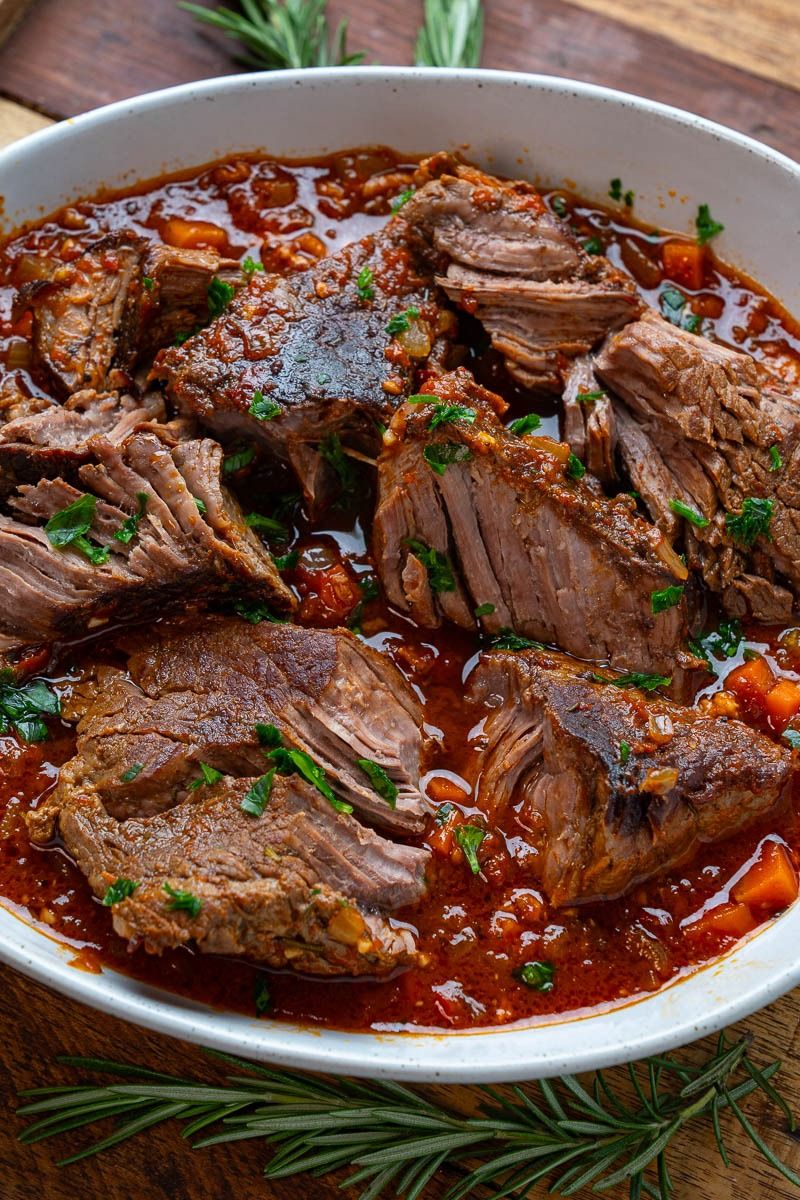
Italian Pot Roast (Stracotto)
Italian Pot Roast (Stracotto) braises beef chuck in red wine and tomatoes until it falls apart, giving you a rich, fork-tender Sunday dinner.
🧂 Ingredients
- 3 1/2 lb (1.6 kg) boneless beef chuck roast, tied with kitchen twine
- 2 1/2 tsp kosher salt, plus more to taste
- 1 tsp freshly ground black pepper
- 3 tbsp olive oil
- 1 large yellow onion, finely diced (about 1 1/2 cups)
- 2 medium carrots, finely diced (about 1 cup)
- 2 celery stalks, finely diced (about 3/4 cup)
- 4 garlic cloves, minced
- 3 tbsp tomato paste
- 1 1/2 cups (350 ml) dry red wine, such as Chianti or Cabernet
- 1 can (28 oz / 800 g) crushed tomatoes
- 2 cups (480 ml) low-sodium beef broth, plus more as needed
📋 Instructions
- 1Season and Sear the Beef — Pat the chuck roast dry with paper towels and season all over with 2 tsp of the salt and the pepper. Heat the olive oil in a large Dutch oven over medium-high heat (about 375°F / 190°C) until it shimmers, then sear the roast 4 to 5 minutes per side until deeply golden brown on all faces. Transfer to a plate; the meat will not be cooked through yet.
- 2Build the Soffritto — Lower the heat to medium (about 325°F / 165°C) and add the onion, carrot, and celery to the pot. Cook 7 to 8 minutes, stirring and scraping up the browned bits, until the vegetables are soft and the onion is translucent. Add the garlic and cook 1 minute more until fragrant but not browned.
- 3Bloom the Tomato Paste — Stir in the tomato paste and cook 2 minutes, mashing it into the vegetables, until it darkens to a brick red and smells sweet rather than raw. This step concentrates its flavor and removes the tinny edge.
- 4Deglaze with Wine — Pour in the red wine and bring to a boil over medium-high heat (about 375°F / 190°C). Simmer 4 to 5 minutes, scraping the bottom constantly, until the wine reduces by half and the sharp alcohol smell is gone.
- 5Add Tomatoes and Broth — Stir in the crushed tomatoes, beef broth, and remaining 1/2 tsp salt. Return the roast and any juices to the pot; the liquid should come about two-thirds up the meat, so add a splash more broth if needed.
- 6Braise Low and Slow — Bring the liquid to a bare simmer, then cover and transfer to a 325°F (165°C) oven. Braise 2 1/2 to 3 hours, turning the roast once at the halfway point, until a fork twists easily in the center and the meat reaches 200 to 205°F (93 to 96°C) on an instant-read thermometer.
- 7Rest the Roast — Lift the roast out with tongs or two spatulas onto a cutting board, tent loosely with foil, and rest 15 minutes. Meanwhile, skim the fat from the surface of the braising liquid with a ladle or spoon.
- 8Reduce the Sauce — Set the pot over medium-high heat (about 375°F / 190°C) and simmer the liquid 8 to 10 minutes, stirring occasionally, until it coats the back of a spoon and has the consistency of thin gravy. Taste and adjust salt.
- 9Slice and Serve — Snip off the twine, slice the stracotto against the grain into thick slabs, and arrange on a platter. Spoon the sauce over the top and serve with polenta, mashed potatoes, or egg noodles.